In pictures: Giant Mine’s iconic headframe comes down

An icon of Yellowknife’s mining heritage has taken its final bow and disappeared from the skyline.

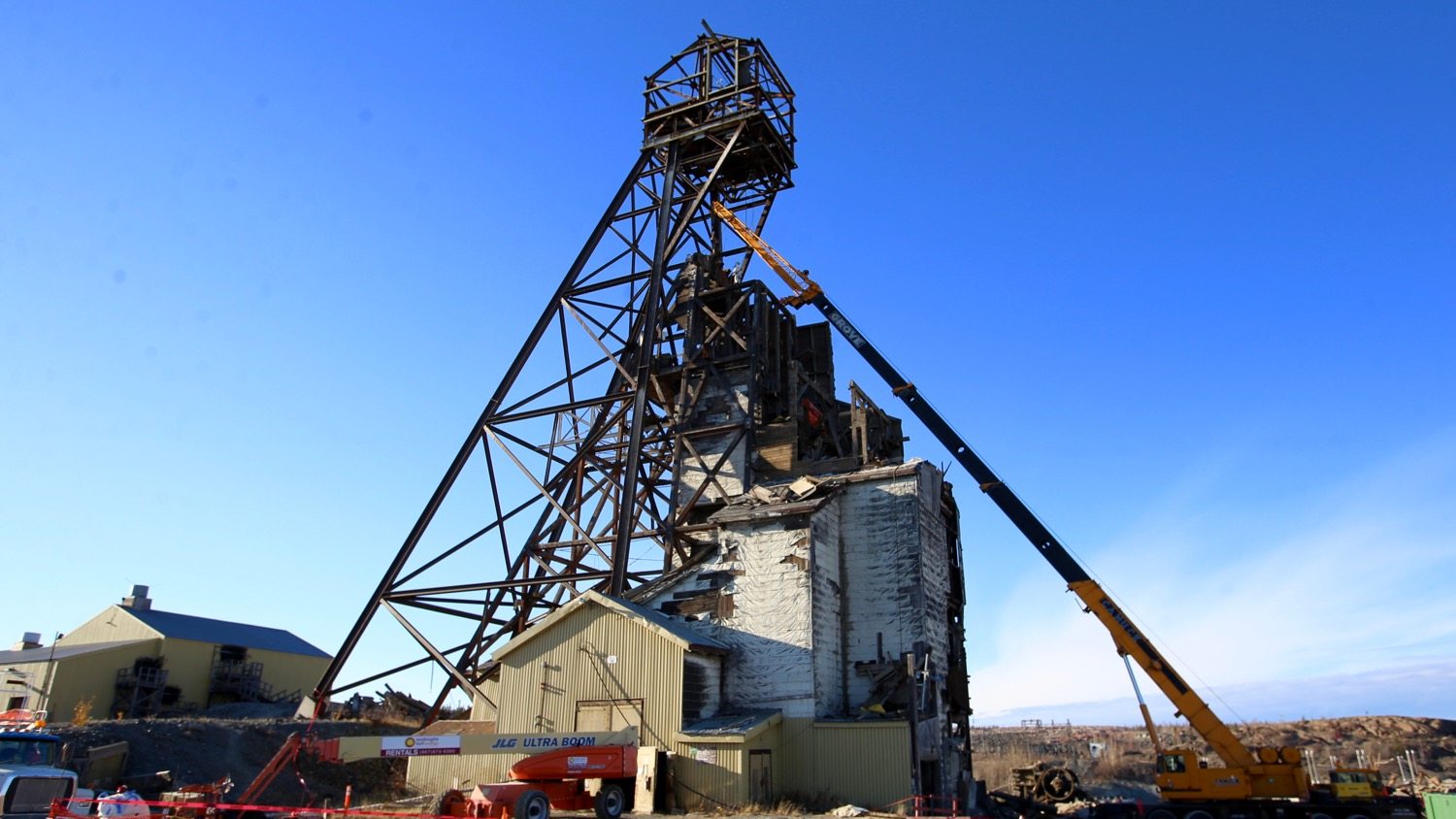
The C-shaft headframe, a feature on the horizon since 1947, has been dismantled by workers cleaning up the contaminated site of Giant Mine, a former gold mine just outside the city.

The federal government, which assumed control of the site after Giant Mine ceased operations more than a decade ago, deemed the headframe’s demise necessary for the safety of workers and the public.

“We had noticed that the headframe was starting to deteriorate and pieces had the potential to fall off,” said Natalie Plato, deputy director of the project to remediate the mine site.

“We had to bring it down so it did not hurt a worker on-site.”
Giant Mine's C-shaft headframe
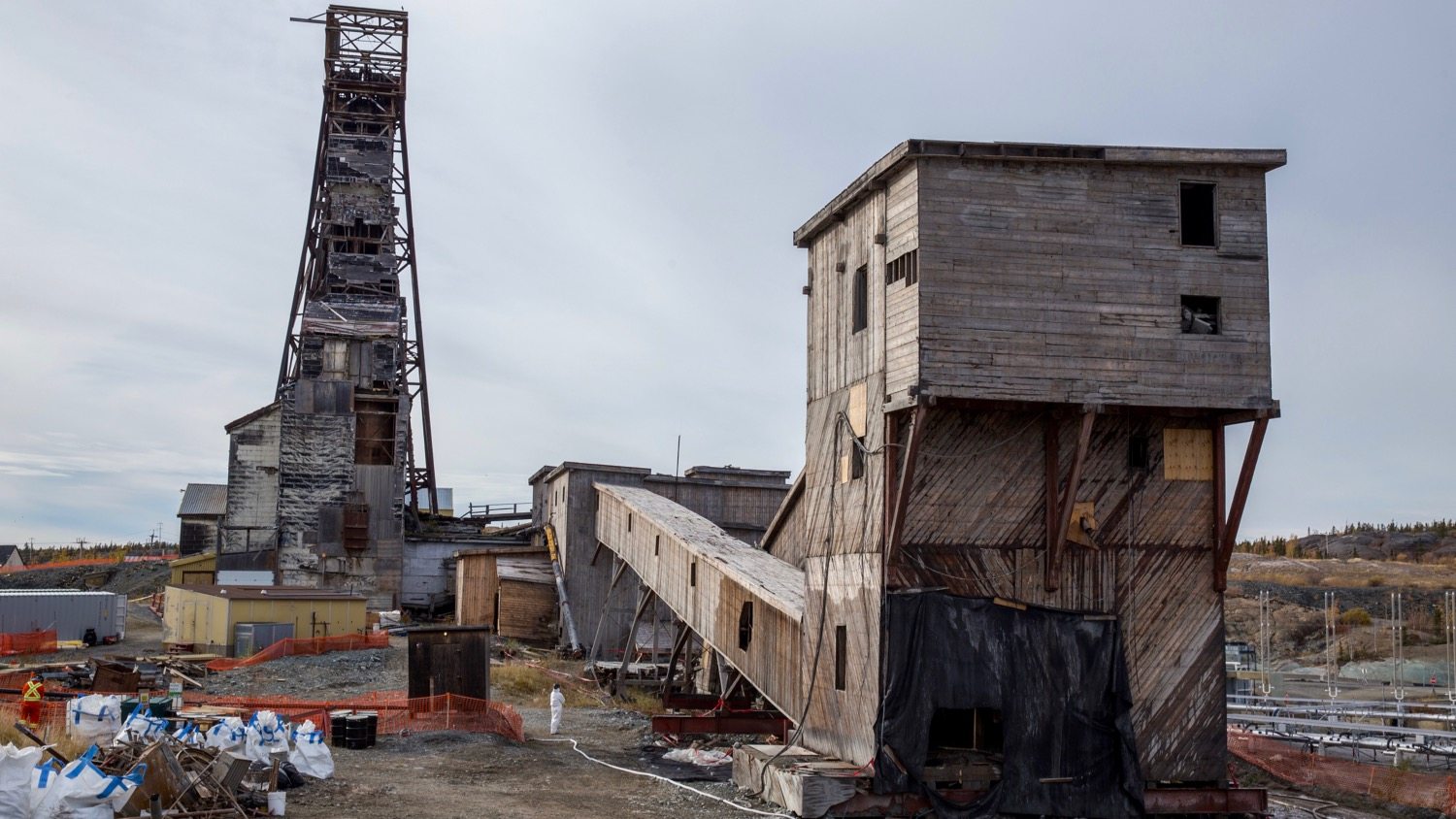
Work to deconstruct the C-shaft headframe and surrounding buildings began in September. This shows, from left, the headframe, crusher house, conveyors and screen house.
Giant Mine's C-shaft headframe
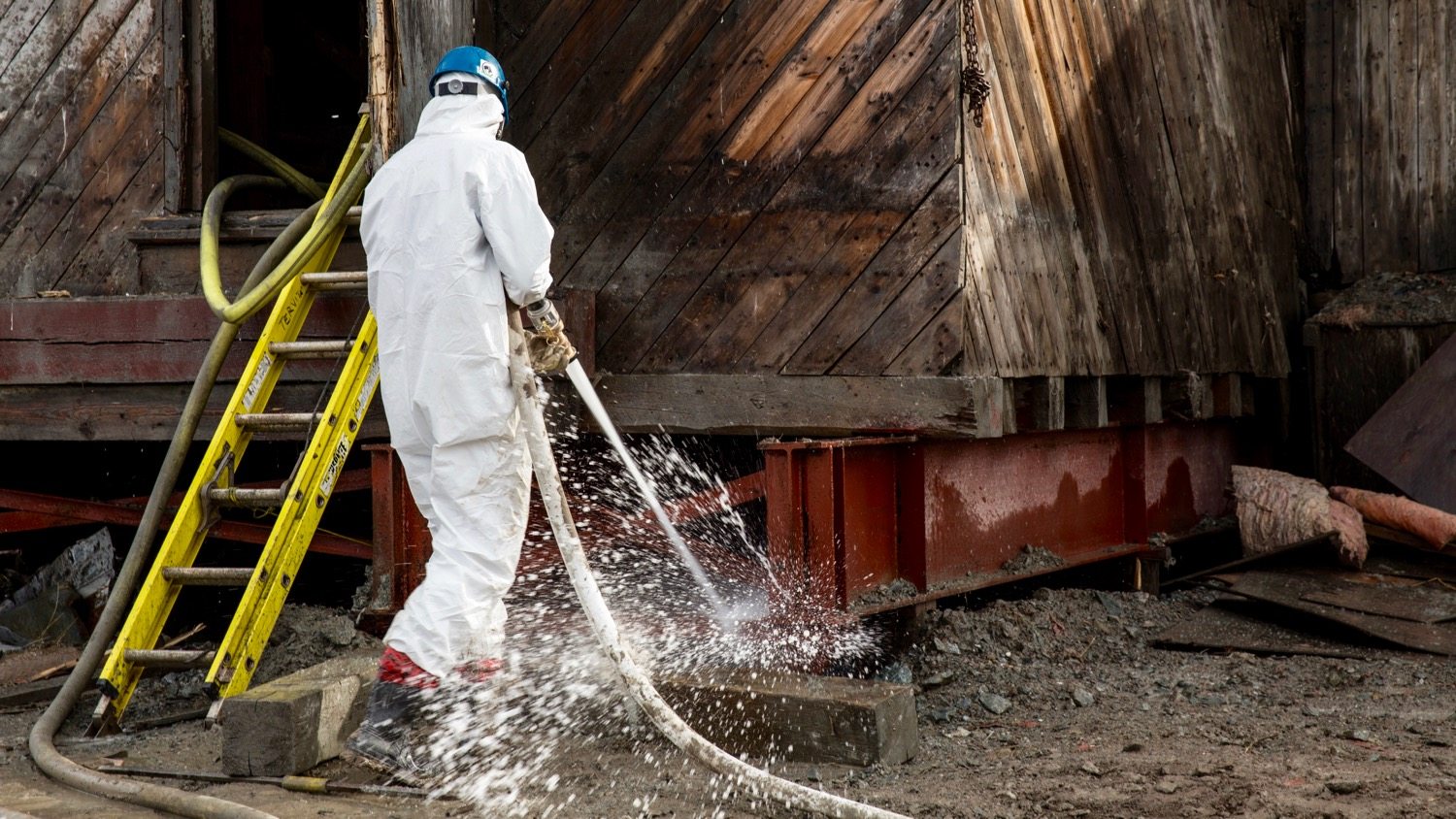
To suppress dust, structures were sprayed with water before work began.
Giant Mine's C-shaft headframe
The wood portion of the headframe was the first to be dismantled, in early October.

The remediation of Giant Mine will take decades at the very least. The current plan – designed to last for at least 100 years – involves using coolant devices, known as thermosyphons, to keep 237,000 tons of toxic arsenic trioxide frozen in place underground. In total, the work is projected to cost around $1 billion.

Read: Giant Mine project to be given independent oversight

In the shorter term, the process of taking down the headframe and associated complex began in September and had been all but completed by Wednesday, when the federal government released new photos.

Asbestos removed from the headframe structure has been shipped to a southern disposal facility.

“The remaining wood that has been tested and is not hazardous – it doesn’t contain arsenic – will be stored on-site until we get to full remediation of the site,” Plato told Moose FM.

“We have worked with the Mining Heritage Society and the GNWT to see if they wanted to salvage any items, and I don’t believe that any were identified.”
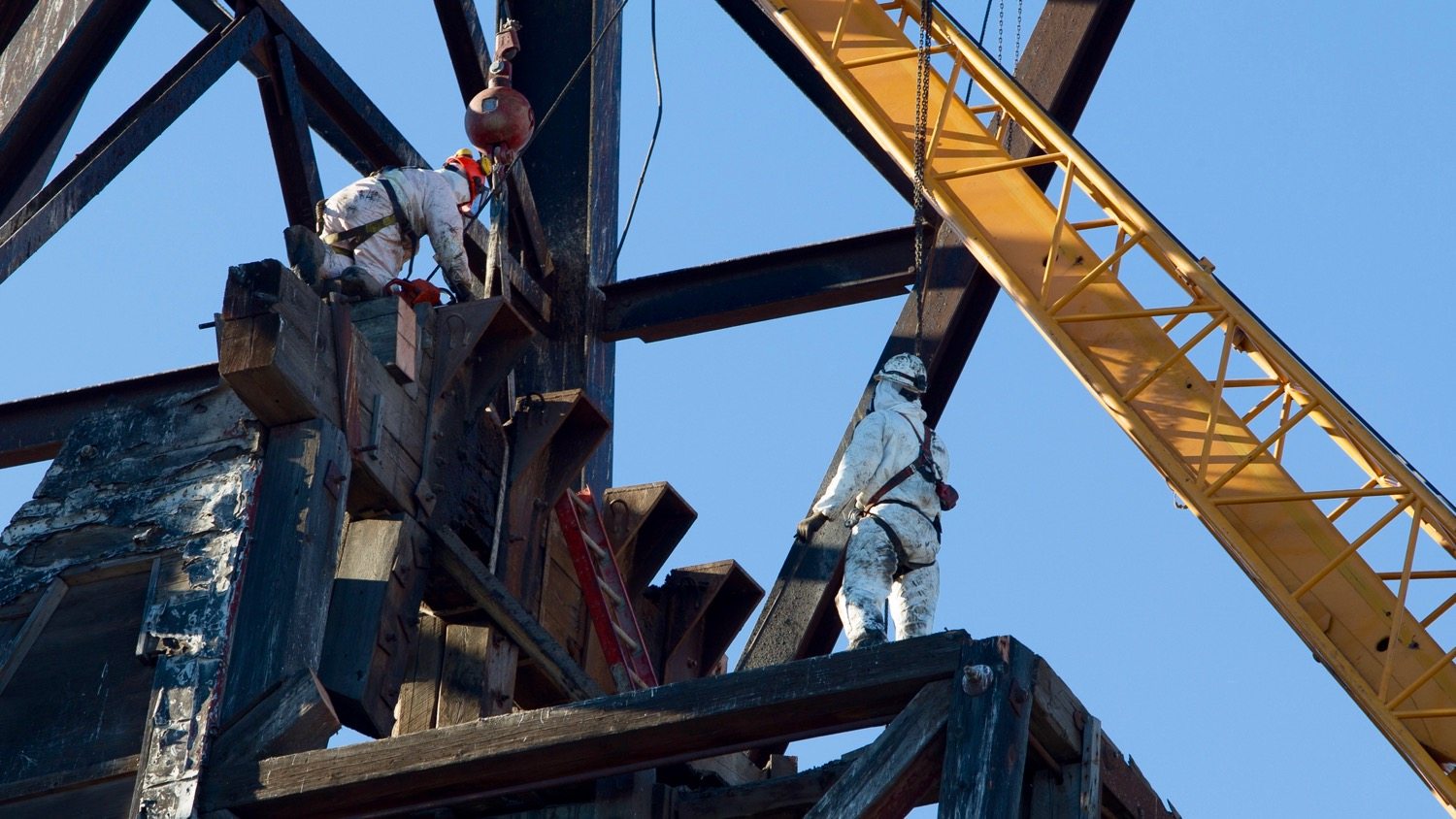
Giant Mine's C-shaft headframe
The headframe was approximately 40m in height.
Giant Mine's C-shaft headframe
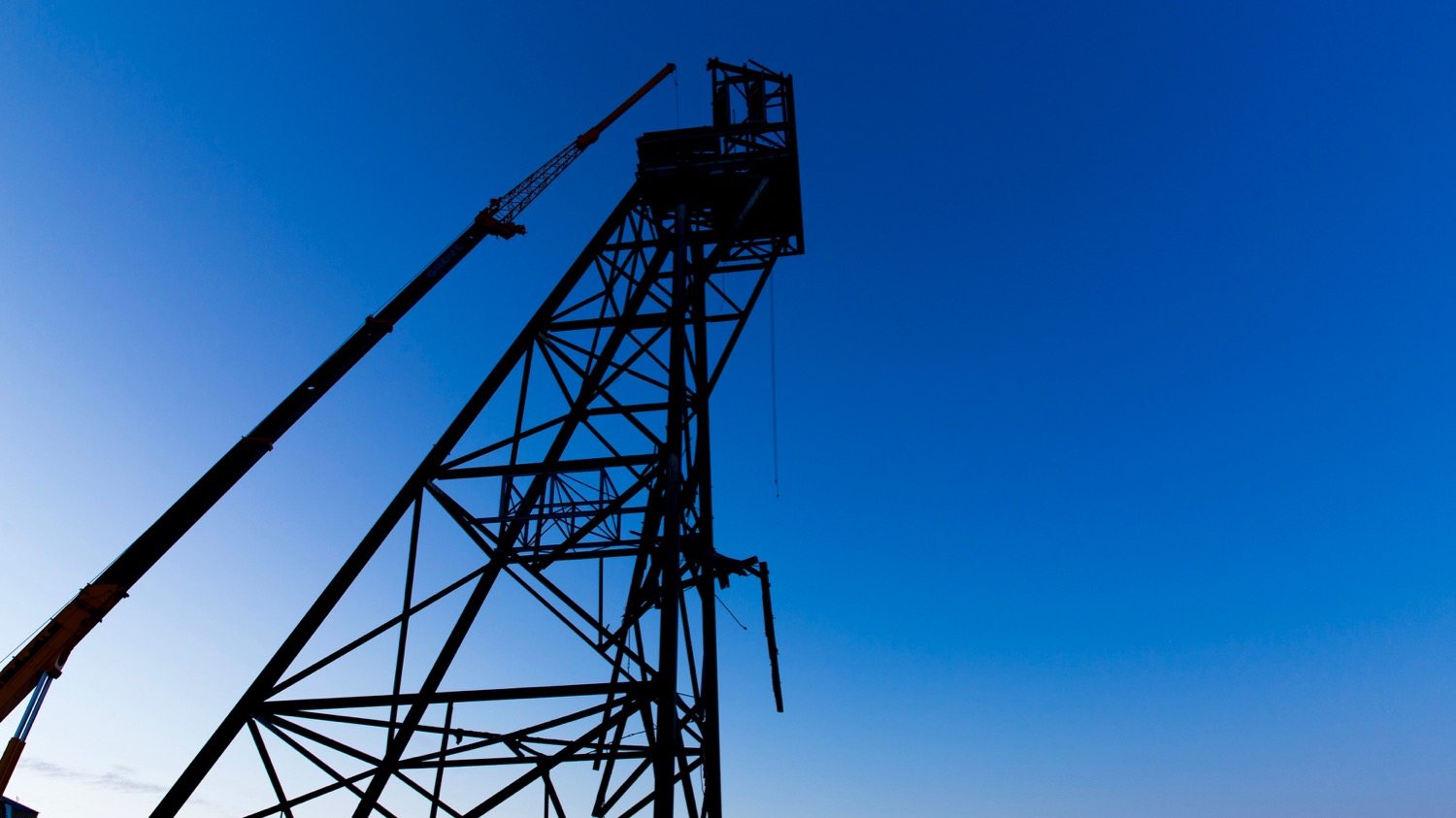
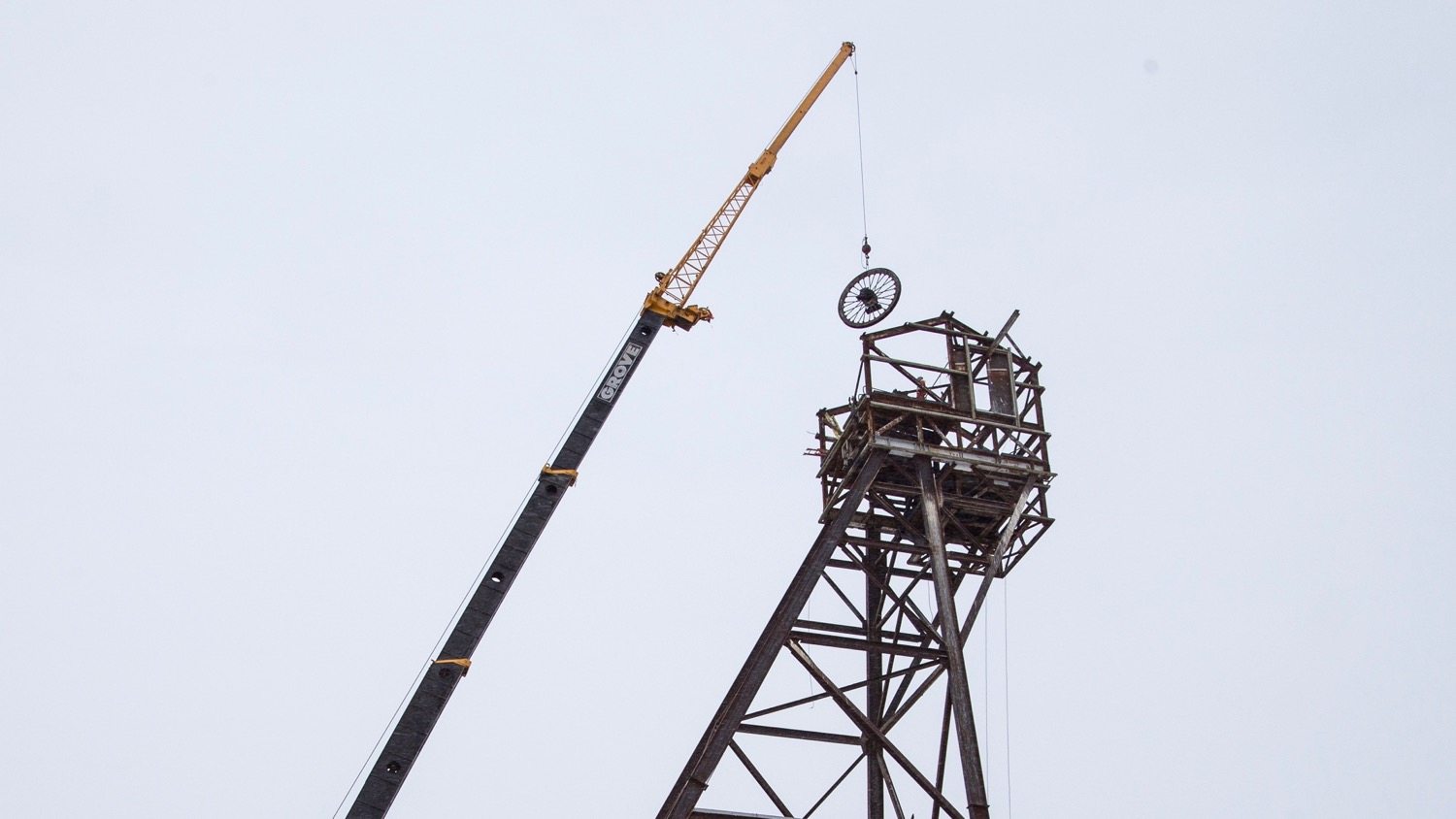
A sheave wheel is lifted from the top portion of the headframe on October 23.
Giant Mine's C-shaft headframe
The steel support structure was dismantled from the top down.

Last week, Mining Heritage Society president Walt Humphries told us: “We knew it was coming. It’s one of the last headframes in town, so it’s sad in that respect.

“But the C-shaft is in a unique position because it’s right where they’re doing the clean-up. It would have been very, very expensive to save it.”

Read: How do you want Giant Mine to look when the clean-up ends?

Plato says the mine’s A-shaft headframe and old curling rink are also “in very poor condition” and next on the list to come down, in the coming year.
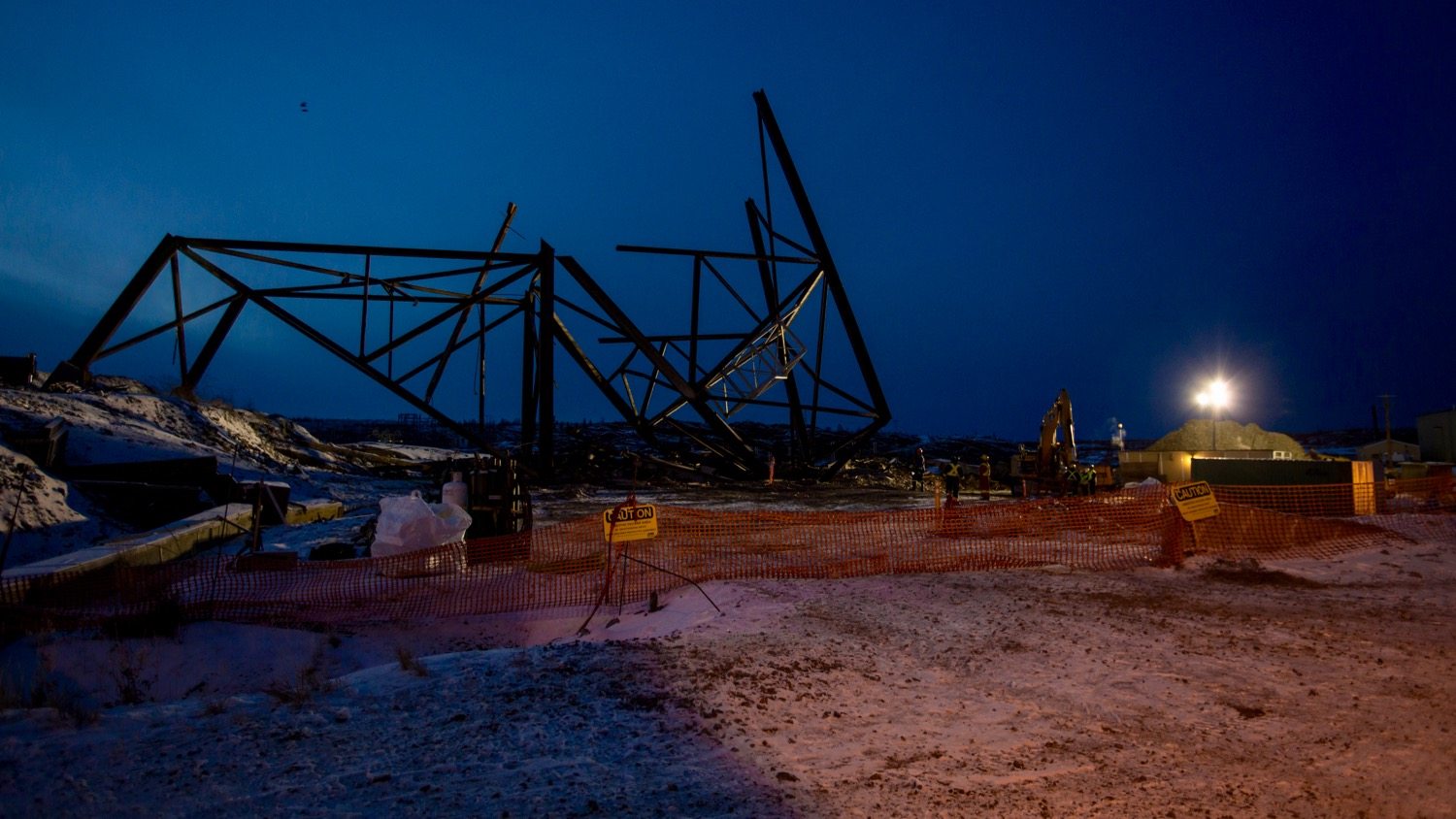
Giant Mine's C-shaft headframe
The federal government is in the process of working out how the remediated mine site will eventually look.

By next summer, the remediation team will finish a consultation process designed to figure out how the mine should eventually look once the clean-up is largely complete.

“After that, we’ll have to take some decisions on what the final plan will look like,” said Plato.

“It may not reflect what everybody wants, but we’ll try to incorporate as many desires as we can.”


True North FM
True North FM
CJCD Moose FM broadcasts to Yellowknife and Hay River in Canada's Northwest Territories.

Continue Reading

You may also like


cjcd Now playing play

- Advertisement -

Related Articles

- Advertisement -

Latest News

Tuktoyaktuk RCMP lay charges in bootleg liquor investigation

Tuktoyaktuk RCMP are laying charges following an investigation into liquor bootlegging earlier this week.

Youth engage with Tłı̨chǫ language in unconventional immersive spaces

While in-person On the Land learning continues to be central to Tłı̨chǫ language revitalization, the Tłı̨chǫ language division is looking at ways to engage with youth through new immersive platforms, like virtual spaces, that honour history and traditions. Danielle Dacanay with the Tłı̨chǫ Government’s Language Division emphasized that virtual resources are supplements to learning the language in the traditional way, they are not a replacement for it.

New microgrant stream wants youth to plant language seeds outside school

“100 youth projects wanted in French,” a new microgrant program wants youth to plant language learning seeds outside school. A network of action-research teams in Canada, other parts of North America, Africa and Europe is launching a youth grant stream to support French language engagement outside of conventional spaces. Youth across the country aged 14 to 30 are eligible for 100 microgrants in support of grassroots initiatives as part of this program run by the Dialogue Network.

Water testing at another Yellowknife school confirms elevated lead and copper

Testing at another school site in the city of Yellowknife showed elevated levels of lead and copper in water present in some of its drinking taps. Earlier this month, testing showed four other school buildings in Yellowknife and a school in Behchokǫ̀ had elevated levels of both copper and lead in water. Since comprehensive testing of schools across the territory began this fall, 28 school sites out of 34 announced to date have tested positive for elevated levels of lead.

Testing at more NWT buildings confirms lead in water

Fort Smith officials said water testing at municipal buildings has confirmed the presence of lead. According to the announcement, water samples at the Town Hall, the Fire Hall, and the Municipal Services Building continue to show elevated levels of lead.