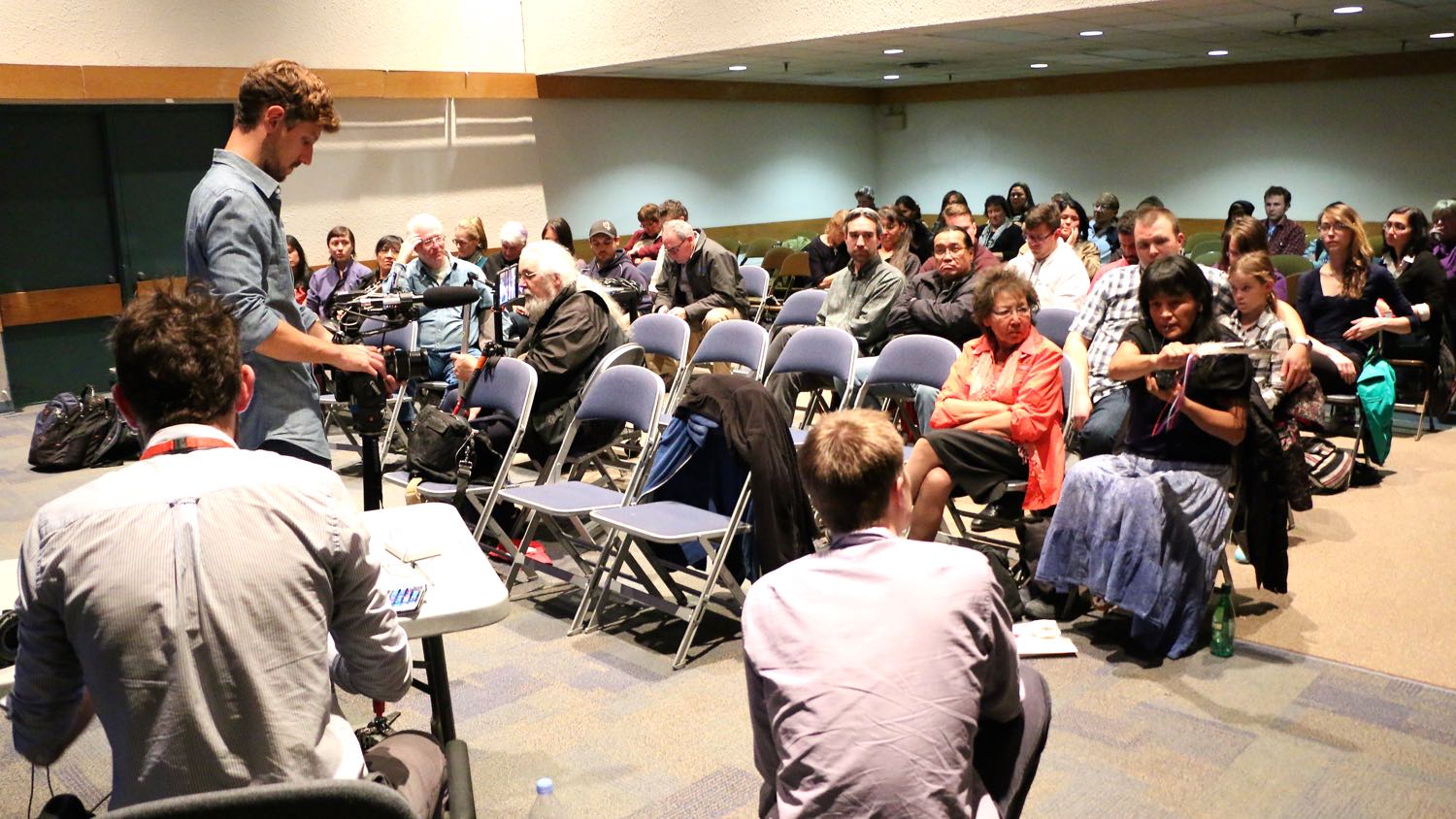
A live-streamed BBC public meeting in Yellowknife passed 75,000 online views as residents gave reporters story ideas to share with the world.
At one point during Tuesday night’s meeting at Northern United Place, more than 10,000 viewers worldwide were tuned in via Facebook.
They heard local people raise topics like fracking, the Thaidene Nene national and territorial park, caribou numbers and the northern fur industry.
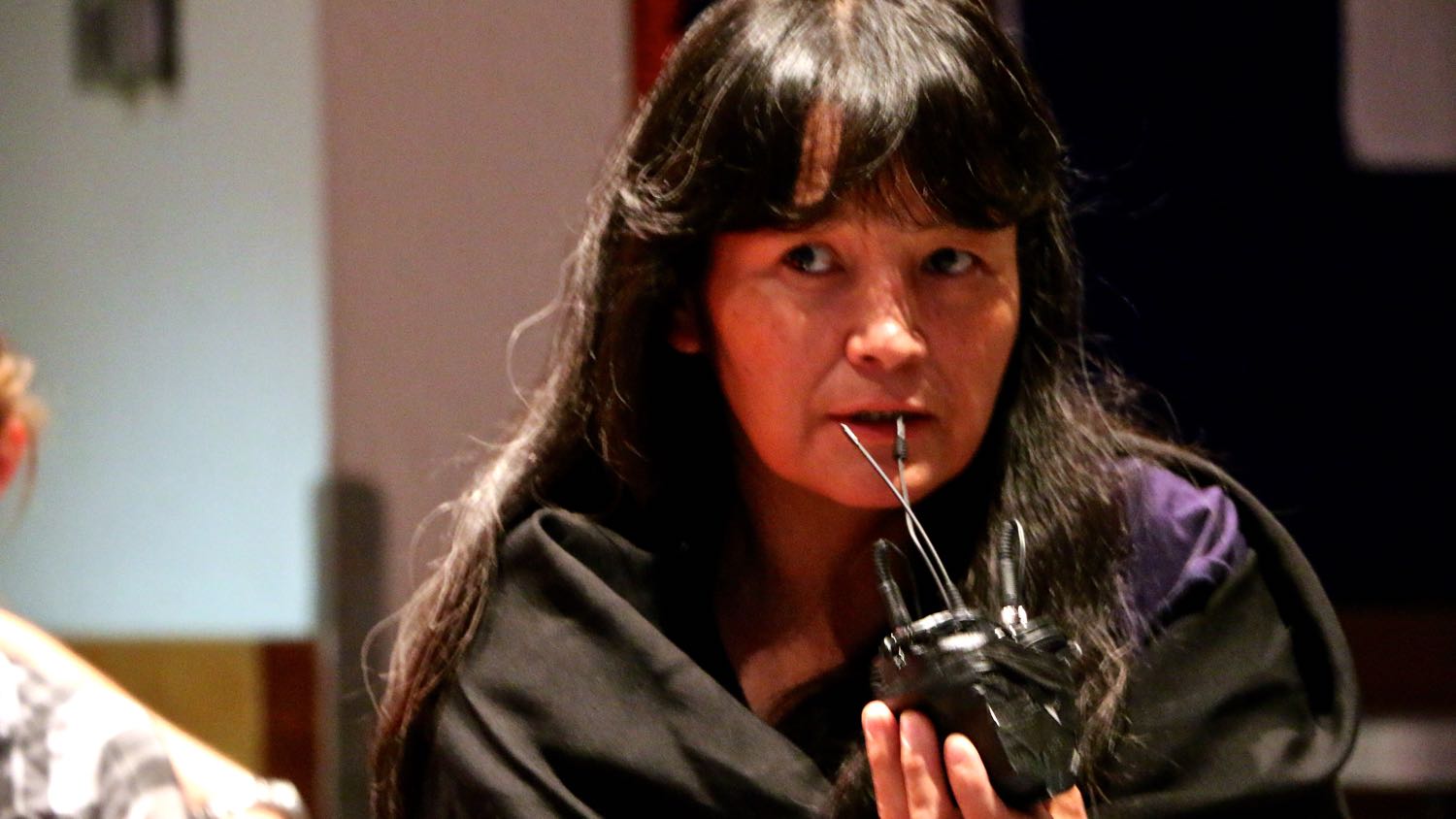
Much of the meeting was dedicated to exploring the issue of Canada’s residential schools and the continued suffering of northern survivors, with Dene speakers passionately recalling their own experiences. Several were moved to tears.
Watch a replay of our live #Yellowknife #NWT town hall Q&A. Thanks to everyone who took part http://t.co/X6dqB6GtDa pic.twitter.com/yLbYSsAq11
— BBC Pop Up (@BBCpopup) October 7, 2015
On occasion, the visiting journalists irked some audience members as they appeared to cut short First Nations speakers discussing the impact of residential schools.
As the BBC attempted to shift the debate to fracking, APTN reporter Iman Kassam – invited by the BBC as a panellist – replied: “I know you guys want to get the momentum going and touch on as many topics as you want, but these are the topics that are coming to you. And they’re really important.
“This is the reality. You talk about fracking? It does come back to Canada’s colonial past. And it’s not just a past, it’s a current reality in Canada.”
BBC journalist James Morgan, noting thousands of viewers watching online, said: “Your stories are being heard. We feel very grateful to be in Denendeh and to hear from members of the Dene First Nations.
“I’m very thankful to hear these important stories and we feel very appreciative to be in your community.”
On Facebook: BBC Pop Up
Panellist Jacey Firth delivered opening remarks in Gwich’in as the meeting began, while Kassam spoke of immense strides taken by the NWT’s Pride movement in the past four years.
There were boos as the names of Paul McCartney and Pamela Anderson – anti-sealing campaigners – were mentioned in relation to the northern fur industry.
Lighter topics explored included how northerners beat the cold and dark of winter.
Broadcaster Lawrence Nayally, also on the panel, said: “The world is looking at us. With new social media tools, we can reach vast distances.
“The Elders actually told about that – that the young people would be given a tool. Perhaps this is what it is.”