Yellowknife’s new water treatment plant opened its doors to visitors for the first time on Monday.
The facility cost a fraction over $30 million to build and began operations this summer, just in time to end a weeks-long boil-water advisory across the city.
Such advisories should be a thing of the past as the new facility boasts an advanced water filtration system.
Moose FM took this photo tour with city staff.
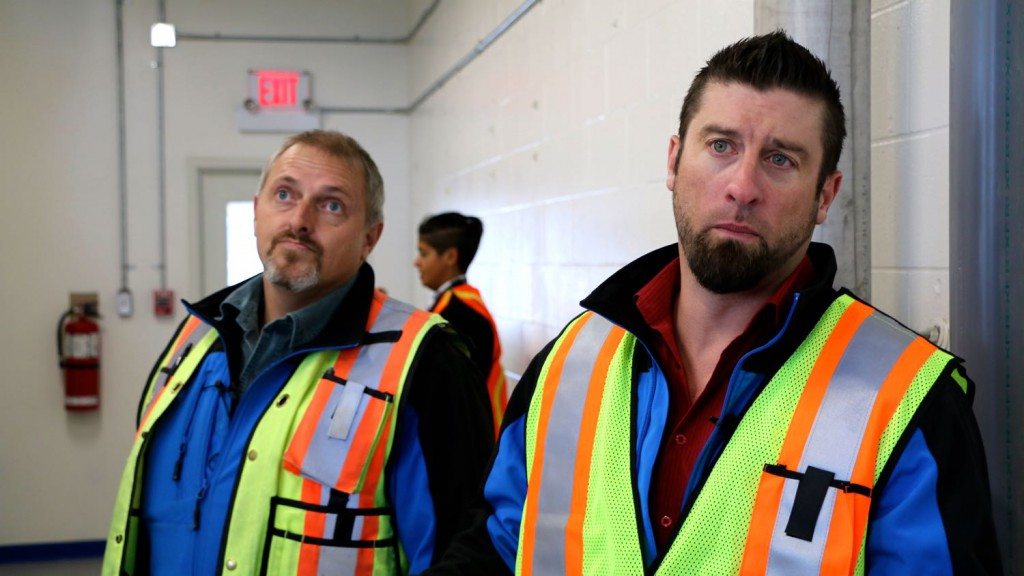
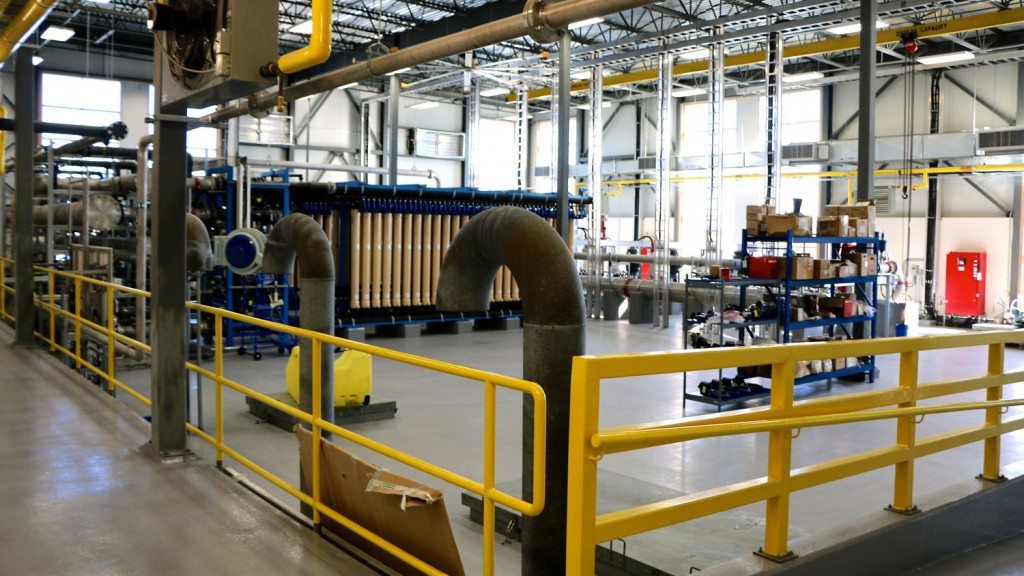
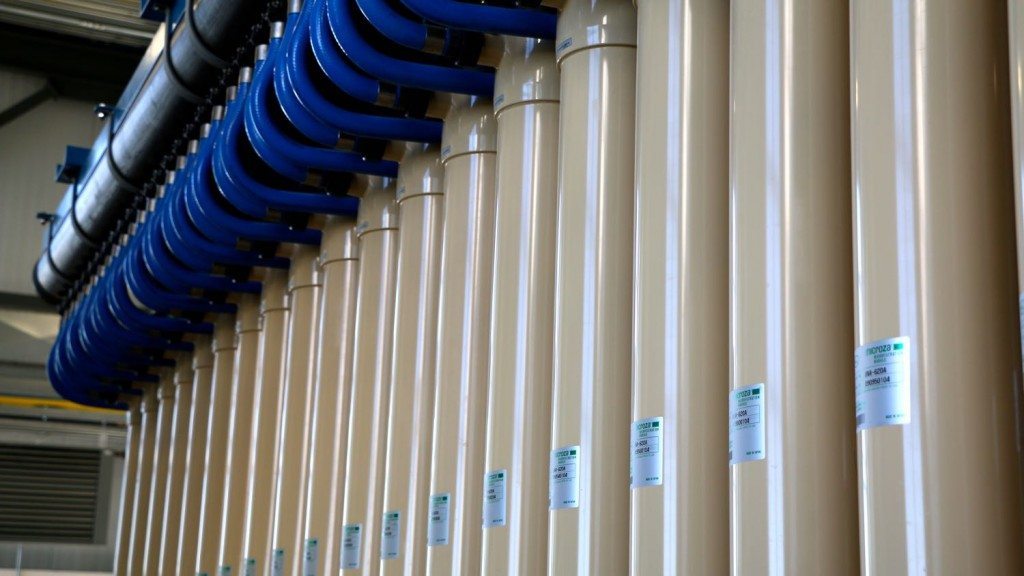
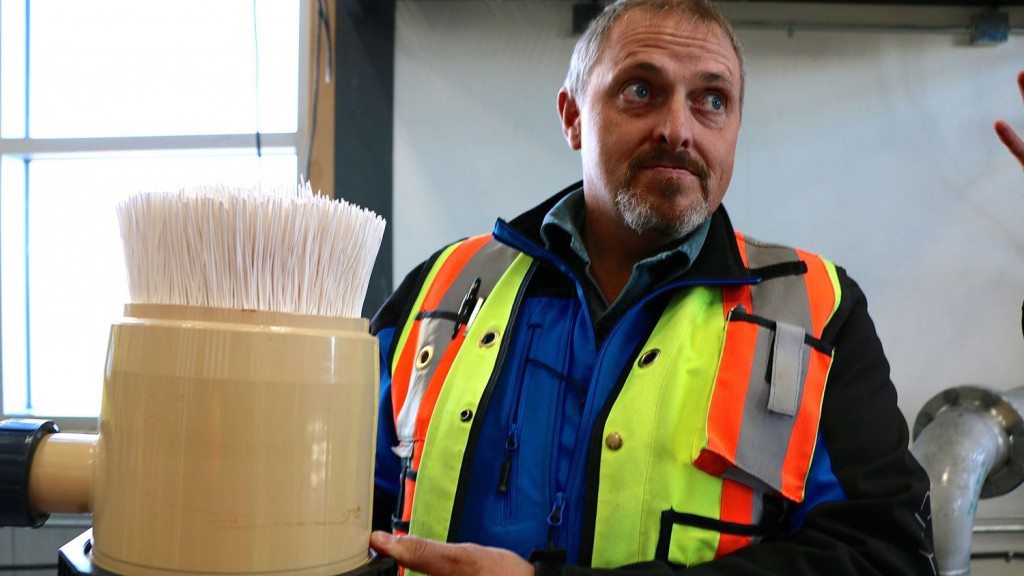
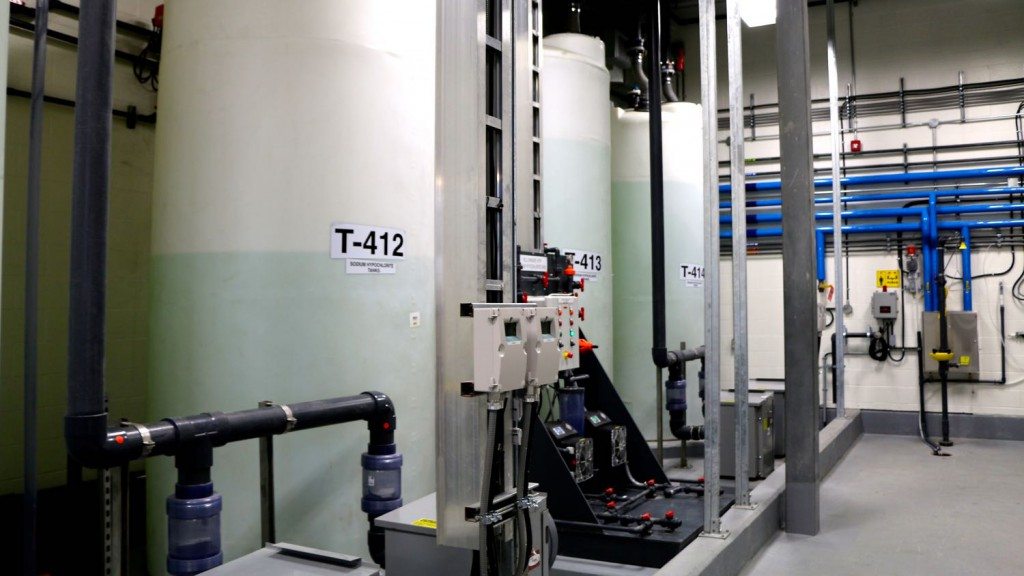
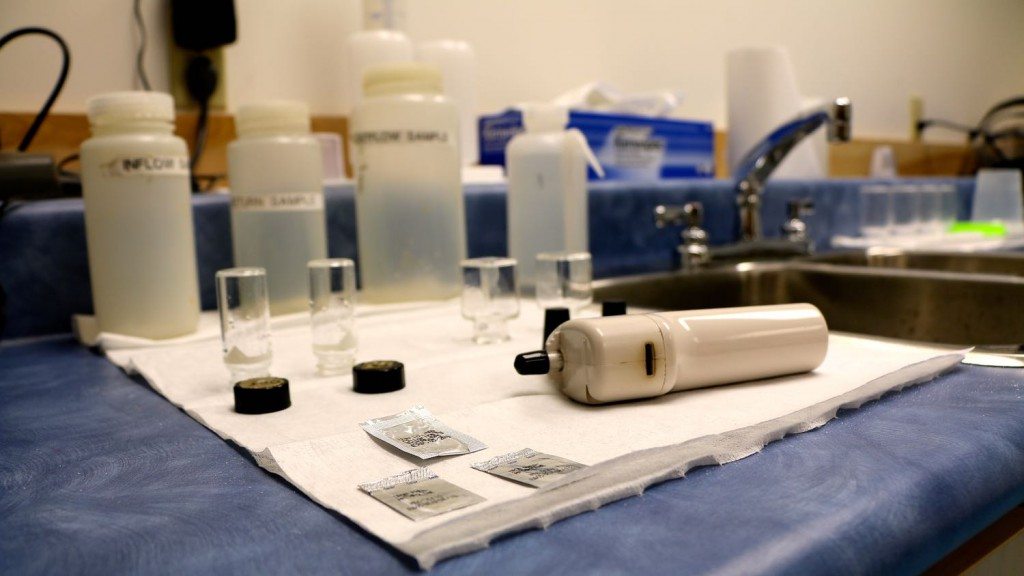
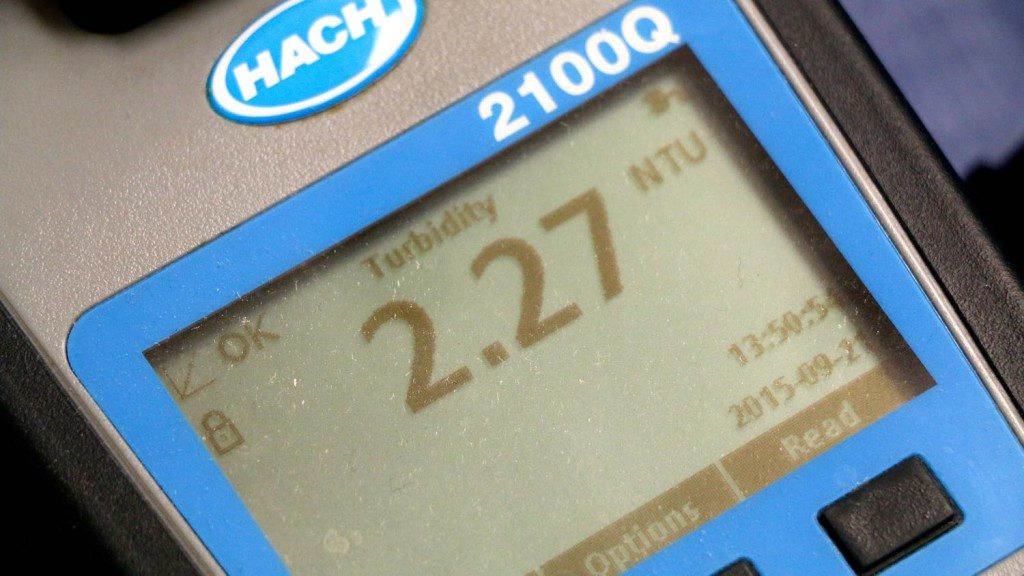
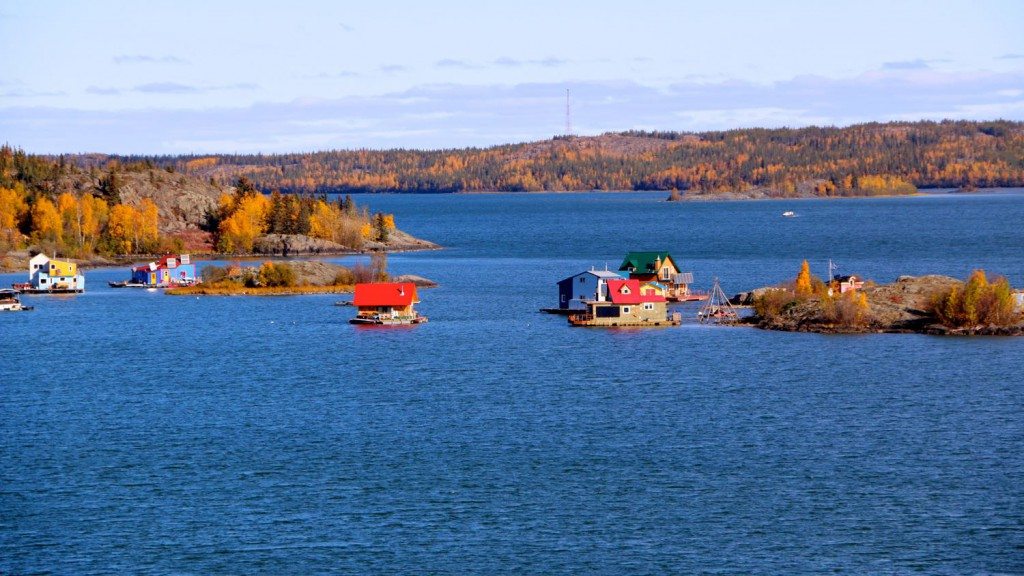
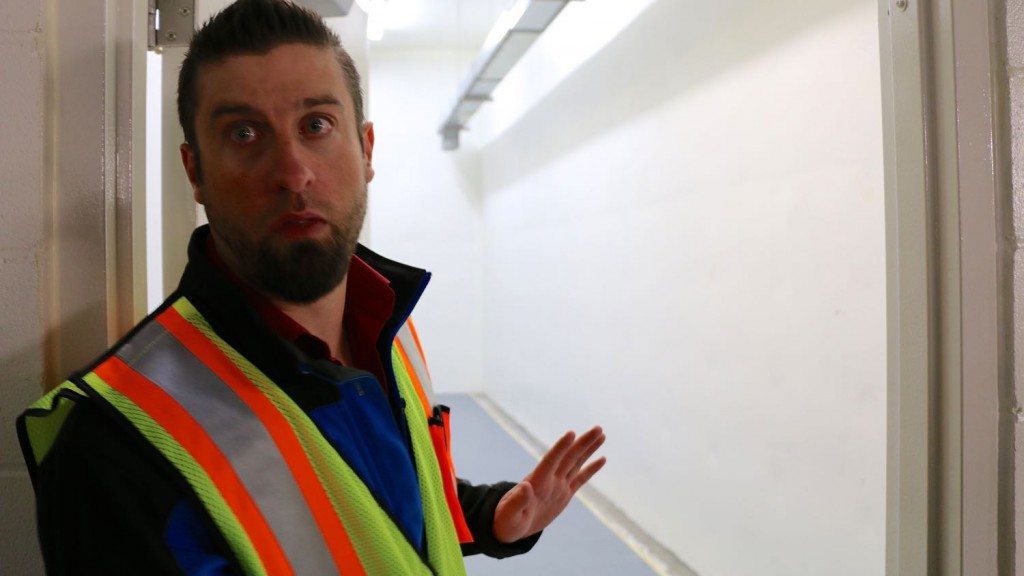
Superintendent Scott Gillard and director of public works Chris Greencorn gave Moose FM a tour.The facility can handle 20 million litres of water per day, and could support more than 30,000 people.At the heart of the facility are new water filters, or membranes, which do a much better job of cleaning the city’s water than was previously the case.Scott Gillard holds up an example of the new water filtration system.Water passes through this filter, which helps to remove particles as tiny as one micron (one thousandth of a millimetre).Gillard believes the new filtration system makes boil-water advisories a thing of the past.These tanks contain sodium hypochlorite. This chemical replaces chlorine in the water cleaning process and is said to be a safer solution.The facility employs three staff and costs around $1.3 million to run each year. Testing of the water supply can be performed on-site.This instrument tests for turbidity, or how much silt and debris is in the water. (When Moose FM toured the facility, turbidity was at around 0.012 NTU. For context, the 2003 boil-water advisory in Yellowknife saw turbidity approach 50 NTU.)These screens are part of the small control centre in one corner of the building, from which operators can inspect the entire system.The next question for Yellowknife is where its water comes from. This is the view from the facility, looking out over Yellowknife Bay. The city could decide to draw water directly from the bay when its old pipe to Yellowknife River comes up for replacement, in the near future.If the city decides to pump water from Yellowknife Bay, contamination from the toxic remnants of nearby Giant Mine will be a concern. This bland corridor could form part of a new arsenic treatment installation if the city decides to go ahead with it.
Housing NWT has announced that they are adjusting the rental rates for their Market Housing Program to better reflect market conditions and the cost of delivering housing.
Northwest Territories Permier R.J. Simpson has announced the appointment of Shannon Barnett-Aikman as the Deputy Minister of Education, Culture and Employment.