




The GNWT’s Environment and Climate Change department reported that Great Bear Lake is at its lowest water level ever recorded during this time of year and flow rates on the Great Bear River are well below average for this time of year. Officials said water levels and flow rates remain relatively low across most of the NWT, with Great Slave Lake’s water level currently “well below average.” Researchers noted the level has been slowly decreasing since the end of April 2025.
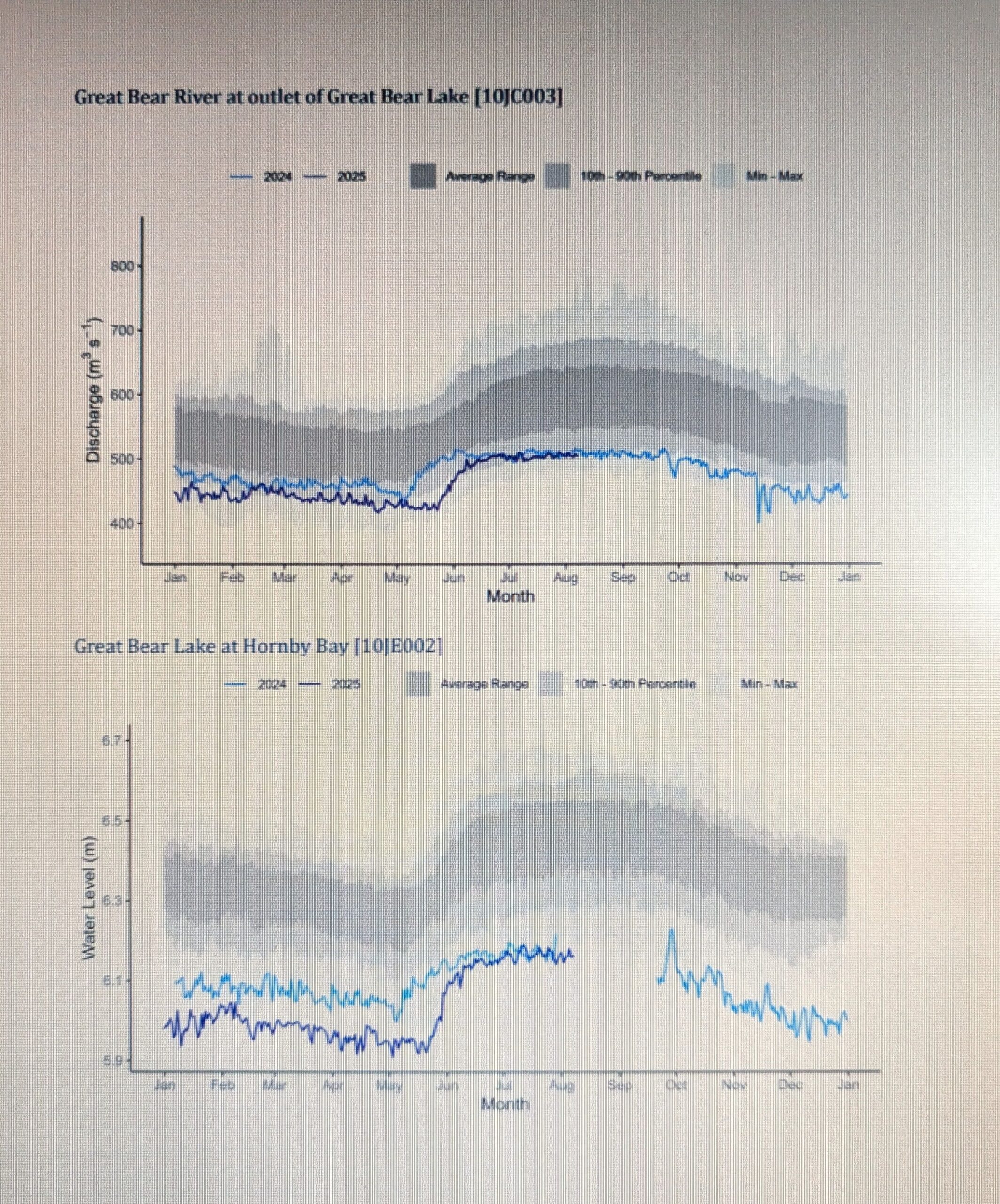
Scientists with GNWT say the low water levels are the result of extreme drought conditions that began in the summer of 2022 and have persisted through 2023 and 2024. They say water levels have since shown some recovery, which has mostly been limited to smaller rivers and lakes.
Data collected by the GNWT’s Environment and Climate Change department showed that precipitation and temperatures in July were below average for most areas of the N.W.T.
“July precipitation across the NWT was generally below average with most communities, including Fort Smith, Hay River, Fort Simpson, Norman Wells, and Inuvik – receiving below to well below average rainfall. Only Yellowknife recorded approximately average precipitation,” researchers said in a water level report released this week.
Rains in the southwestern portion of the territories led to rises in flows on some rivers sourced in the Mackenzie Mountains, including the South Nahanni River.
Researchers found that the South Nahanni River showed levels well above average, while the Snare River and Lockhart River showed average levels.
For a number of rivers including the Slave River, water level was found to be below the average range for this time of year, said researchers. Data showed that Hay River and Mackenzie River water level (measured at different points along the river) was below average for this time of year while the Liard River showed average water levels for this time of year.
There were some exceptions to where water levels and flows were found to be above average including Some smaller rivers in the Great Slave Lake basin, including the Hoarfrost River and the Taltson River.
Researchers found that temperatures in the N.W.T. for the month of July were for the most part below average.
“Fort Smith, Yellowknife, Norman Wells, and Inuvik experienced cooler temperatures than normal, while Hay River and Fort Simpson recorded normal temperatures,” said researchers.
Historic and real time data on water levels in the N.W.T. are available on the Environment of Natural Resources website






