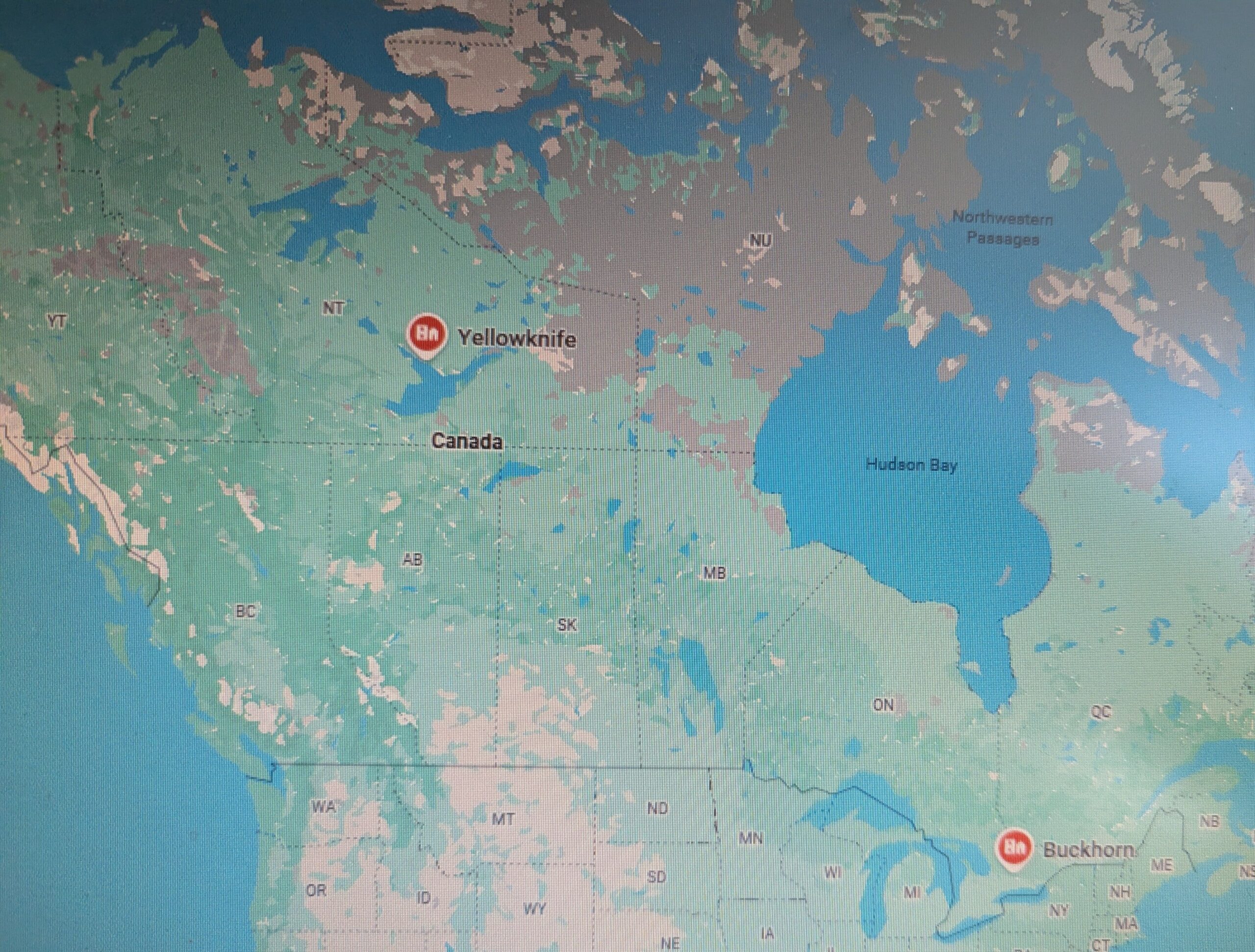
Wild birds are usually not friendly with people, no matter where the ‘feathered friend’ might be from or going to. So when Bill Scheele from the town of Buckhorn found himself face to face with a beautiful and friendly pigeon and then saw the tag on the bird suggesting it came from Yellowknife, it raised some serious questions. For one, Buckhorn Ontario is about 3,000 km from Yellowknife.
Scheele noticed “2025-MFT-0761” written on the tag around the pigeon’s foot. A google search brought Scheele to a pigeon racing association in the North and a local pigeon racer in Yellowknife.
Schele then stumbled on a story about Norm Pottinger, a pigeon racer, who has worked with racing pigeons for many years, so Scheele reached out to True North FM.
“I’m not convinced the bird is from Yellowknife,” he said. “It might be some kind of mistake.”
True North FM also reached out to Pottinger, who was not available for comment immediately.
True North FM contacted Lauren Jones, who is a wildlife scientist with expertise in wild birds. Jones is based in Six Nations, an area that has become a haven for birds that are nearly extinct in other areas of the region. Jones explained that ”in theory” it is very possible for a bird to fly long distances and noted there have been many documented incidents of birds having flown great distances.
But how did a bird from Yellowknife end up in Buckhorn in August, a place and time that may not part of the bird’s regular habitat or migration path.
Jones said there could be a number of reasons, including human interference and environmental factors. Jones explained that in some cases, birds can experience disruptions of their regular navigational abilities due to environmental factors like nighttime lights or glaring, which can throw off a bird’s sense of where they are or where they are going.
Scheele told True North FM he first spotted the bird in a marina called Reach in Buckhorn, Ontario.
The bird approached Scheele and kept “hanging around” and “hanging around” some more.”
“It wouldn’t leave and sits on people,” said Scheele, who explained that folks in the neighbourhood are easily able to hold the bird and feed the bird food and water.
“(The bird) picked up with one of the ladies on the boats, right beside us and it literally sits on her screen door waiting for her to come and give it more water or food or whatever a bird wants,” bemused Scheele.
Scheele lives in the Trent-Severn Kawarthas, in a houseboat in an area many people call ‘cottage country.’
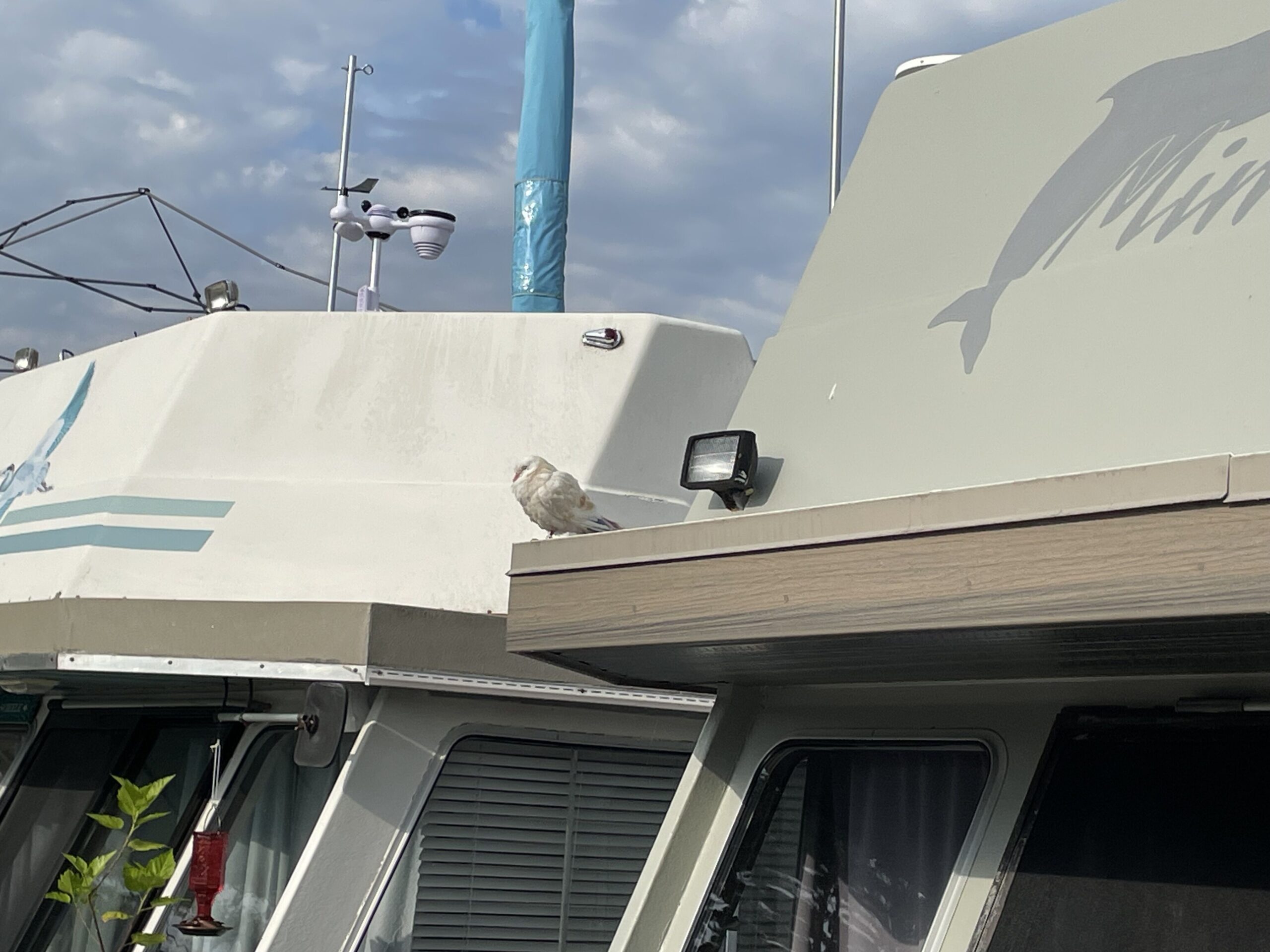
Scheele said he is trying to help the pigeon find the way back. For now the bird is staying put in Buckhorn and has captivated the hearts of Scheele and locals.
“The bird showed up and became a mascot. We’re trying to help him find his rightful home so he’s happy again,” said Scheele.