


100.1 GO FM - We're Your Feel Good Pop Station

‘Little progress’ treating form of cancer that killed YK boy

The type of brain tumour that killed Yellowknife boy Malcolm Austin remains one of the most dangerous, and least understood, forms of cancer.

That’s the view of the Brain Tumour Foundation of Canada, which provides support to brain tumour patients and funding for research.

Malcolm passed away this week, having been diagnosed with diffuse intrinsic pontine glioma – or DIPG – in October 2014.

DIPG has a reported zero percent survival rate. Fewer than 10 percent of children survive two years from diagnosis.

Read: Yellowknife grieves as six-year-old Malcolm Austin passes away

Janic Gorayeb, a health information specialist at the foundation, told Moose FM this form of cancer is exceptionally difficult to both treat and study because of its location inside the brain.

“It presents at six or seven years old with mild neurological symptoms and it affects the brain stem and the nervous system,” said Gorayeb.
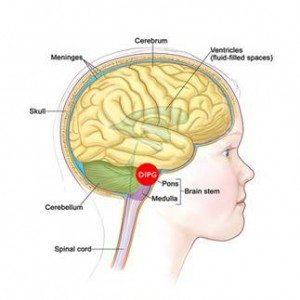
DIPG
Image: For Daisy & DIPG Brain Cancer Research.

“This area of the brain affects swallowing, balance, vision – the child may have difficulties with chewing. Because it is a very rapid, fast-growing tumour, the symptoms may worsen quite quickly as well.

“It’s very difficult for a medical team to do surgery on a child to remove the tumour, because it’s so difficult to access. And because it’s so difficult to access, biopsy tissues are rarely acquired – so we don’t even know a lot around the genetic landscape of DIPG.”

There are more than 120 forms of brain cancer, but DIPG remains one of the most aggressive – and least likely. The cancer affects only children and there are around 30 cases in Canada each year.

“I’ve been with the foundation for seven years and this is the second time I’ve come across it,” said Gorayeb.

“Unlike other pediatric cancers, there has been little progress in improving treatments and cure rates for this type of cancer. The failure of most therapies for this cancer can be attributed to its delicate location.

“It’s similar to glioblastoma multiforme, which is the most aggressive form of adult brain tumour.”

More information: Brain Tumour Foundation of Canada

There have been some limited breakthroughs in healthcare professionals’ understanding of DIPG.

In April 2014, Toronto pediatric hospital SickKids published a study uncovering the genetic drivers of DIPG and identifying three separate forms of the cancer. The genes uncovered in that research had never been seen in any other cancer.

Researchers at SickKids are now exploring what forms of therapy might work in future treatments for DIPG.

Ollie Williams
Ollie Williams
Hello! I'm the one with the British accent. Thanks for supporting CJCD. To contact me, you can email me, find me on Twitter or call (867) 920-4663.

Continue Reading

You may also like


cjcd Now playing play

- Advertisement -

Related Articles

- Advertisement -

Latest News

Snowkings’ organizers say volunteers play important roles in festival

Snowkings’ Winter Festival organizers are busy getting preparations underway for this year’s much anticipated snowcastle. The Snowkings’ snow and ice fortress is expected to burst back to life on Yellowknife Bay on March 1. For 31 years, the festival has attracted thousands of visitors from across the territory and from across the globe. Organizers are looking for people within the local community of Yellowknife who are interested in volunteer roles.

Climate resilience capacity program reaches Hay River and Inuvik

A series of workshops focussed on “climate resiliency” have reached three hubs of the N.W.T. Organizers say the initiative has helped to build local capacity around recovery, resilience and emergency preparedness. The gatherings brought together about 30 representatives from Indigenous governments, Northern NGOs,community organizations, and health and wellness workers for psychological first aid training and community-led planning focused on climate resilience.

Yellowknife Street Support Network launches this Friday

The Yellowknife Street Support Network is holding a community gathering in front of the post office on Franklin Avenue starting at 12 p.m. on Feb 13. Everyone is invited to share a meal, where soup, bannock and coffee are being served and learn more about the group’s vision and plans. 

Scaling back of operations at Gahcho Kué diamond mine announced

Operations at the Gahcho Kué diamond mine in the Northwest Territories are being scaled back, according to a recent announcement from Mountain Province Diamonds Inc. 

Cold alerts issued in NWT’s north and south as temps to dip into -50 zone

Environment Canada has issued several yellow cold warnings across the territory, including for Sachs Harbour, Aklavik, Fort Good Hope, Tulita, Norman Wells, Ulukhaktok, Colvile Lake, Deline, the Inuvik region, Tuktoyaktuk, Paulatuk, Tsiigehtchic and Fort MacPherson along with areas of the North Slave region. This evening the cold warning was also extended into the communities of Wekweeti, Whati and Behchoko, with wind chills of -50 degrees expected tonight.



