
Serving as one of the bedrocks of the NWT’s economy, Rio Tinto’s Diavik Diamond Mine offered a (steel-toed) boots-on-the-ground tour of the site to members of the media.
This was the first media tour of the mine since 2019. It was decided that the public should be given a fresh look inside the mine’s operations as they are on their way to shutting the site down by 2026.
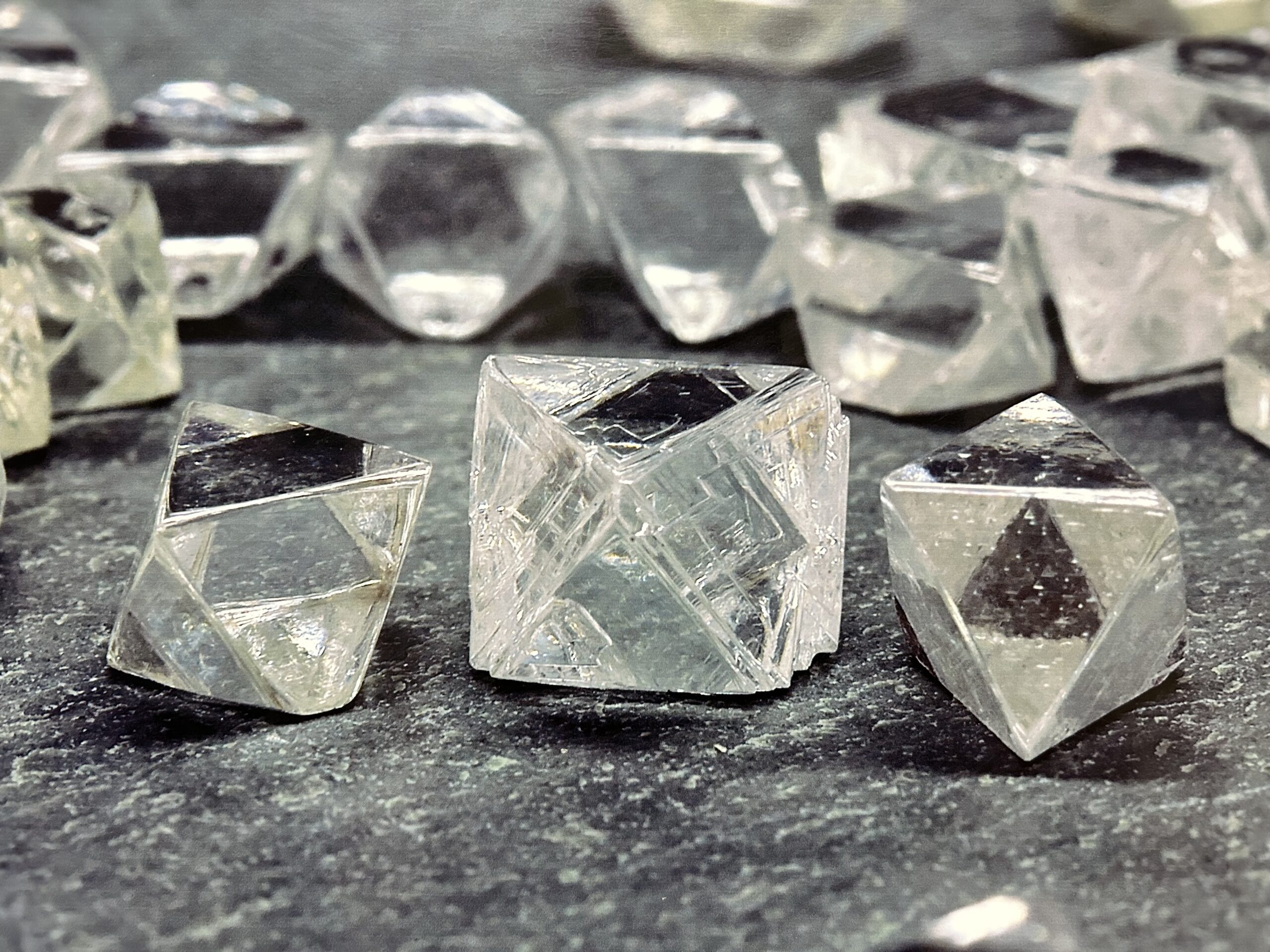
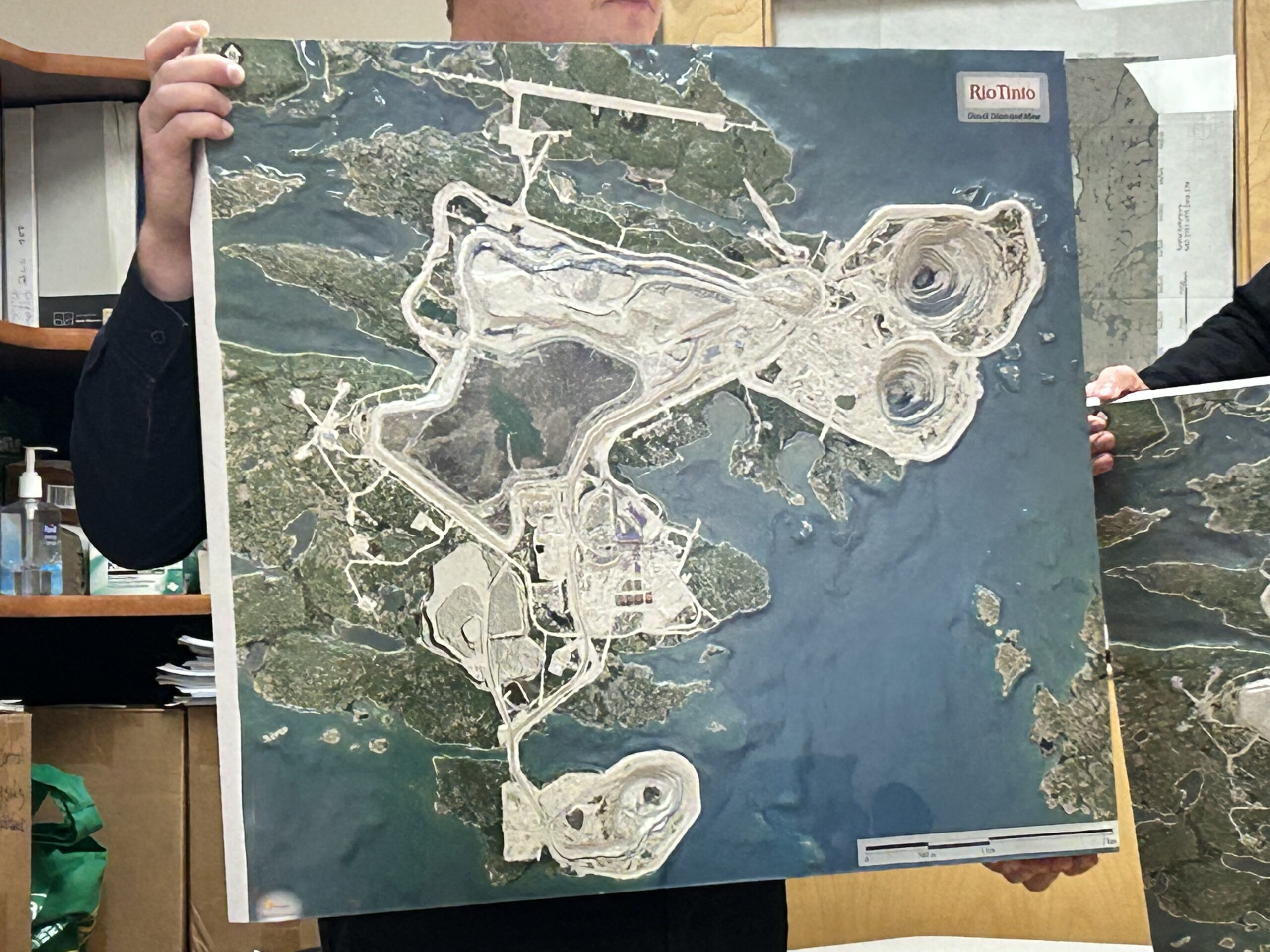
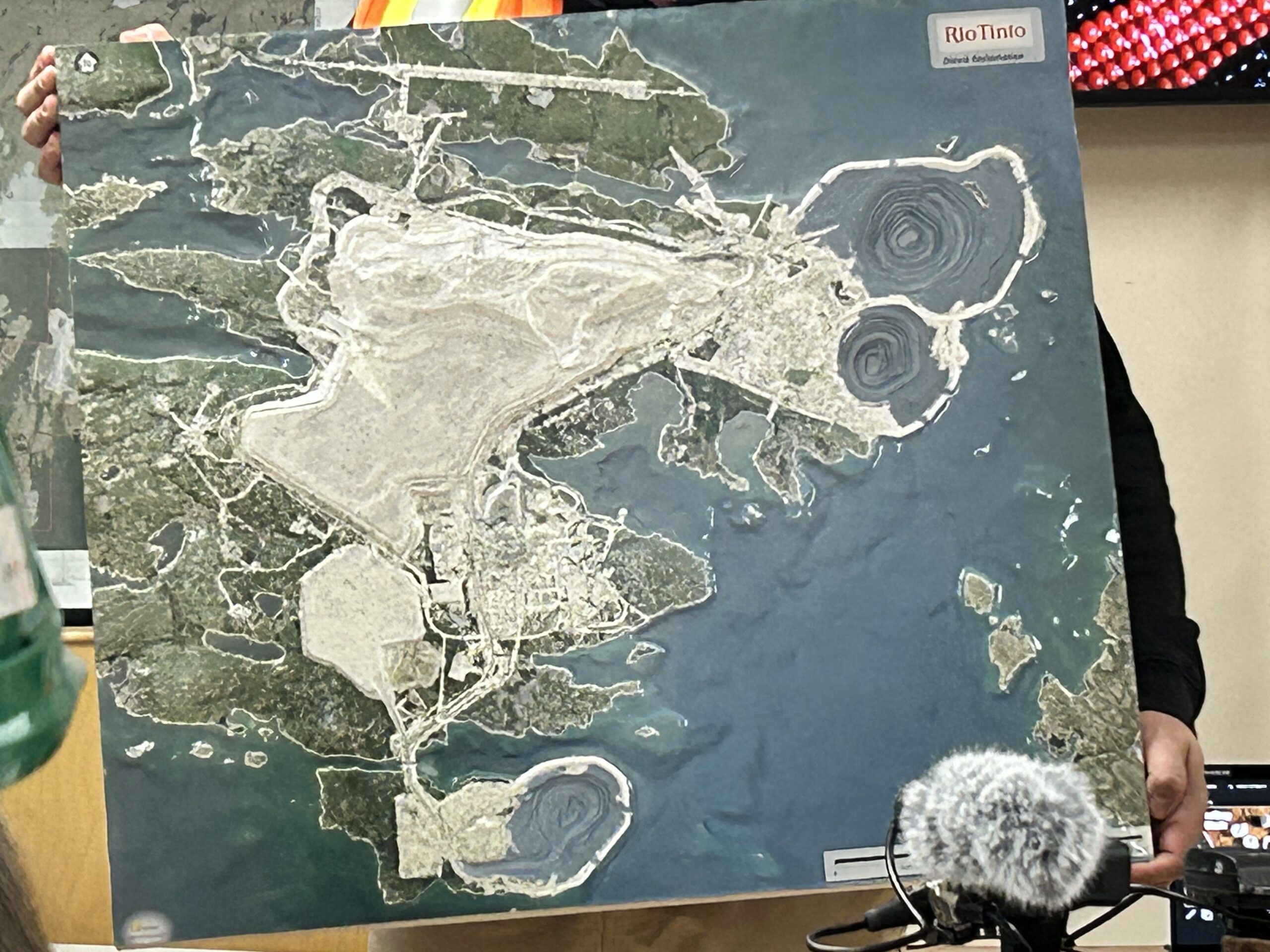
Resting on an island in Lac de Gras around 300 kilometres away from Yellowknife, the Diavik Diamond Mine was first opened for operations in 2003. It currently has around 1,330 employees, and in its more than twenty years of operation, has provided over 144 million carats, which is the equivalent of putting diamonds in over 120 million engagement rings.
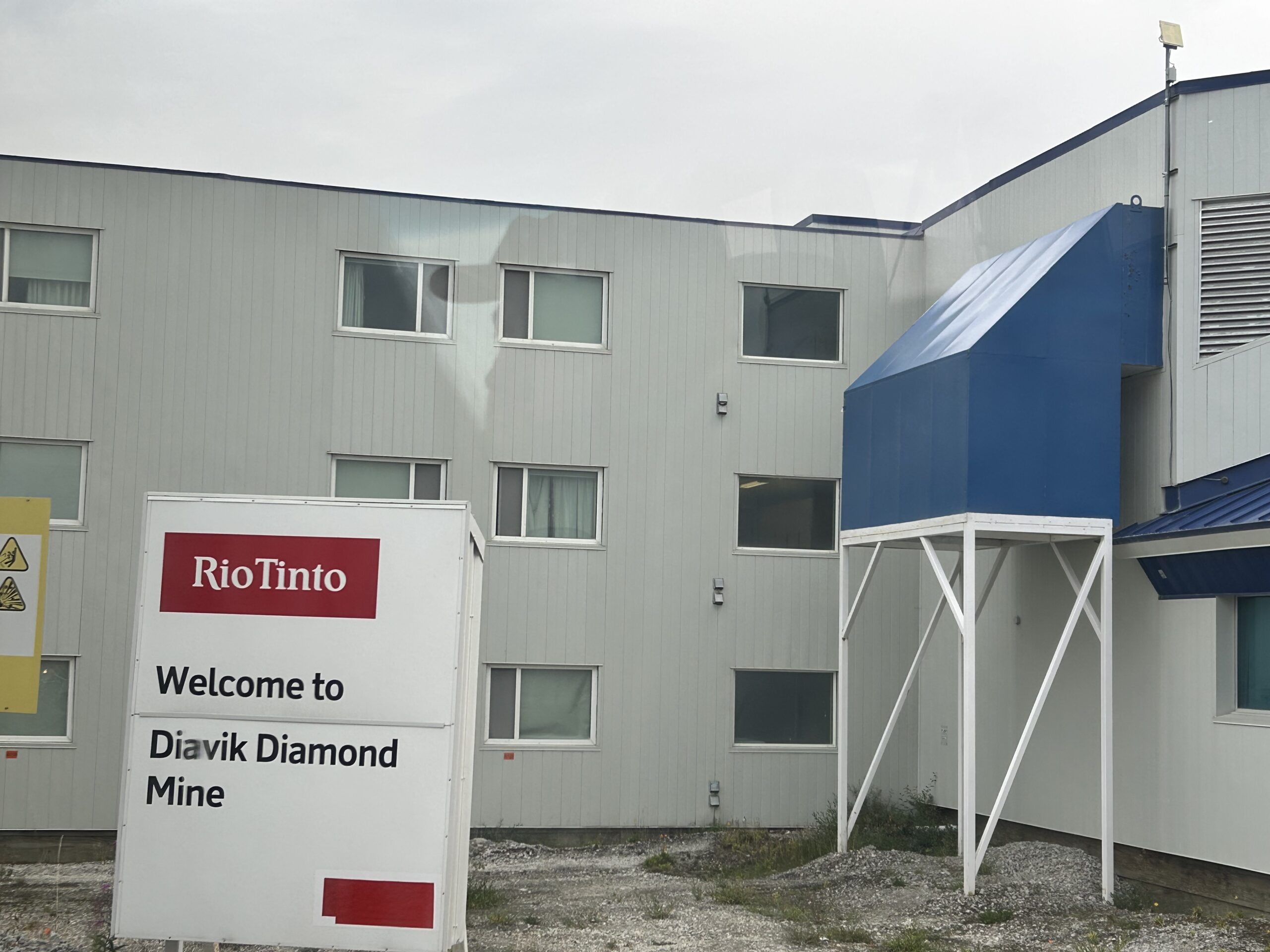
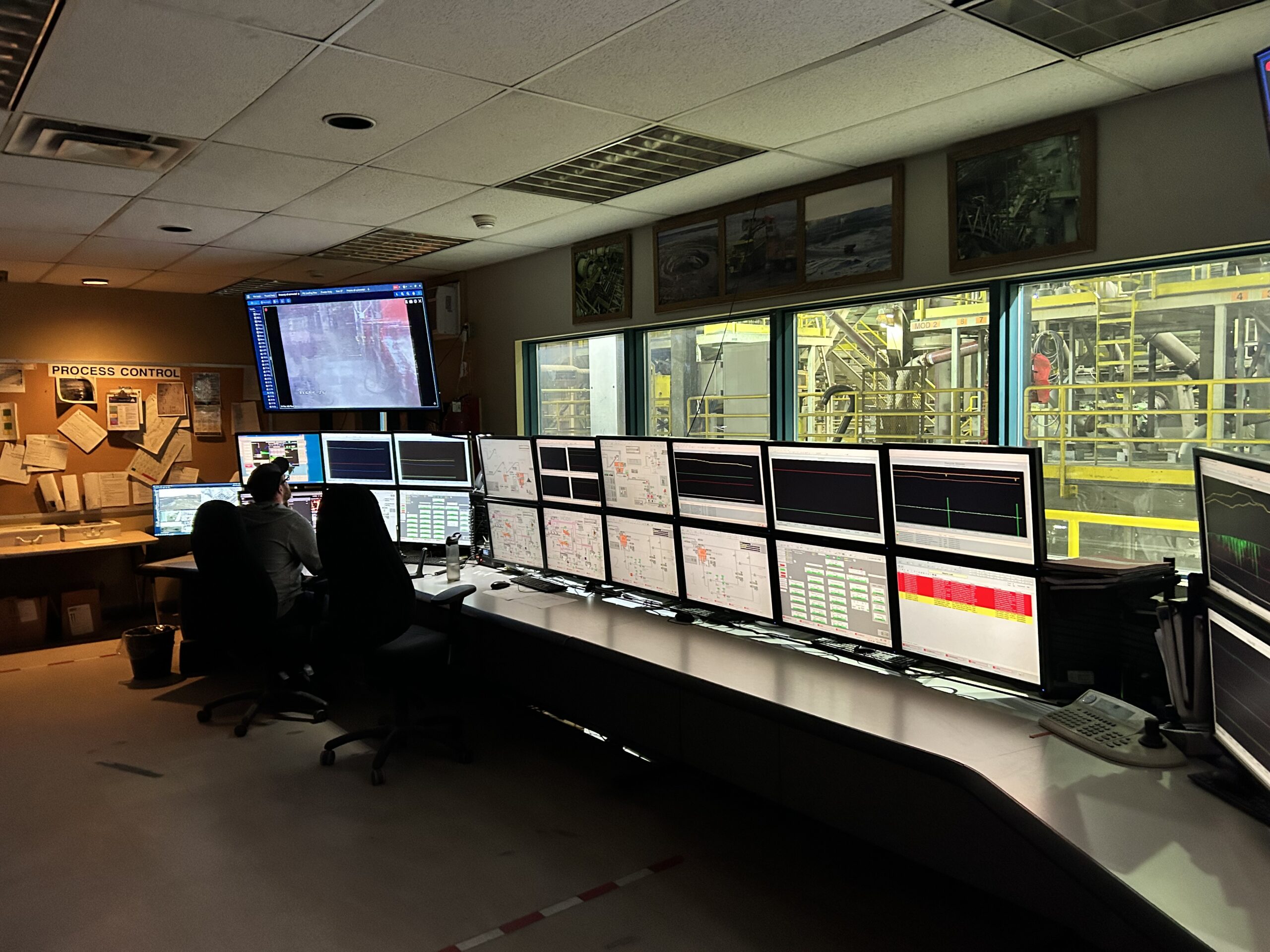
The tour showed much of the mine’s unique nature. Given it’s location, the site exists as a self-contained community with it’s own living and dining areas, and a series of buildings and workshops connected by elevated walkways. The mine also contains its own water treatment facilities, and wind and solar farms for renewable energy.
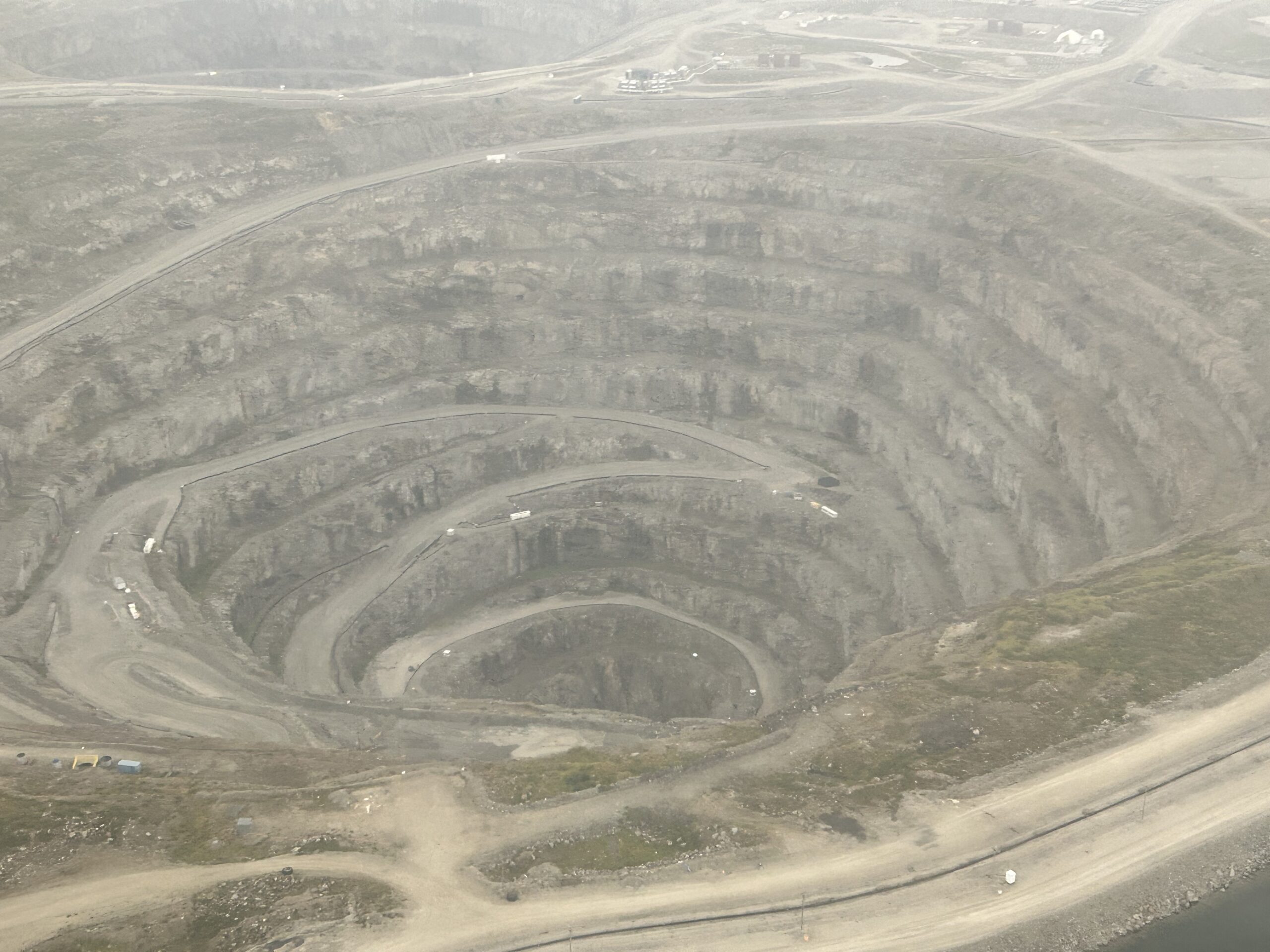
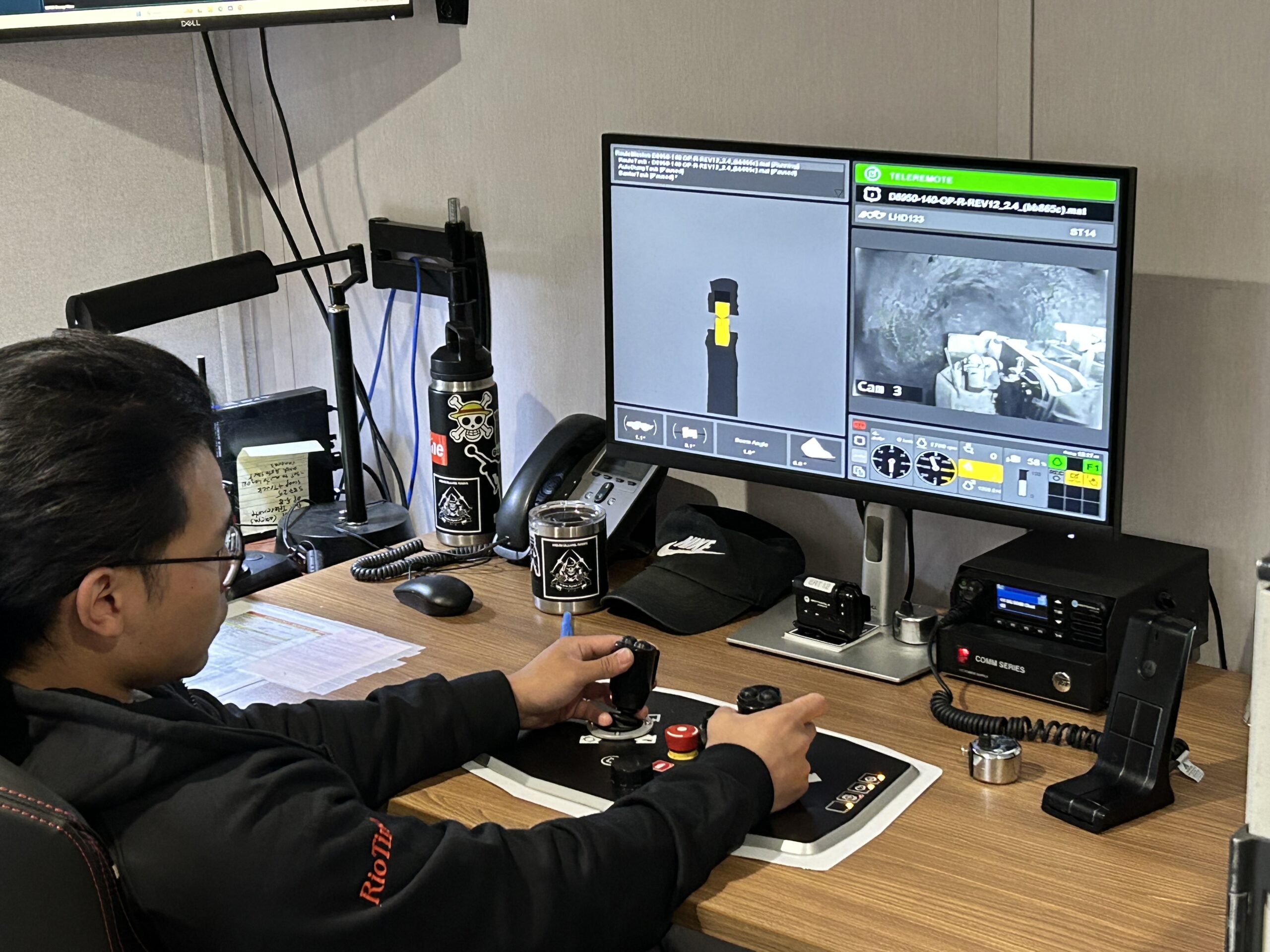
As one would expect, there are also two large, spiraling dig sites where the main action happens. Instead of a pickaxe and helmet lamp, Diavik miners make use of state-of-the-art equipment, such as remotely controlled vehicles that can navigate the dark tunnels and extract piles of loose minerals.
(Photo taken by Connor Pitre/True North FM Staff)
(Photo taken by Connor Pitre/True North FM Staff)
(Photo taken by Connor Pitre/True North FM Staff)
There are many steps that go into delivering a finished diamond to a jewellery store shelf, and it all starts at the mine. However, as part of a strategy that has been in place since the first plunge of a shovel, Diavik is running dry, and is already in the process of shutting down operations.
Matt Breen, the Chief Operating Officer for the mine, went into detail about how the closure process will be conducted.
“Diavik will continue with commercial operations for the next few years. We’ve already started to remove buildings that are unnecessary. There’s ongoing efforts through areas that are being disused and as we go through those areas we’ll start to remediate them. We’ll haul them off and allow natural processes to take place and for all of the plants and vegetation to come back naturally.”
It is expected that the flow of diamonds will end in 2026. Once that happens, the site will be decommissioned and demolished.
“The open pit mining has already ceased, so that’s the first step of operations winding down. In addition to that, the 418 pit has ceased all operations including underground. Part of that closure plan was to put the processed kimberlite into the 418 pit, so instead of increasing our footprint on the surface, we’re using a previously mined area.”
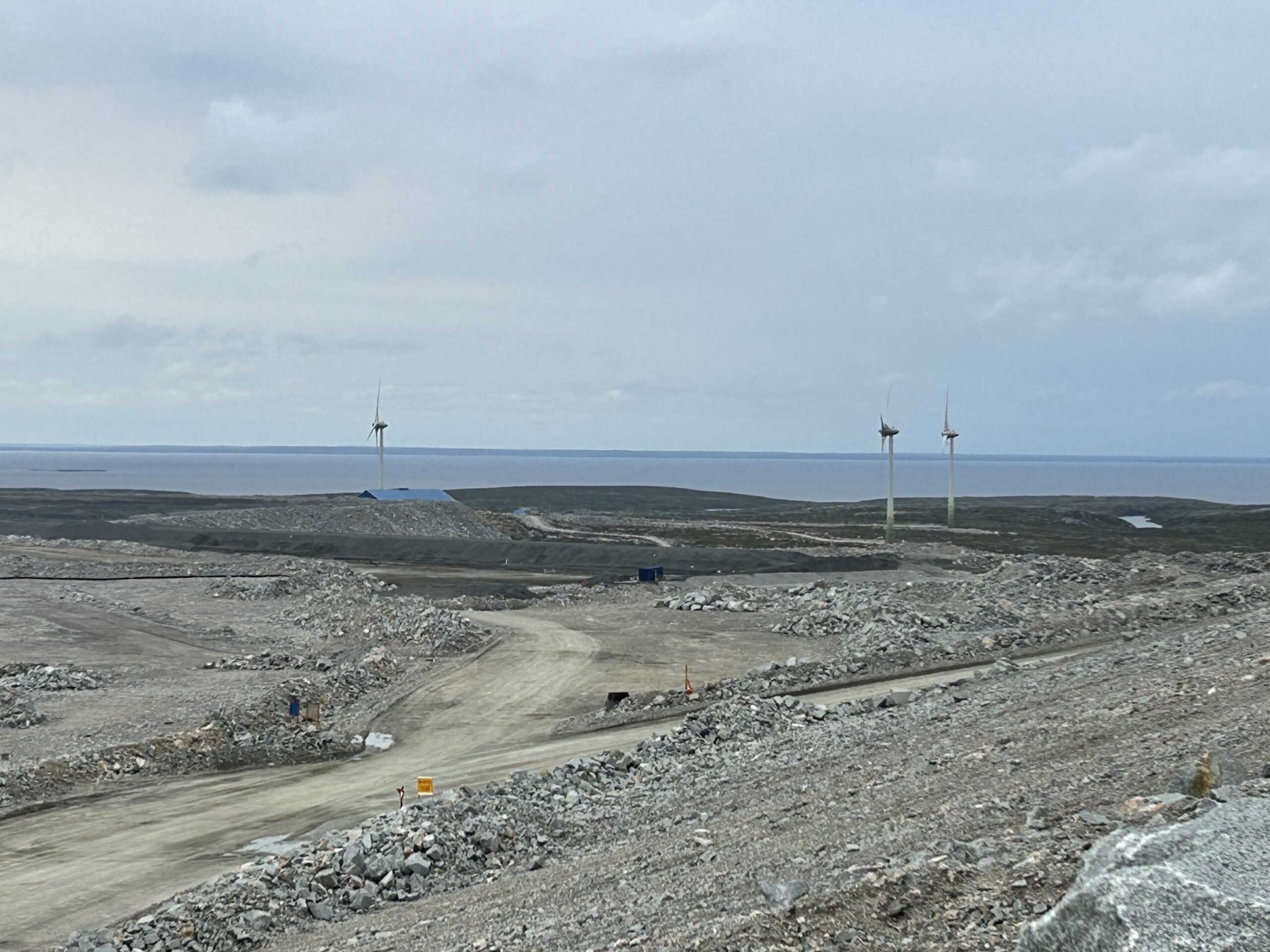
The mine is working alongside several Indigenous partners to make sure that the closure is done both safely and respectfully. Machinery that is no longer needed is already being moved to new homes, discussions on what to do with the over six thousand solar panels are underway, and it is expected that the wind turbines, which are also nearing the end of their natural effective lifespan, will be dismantled.
(Photo taken by Connor Pitre/True North FM Staff)
For the employees of the mine, Rio Tinto is providing the MyPath program, which gives five different options for their futures:
- Redeployment
- Continue Career
- New Career
- Own a Business
- Retirement
The full and complete closure of the mine is expected to be finished by the end of 2029. While there is still much work to be done, 20 years of forethought is so far being executed as fully intended. With a well developed plan, Indigenous participation, environmental considerations, and employee safety nets, the Diavik Diamond Mine is on track to come to a safe and graceful end.
(Photo taken by Connor Pitre/True North FM Staff)
(Photo taken by Connor Pitre/True North FM Staff)