Territorial firefighting bosses say the weather forecast for the next two weeks is unhelpful at best.
Frank Lepine, who helps to coordinate the NWT’s wildfire response, told reporters that warm, windy conditions are on the way.
“Our meteorologist is saying starting Sunday, and for about a two-week period, we’ll get a high-pressure ridge building over the NWT with some high temperatures and windy, warm conditions,” said Lepine on Monday.
“Any fires we’re not actioning, we can expect a lot of growth on them. We’ll see a lot of smoky conditions over the next while.”
Roughly 250 firefighters are at work in the Northwest Territories, including more than 80 from Ontario and a small unit from New Brunswick.
As of Monday, 143 fires were burning in the NWT. New fires are still emerging on a regular basis.
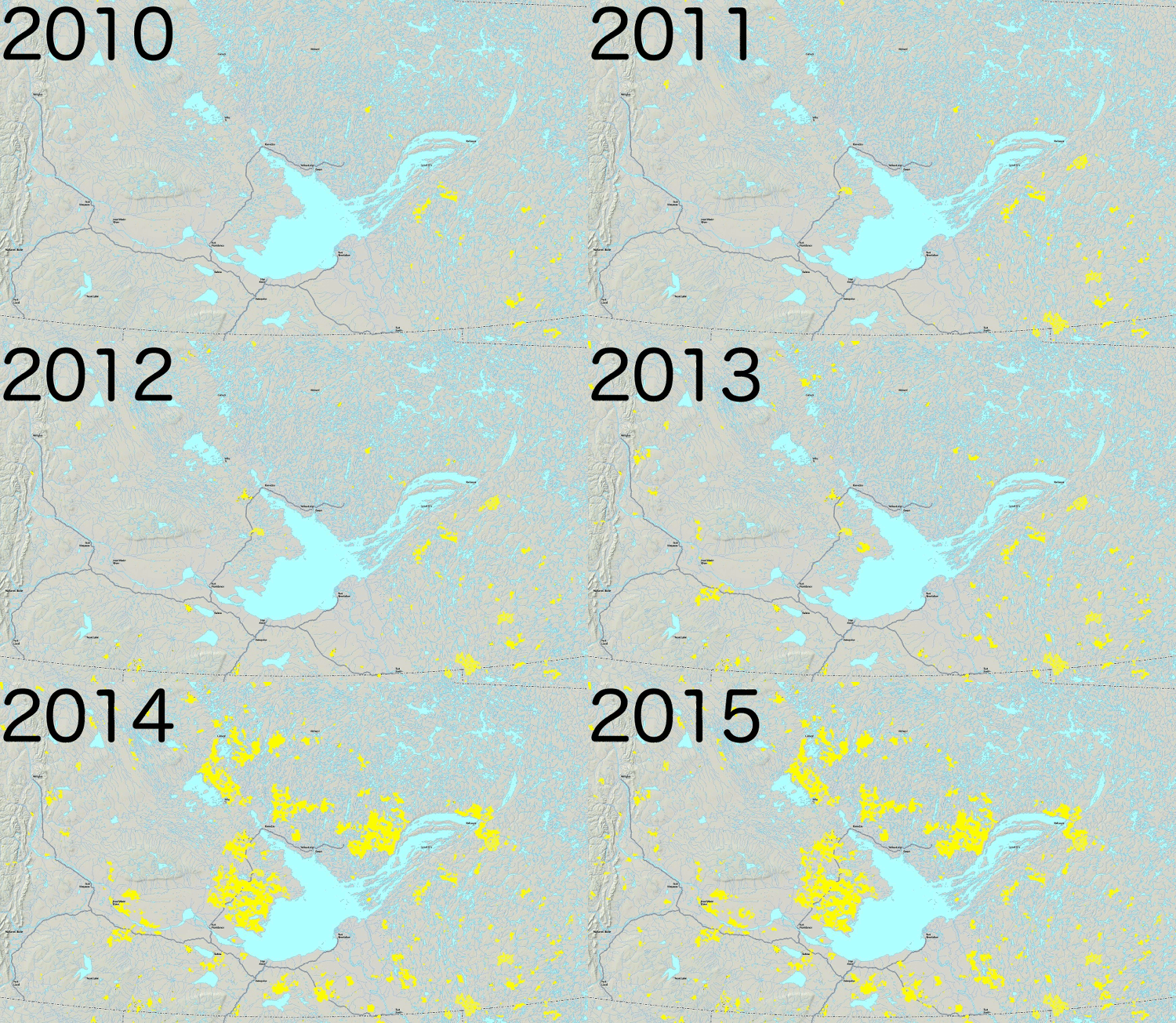
How burn areas in the NWT have developed, 2010-2015
The fire south of Hay River remains a priority. Work has temporarily stopped as the weather conditions “aren’t the best”. When the weather changes, a ‘huge’ group of 60 firefighters will resume creating a back burn to halt the fire should it try to move north toward the town.
Sprinklers have been set up around properties in the corridor south of Hay River. “A lot of effort has gone into protecting the houses and infrastructure along the corridor,” said Lepine.
A fire previously threatening Jean Marie River is now said by Lepine to be “90 percent contained” and no longer a major concern, but fires south of Fort Simpson are expected to keep crews occupied for at least another month.
Lepine described efforts to help Namushka Lodge, east of Yellowknife, with a wildfire moving from Hearne Lake to the lodge’s Harding Lake.
“ENR have built a fire guard around the lodge and we’ve added extra protection with sprinklers and so on. The lodge has also done some work on their fire guard as well,” he said.
Read: Namushka Lodge, east of Yellowknife, threatened by fire
“We took action on this fire two weeks ago and the fire blew up on us [but] we’re taking work to protect the values there. There are only a few values in between Harding and Hearne – the values are north of the fire, when you get into that Reid Lake country. We want to restrict the growth to the north, that’s our intent, and protect the values there.”
With Saskatchewan enduring its largest wildfire evacuation in history, and other provinces similarly affected, Lepine told journalists the nation would look overseas to combat an acute shortage of firefighting personnel.
More information: Visit nwtfire.com for updates
“The cupboard is empty,” said Lepine. “Right now, Canada is on level five, which is the highest level it’s ever been on. I don’t know if we’ve ever experienced this situation like Saskatchewan before.
“Canada is looking at importing resources from Australia and New Zealand right now – Alberta has a number of fire crews from Mexico in, and Canada is also assessing fire crews from South Africa. They are looking internationally for help.”
So far this season, Lepine said no lives and nothing “significant” in terms of property had been lost to the wildfires, with no major injuries to firefighters.
“We’ve been fairly lucky this year, and I’ll knock wood on that,” he concluded.