“In our first four days, we made five dollars.”
Jess Hiebert has come up from Castlegar as one of hundreds of amateur morel mushroom pickers descending on the Northwest Territories.
So far, she’s not quite a mushroom millionaire.
“I was under the impression, rolling in here, that we’d make up to a grand a day,” she says, over coffee in Javaroma. “Pfft. That’s funny.”
Hiebert has come to Yellowknife to spend a few days recovering – and showering – after a week or two roaming the NWT wilderness, in search of mushrooms.
Her story is similar to many others told to Moose FM in recent weeks. She’s having fun and picking up a wilderness education, but she’s certainly not making much by way of an income.
“I’ve made $120 in 10 days,” she admits. “But the longer you go, the more you learn and the more you make.”
And morel morale is good, she contends. Estimating 90 percent of the pickers to be amateurs out for a good time as much as a windfall, Hiebert says disagreements have been rare. The “Pickers’ Ball”, a party among the morel crowd, is apparently a sight to see.
As is the parking lot at Fort Providence’s Big River gas station – which is arguably the mushroom season’s big winner so far.
Dozens of vehicles crowd the lot each night, where a buyer has decided to set up their base for the season. It’s big business for Big River when guaranteed paydays are hard to come by for others.
Head out from the gas station and you’ll find cars strewn by the side of the road as pickers labour for $7 a pound, almost half the price some experts forecast in the frenzied build-up to this mushroom season.
“I like to explain it like Zombieland,” says Hiebert. “You’re driving down the highway and all you see are abandoned cars on the side of the highway and no people are around. ‘Whoa, what’s all this?’ And of course it’s pickers who’ve gone off into the bush to go picking.”
One of the big problems holding back this year’s harvest may be the influx of amateurs.
Whether it’s greed, ignorance or enthusiasm at work, Hiebert says many mushrooms are being picked too soon by ‘babykillers’ – who are subsequently shamed when they turn up at the buyer’s truck with infant morels.
“We had rain last Monday and by this past Friday, the mushrooms were huge – but you only found them if you were in an area where nobody had been before, or else they would already have been harvested,” says Hiebert.
“There’s potential to make more money but it’s kind-of an internal struggle: do I leave it and let it grow, or do I take it because someone’s coming behind me?
“There are people who make their living like this – every summer they go to wherever in Canada there have been big burns, and they make a lot of money. I know some of those people, and they say they are staying away from the NWT because of all the amateurs.”
They’re missing out – if not on mushrooms, then on some of the stranger sights of a wilderness riddled with burn areas.
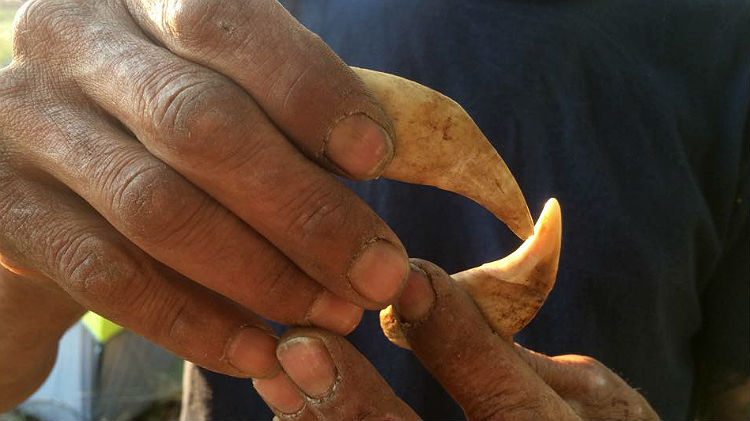
Hiebert may be struggling to find mushrooms, but animal skeletons are everywhere.
“Bear, bison, birds, rabbits, rats,” she says.
“Did these animals get caught in the fire, or was it previous to the fire and now it’s just all the foliage has been burnt away so you can find them?
“I walked around with a spinal cord for a little while.
“You look at me like I’m crazy but when you’re out in the bush, everything’s normal, dude.”