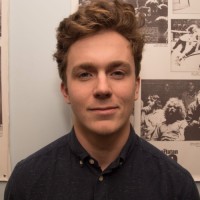
Michael McLeod is running for the Liberal Party in the upcoming federal election. McLeod is the incumbent, first taking his seat as an MP in 2015.
MyTrueNorthNow.com interviewed all the candidates, asking about their plans for the economy, Covid recovery, climate change and reconciliation.
Voting happens on September 20.
Have you always been involved in politics? Was there something specific in mind that made you kind of step up and want to take charge?
Well, what specifically came into my mind when I actually stepped up for the Green Party is that we, especially in the north, we experience a really strong change in the seasons and the climate here and we are definitely under-represented in the Parliament in the decision making of the federal government about climate change. As a person, I’m always going to be very inclined to do good for the environment, for my lifestyle, my thinking and my purchasing a product. It is a personal interest for me not only that the climate policy for the North changes or fold over the world and for Canada, but also that is social justice, especially concerning beaches, housing and homeless situations.
So what environmental policies exactly are you campaigning on?
We’re campaigning not only on the environmental but one major part of my campaign in the environmental aspects is to introduce more feasible alternative energy sources up here in the north, but not only introducing the technology protocols, to have an education hotspot, for example, the Aurora College, here in Yellowknife to educate these specialists and to facilitate actual production of an alternative energy source technology up here in Yellowknife or somewhere else in the north.
Do you have any plans when it comes to reconciliation?
Reconciliation, this is all pretty much one big part because you can’t really make change if not all parties or people, humans in an area are involved together. We have to open a brand new communication channel where we actually do more listening or working for other underrepresented people, especially our Indigenous population here to go forward.
So when it comes to the economy and especially northern housing, how are you going to integrate these issues into your platform?
The northern housing situation, I see twofold. First, first of all, the production of building materials here is lacking, it should be implemented here. We actually have production facilities for building materials and especially for the rental market. Here, we have to look at the diversification of the landlord landscape in the housing market. We have at least one or two parties here in Yellowknife who will control most of the apartment housing market. The government actually should look at the monopolization that is occurring up here. And another big part, which can clear and make the whole situation better is actually would be a guaranteed minimum income for all Canadians.
When it comes to the Green New Deal, how is it that you’re going to try to implement that up in the north?
The Green New Deal, the interpretation is that first of all, like I said, for everybody’s wellbeing is the implementation of a more clear communication process about every field, and look at all the possibilities how we can better the life situation in environmental views, social views, housing, fuels, education, health care, etc. The most important thing for me is that the people here in the north, that the Indigenous nations get more empowered in their own decision, making the northerns get more empowered in their decision making, as we are up here, I believe,. have the best field of vision to make our life better. Technology to be used up here and implemented are wind and solar, and through a thermal energy source.
Obviously, the North is very different from say, the rest of Canada. How are you going to go about making sure that kind of everything you implement is specific in helping the north?
Like I said, the possibility for the regional government and especially also for the Indigenous governments to make their own decisions, and that is the part of budget that has to be created, that those decisions can be implemented. One of the biggest issues which we have in the north, which has been, is the health care problem. We have the non-existing consistency of health care provision, as we have too many transitioning health care professionals, not only in physical health, but also in mental health. The North everything has been like this, everything north of 60 has to be treated with exactly the same importance as at the beginning of Canada, the unification of the southern provinces with infrastructure, finances, as well as employment opportunities for residents.
Awesome, well, thank you very much for this interview.
I just would like to add one more thing. I really encourage all voters to go to the polls this year, especially our younger voters who are still in high school, college and university will not have a chance to actually vote on campus — use all the other voting possibilities as the democratic process depends on everybody’s vote.