



Hay River set for shipping boom with Nechalacho

Hay River is set to become a distribution hub for the Nechalacho Rare Earth Resources Project, according to executives from Cheetah Resources.

Representatives from the mining company, including vice-president David Connelly, were at the Hay River town council meeting, laying out their plans for using Hay River’s port as one of the key points for distributing its ore down south.

The ore is being crushed with the mine’s new sorter before the company’s new Saskatchewan sorting facility is finished construction.

Ore will be shipped down from the mine via rail and leave Hay River via barge to the plant in Saskatchewan.

Vice President of Strategy and Corporate Affairs David Connelly said in an email the mine’s operations would “significantly increase the marine, truck and rail freight through the Port of Hay River.”

“For us to this would be nice if this is a distribution hub once there’s a bit more activity up here,” said Matthew Edler, General Manager of Cheetah Resources.

“Barge route should be the most efficient way of getting — it is by far the most efficient way: it has the lowest carbon footprint, cheapest,” he added.
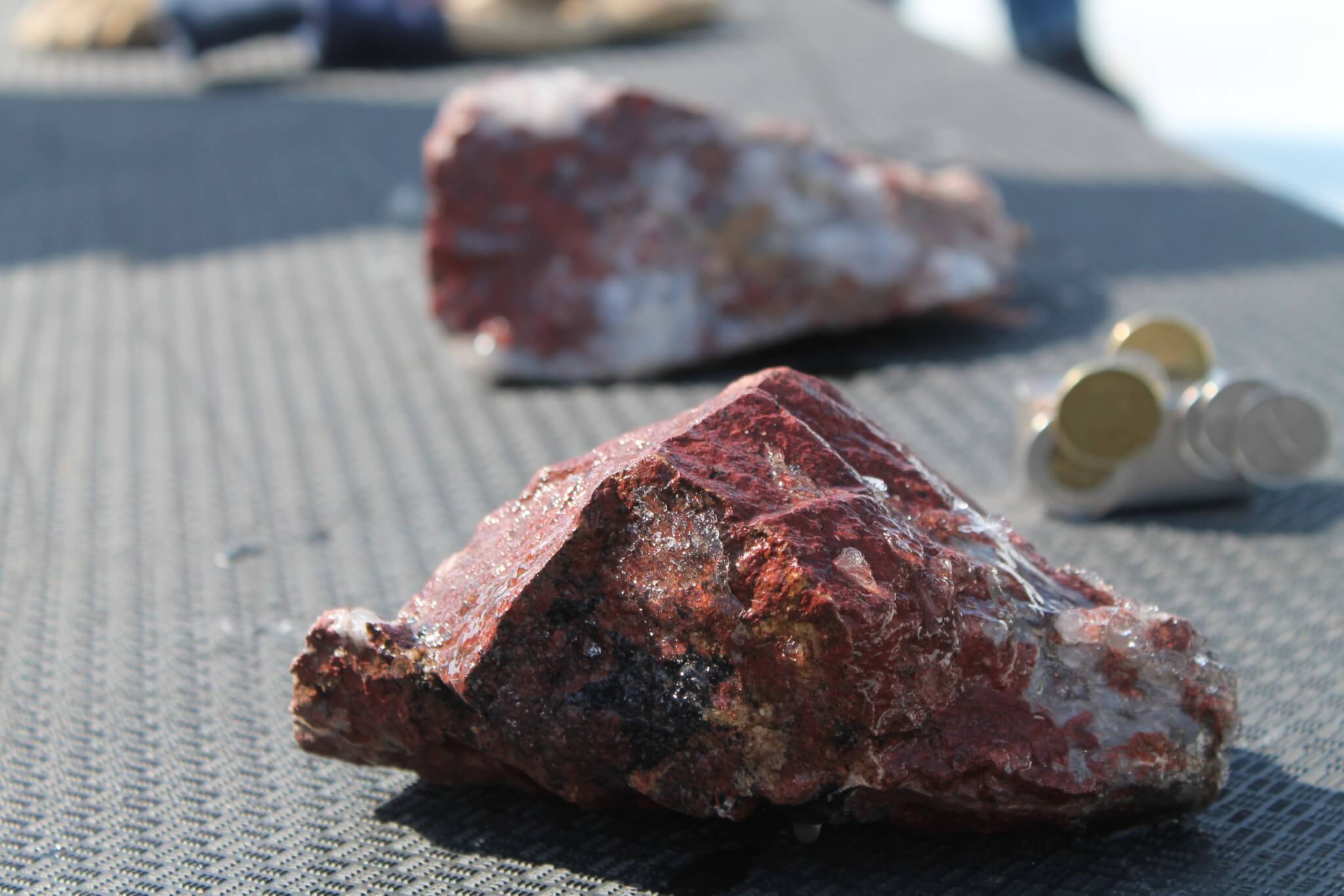
Basnaesite, the product produced at Nechalacho, is a big grouping of a bunch of rare earth metals. (Photo by MyTrueNorthNow.com.)

Ore will also be stored in Hay River in between shipments, rather than being shipped to the sorting plant in Saskatoon.

“Spills, I don’t want because that’s worth money to me,” Edler said. “There’s always a chance of accidents happening and we’ve got basically, basically the process if there is a spill is to collect it and get it back — so it’s a matter of a sweep up and store cleanup of it. But in itself, it’s not hazardous. It’s not toxic.”

Edler added the ore would look like bags of cement.

Hay River Mayor Kandis Jameson said she looked forward to working with the company in the future.


Bailey Moreton
Bailey Moreton
Bailey is new to the north, arriving from Ottawa where he studied journalism at Carleton University. He has worked for newspapers in Halifax, Windsor, and Ottawa. He came to the north hoping to see polar bears. He will settle for a bison. If you have a tip, send it to 905 252-9781, or [email protected].

Continue Reading

You may also like


cjcd Now playing play

- Advertisement -

Related Articles

- Advertisement -

Latest News

Aklavik Access Road closes April 30, one day earlier than anticipated

The N.W.T. Department of Infrastructure has closed the Aklavik Access Road as the winter road season comes to a close. On Wednesday, the department issued a 72-hour closure caution but warned that the road “may close sooner with little to no notice.”

April water levels, temps and precipitation below average in much of N.W.T.

Data collected by scientists with the territory’s Environment and Climate Change department shows water levels remain low in most rivers and lakes across the territory. Great Slave Lake's level is lower than below average levels last year. With snow packs above average in the south, water levels could rise as temperatures rise.

GNWT announces investment of $30 million into inclusive schooling

The Government of the Northwest Territories is investing over $30 million towards stabilizing inclusive schooling in the territory following a 2024-2026 review.

32nd N.W.T. school sees enhanced lead levels in water

With another school showing high levels of lead in drinking water, testing so far confirms that 32 of 40 schools in N.W.T. have elevated levels of lead, that's 80 per cent. School water testing results were announced for two more schools in the territory with one school in Délı̨nę showing elevated levels of lead.

Flood and wildfire preparedness activities begin across N.W.T.

Flood and wildfire preparedness planning activities are beginning across the territory. Hay River’s Local Emergency Management Organization is bringing emergency preparedness information resources, including a preparedness brochure mailed out this week to households. Jason Currie, NWT’s manager of fire operations says with snow pack water equivalencies being “well above average” this season is helping delay wildfire season.


