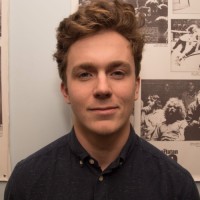
Kelvin Kotchilea, who works with the GNWT as a finance officer, is one of four candidates running in the Monfwi MLA byelection. The seat is vacant after former MLA Jackson Lafferty stepped back from the position he held for more than 15 years.
100.1 True North FM has reached out to all the candidates for an interview.
Voting happens on July 27.
BM: Why did you decide to run?
KK: I was a renewable resource officer in my community in Behchoko, and it was becoming too culturally sensitive. And at that point, I decided to take a step back and go back to post secondary in the Business Administration, accounting program. And during the program, I learned about leadership and financial accounting and then the opportunity was there and I had a lot of support from people to be a candidate for the MLA position.
BM: What were people saying? Did you go to them and say, ‘Oh, I’d like to run?’ Or did they come to you and say, ‘Oh, I think you’d be good at this’?
KK: So someone asked me a question. ‘Real quick, what are you currently doing?’ And my answer was, ‘Right now, I graduated from the business administration diploma program. So I’m working as a finance officer for Education, Culture, and Employment.’ And I kind of mentioned that I’m 16 courses shy of a degree as an accounting major. But that being said, in five years, I would like to see myself in senior management and then progress to a chartered professional accountant. And then at that point, the person said, ‘That’s what we need in a leader that has goals and visions, that can mean something to work towards, like a plan and that’s what we would like in a MLA and you should strongly consider it.’ And then it just floated around from there. I think after all, I finally made that decision to work for my community for my region, and give back.
BM: What makes you qualified to be elected to the position of MLA?
KK: I think, what I consider that people don’t look closely at — MLA sit on various committees, and they table a lot of financial discipline or financial management works. Yeah. And then within the allocated funds for operation and maintenance, which is the biggest portion of your budgeting for all departments, for all their programs and services, there’s a small portion that for infrastructure and capital procurement and by having a strong financial background or even a clear understanding, you can then advocate for more for your region, based on working with the constituents. What, what do they like to see your term? So having that communication skill, both financially and then being able to communicate it back for my constituency.
BM: You mentioned advocating for more infrastructure spending for your community. What are some of the things if you were elected, you’d hope to work towards? What’s your platform?
KK: So, now that I have been going to the communities, I’m getting a better sense of key areas. So one of the biggest ones are housing, wellness and treatment — taking care of the situation, and employment. During my time with business administration, I learned about this theory called Laslow’s Hierarchy of Needs and I can get a clear sense that people need their basic needs, and psychological needs met to reach the summit — that’s the shelter work, clothing, food, then the psychological needs with mental health and wellness. So there’s the big, not that there’s a big push for it, but I can see there’s, there’s a need for it. That’s something when I started going to all four communities, I’ll collect that data and that’s going to give me an agenda of what I would like to try to accomplish in the two years.
KK: Jackson Lafferty had been as MLA for since 2005, he had a lot of experience in the position, I was wondering what experience you have in advocacy and how will you go about advocating for these things that you think your region needs?
KK: Right now, the difference between being a regular MLA and then having a portfolio or being the Speaker is that when you become an MLA or a speaker, you tend to give up a bit of the advocating that maybe for your constituents, because you have to be neutral, you have to cater to all residents throughout the Northwest Territories. So my goal is just to be a regular MLA, so that I can touch on various key areas that I like to address and you need to realize that, at that level of politics, there’s a lot of give and take, you have to work with other MLA’s to get what you kind of want for your community and they’re going to want something in return. So it’s just to see, where does everybody kind of sit? And what is everybody’s agenda at the end of their term? And at the end of the day, for myself, it’s just to make a big improvement in the current situation that all four communities in my region are at.
BM: I was reading in another interview, you mentioned you had concerns about and especially, you mentioned, in your own experience, there were a lack of opportunities for young people. So how would you go about changing that?
KK: Right now, I could use my situation as an example. But when you look at various government departments, there are some individuals that have 10 plus years but may be in the same position. If we were given a bit more management positions, some individuals would have the ability to move up and then that creates a vacancy, and it creates an opportunity for someone to gain experience in one of those entry level positions. Right now [Municipal and Community Affairs], and Industry, Tourism and Investment] each have an area superintendent, which gives me an idea that all departments should have a superintendent, with the Tłı̨chǫ being the largest indigenous communities in the north. And then having that self-government agreement in place. We want the people to have more control over programs and services that can better cater to their people’s needs, versus when the territory government kind of spits it out and has to work for all residents. So this gives more control and more ability to meet it.
BM: The Tłı̨chǫ Highway is set to be completed later this year, what will that mean for the communities in the area, and what are the infrastructure projects that are needed next?
KK: So I mentioned before Hay River as an example, their initiative to really say that they acted on something they’re able to sell to Northerners, and maybe the rest of Canada. So there’s definitely something that we can do, like maybe a fish processing plant, once that highway is put in place. Other things that we’ll probably see is a growth in infrastructure, tourism, so you’ll get that money multiplier effect when people do go into communities and spend money in those communities, with local vendors, and people that even sell arts and crafts. So this is definitely something we need to get together on, seeing what’s something we’re good at, that we can offer up. Once we’re in consensus, it’s time to act upon them because right now, a lot of times, people either focus on today and in the past. For myself, I like to focus on today and beyond, because you can’t really do anything with incomplete work. So it’s always what can we do? So I always look forward to future planning and setting goals. So I guess with the highway being put in place, it’s a good opportunity to rethink what we can do in the next few years and the grand opening and go back and work with this new direction.
BM: In that mindset, looking forward, if you are to win and you complete your first term, what do you hope to have achieved and brought to the people in their monthly region?
KK: The three key areas for myself is to look at the housing needs and how to create independence to homeownership and put a real emphasis on that. When we have people in the community that are working, we should promote independence of homeownership, then look at people that maybe were in rental units since the 90s and 80s and look at how they weren’t in a rental to ownership program and how can we look at the amount of years that they’ve been turning into a rental program and honor an X amount of years that they pay; those who have maybe over 10 to 20 years periods in employment, then surely we can push for those management positions. There’s no reason we can’t do it, especially with Covid, it definitely taught us — jobs can be done remotely. No more excuses, why can’t they give those to the communities when they’re starting to be more people with the level of qualification needed. We need to create more opportunities there. And with treatment, there’s a big outcry for it right now. And it’s no more, no longer normal to see people struggling and doing the same thing each and every day. We can do something about it. It’s a community effort. It’s not one person. So there has to be a community place to be community involvement on how to deal with it.
BM: Anything to add?
KK: Good luck to the other candidates, it is tough but they’re all coping with it well, at the end of all this, I hope we can always work together and use each other’s kind of goals, where I can be part of the general agenda at the end of it because we all have good ideas. We all have our own set of skills and don’t let anybody tell you otherwise.