Madelaine wanted to get on the bus.
“I recall the day when the students were leaving for school – my sister and brother got on the bus, so I got on,” she says. “I wanted to go for a bus ride, too.
“I wasn’t yanked out by some foreign stranger who said, ‘You’re coming to school.’ I didn’t fight back.”
Madelaine Chocolate Pasquayak was five years old, she says, when that bus came. Madelaine was so excited to get on it that, eventually, her parents relented.
She boarded the bus, and so began a decade at residential school in Fort Smith.
“My sister would grab me by the arm and drag me off the bus, and I’d jump back on because I wanted so much to go,” she remembers.
“The priest asked how old I was, and my dad said I had just turned five. That was old enough. I got on the bus, looked at my sister, and I was like: ‘Try to kick me off now.’
“When we were on the bus, I got tired and bored of the ride. I turned to my sister and asked when we were going home. She said, ‘Not for a long time.’ And suddenly I understood and started to cry.
“I was gone for nine months out of the year, every year after that. And I went back every year for 10 years.”
Now, Madelaine is a teaching assistant at Yellowknife’s Mildred Hall School.
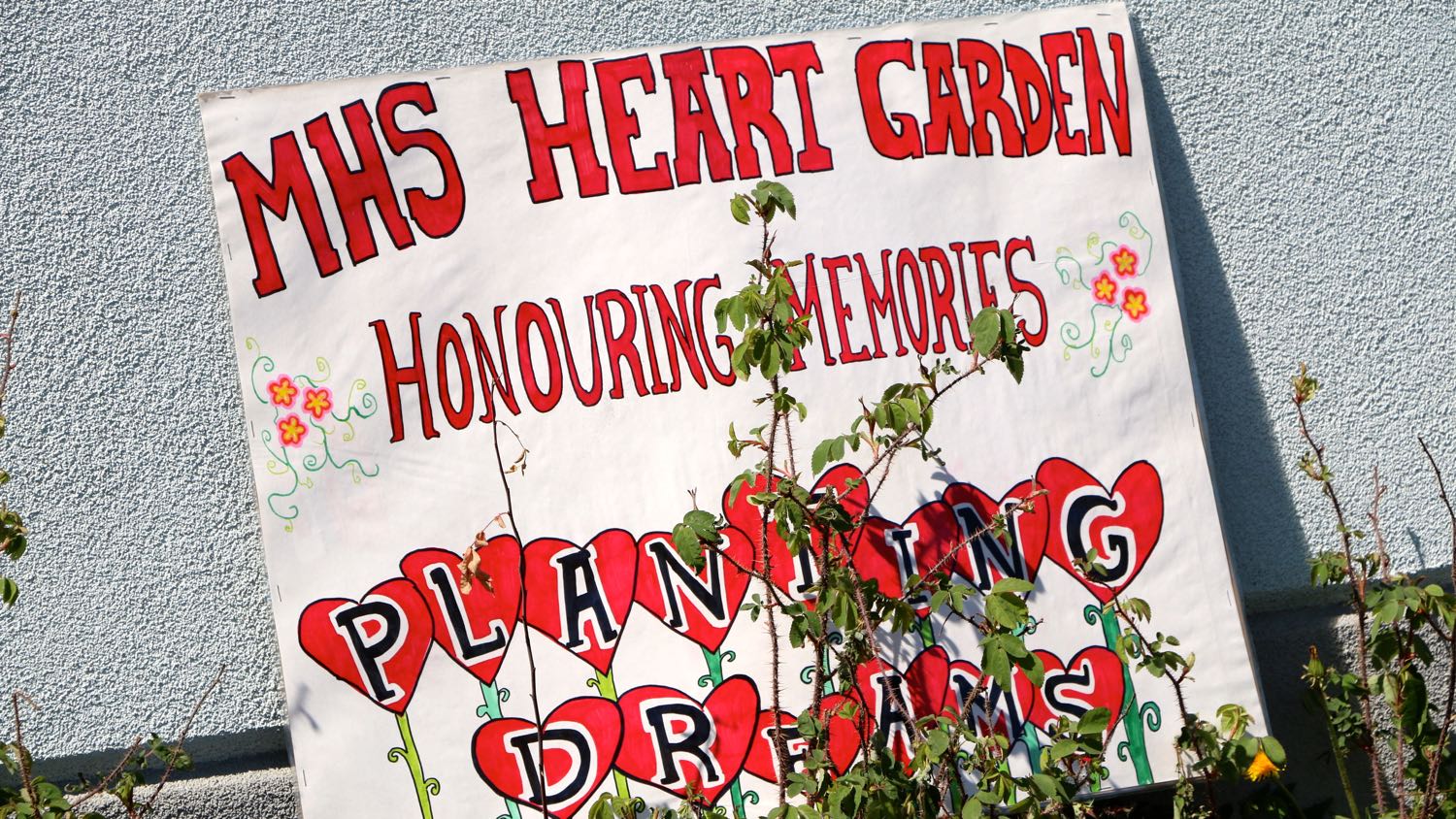
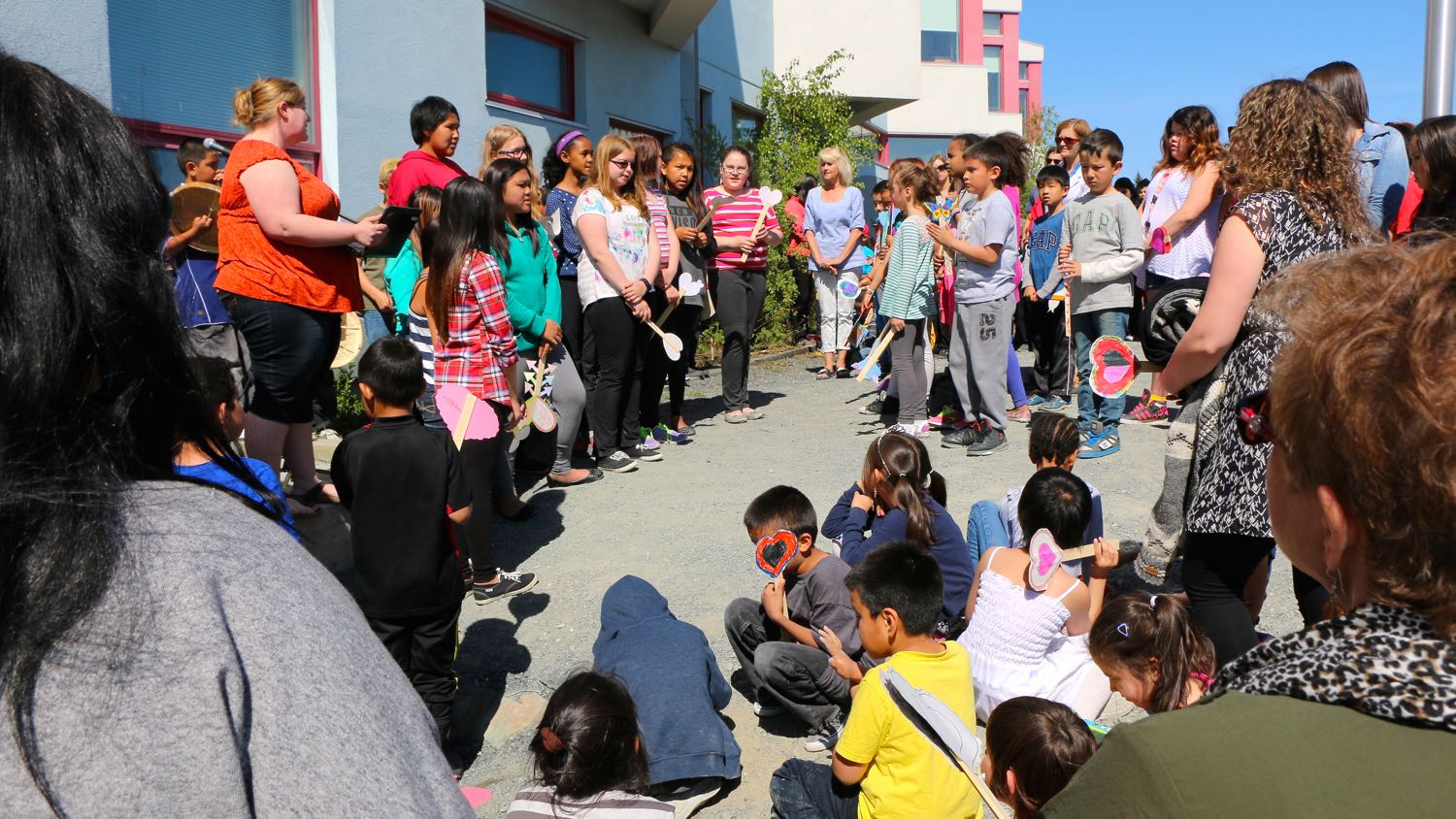
On Wednesday, June 3, the school planted a “heart garden” to honour those who went to Canada’s residential schools but never came back.
At Mildred Hall there are children with family members who died in residential schools, taught by teachers who themselves survived the system.
With the Truth and Reconciliation Commission’s findings in the headlines, this week has given the school an opportunity to talk about that history; to figure out just what residential schools mean to the kids, and what the kids’ perspective means to the teachers.
Earlier in the day, Madelaine led the children in prayer as the heart garden ceremony began.
“Lord God, we remember all the young girls and young boys who have suffered from tuberculosis, from smallpox, measles, whatever sickness they had. So many have died,” she said.
“All these young students who had a future before them, but their lives were taken from them.
“I am a survivor, Lord God, and I know the pain, Lord God, of being taken away from the family. I know how many of us have cried in the night, Lord. I heard them cry, Lord. Who knows how many cries you heard?”
Lucia Nakehk’o is on stage.
“My grandparents went to residential school, and all my aunties and uncles went,” says the 11-year-old, who has worked hard to understand the history behind what happened to her family and her people.
For her NWT Heritage Fair project, she and her friend Shayla Huynh focused on Walking With Our Sisters. Today, she is addressing schoolmates about her personal connection to the residential school system.
“My uncle Michael went when he was about my age and he never came home from residential school,” Lucia tells Moose FM, later. “He got sick, and the nuns and nurses there didn’t really take care of him.
“My grandpa didn’t really like talking about residential school – neither did any of my aunties or uncles – but in the last couple of years they’ve started to talk about it.
“I think it’s just horrible, what happened to them. And I don’t understand why they did it.”
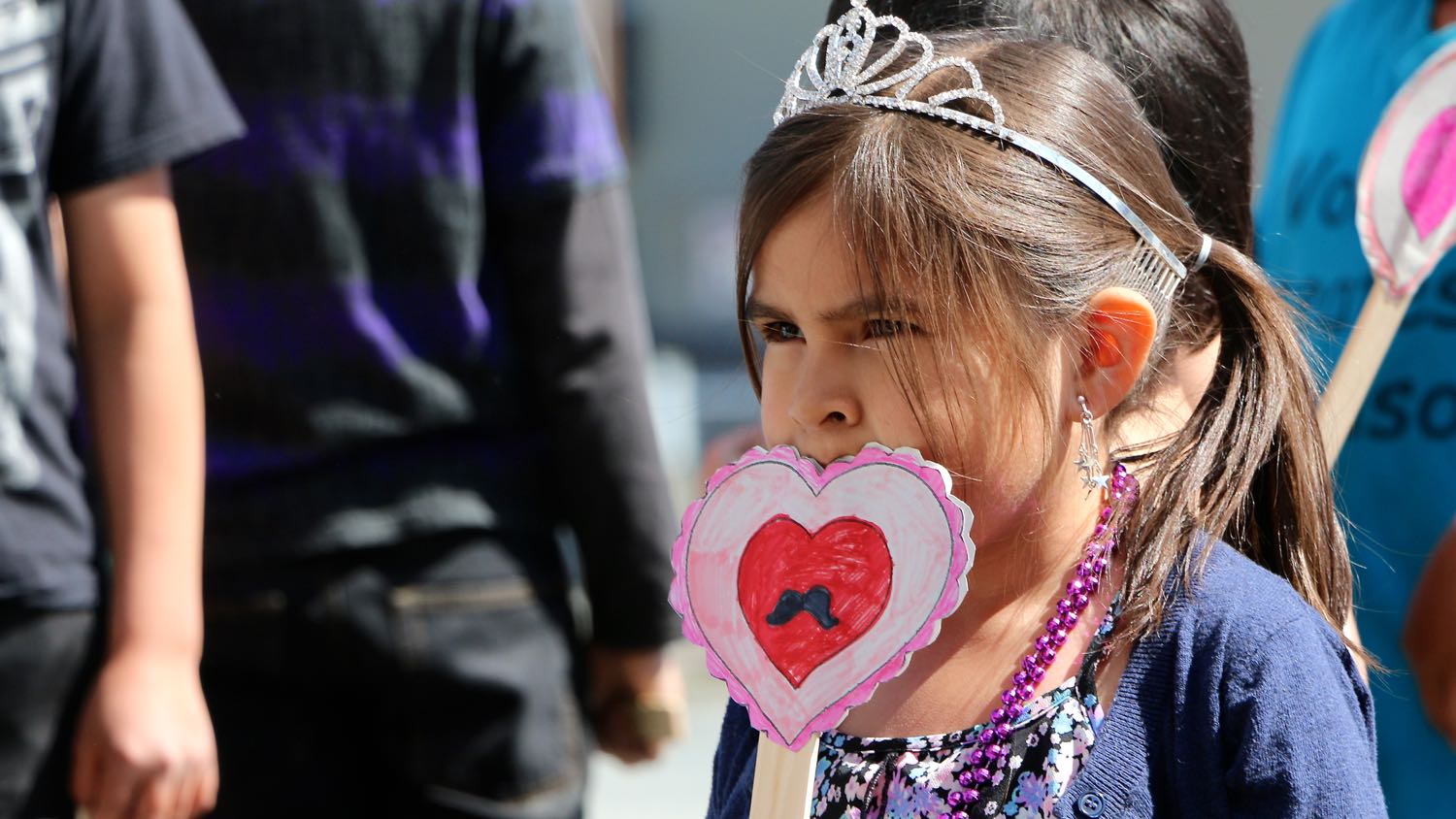
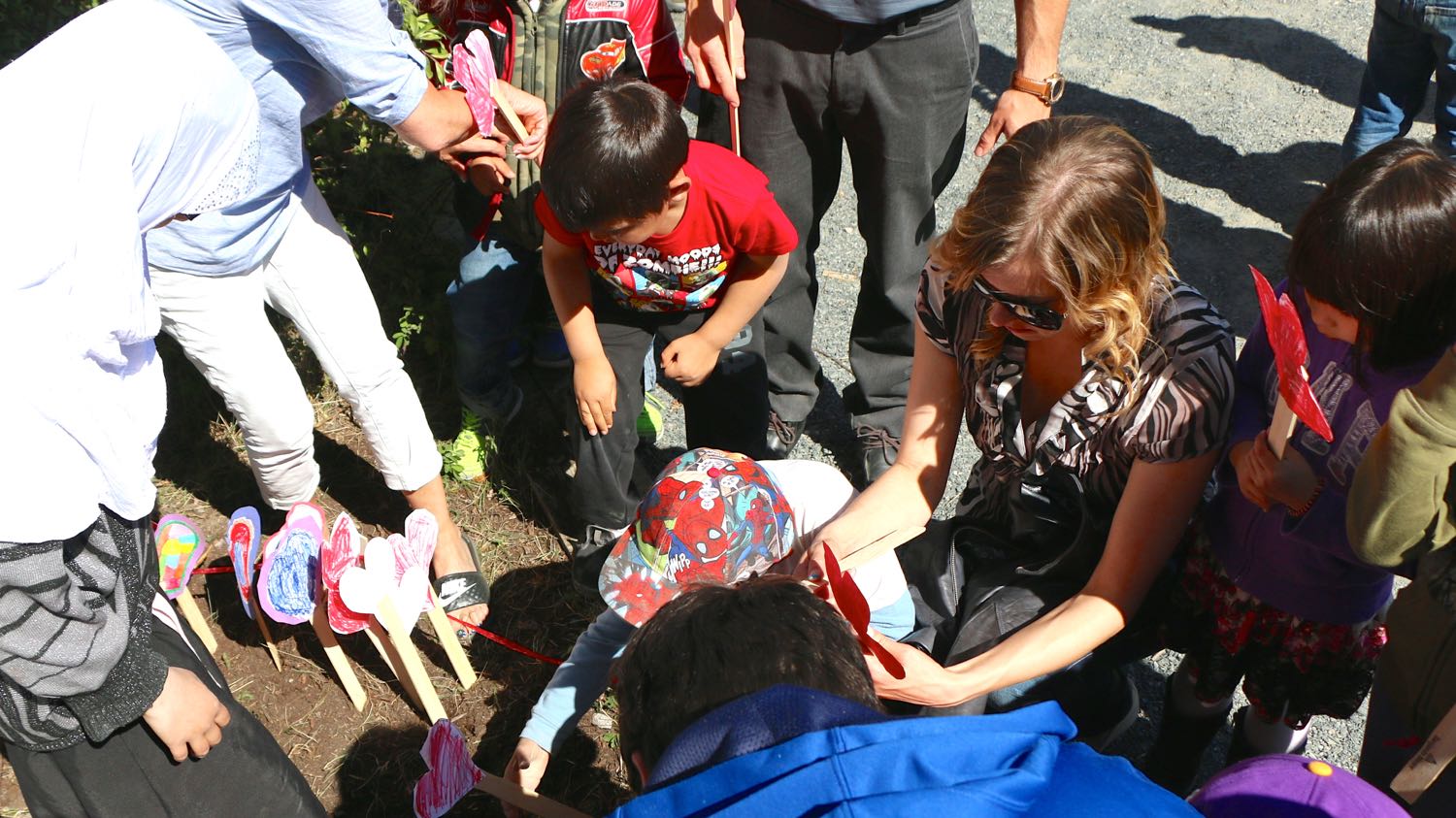
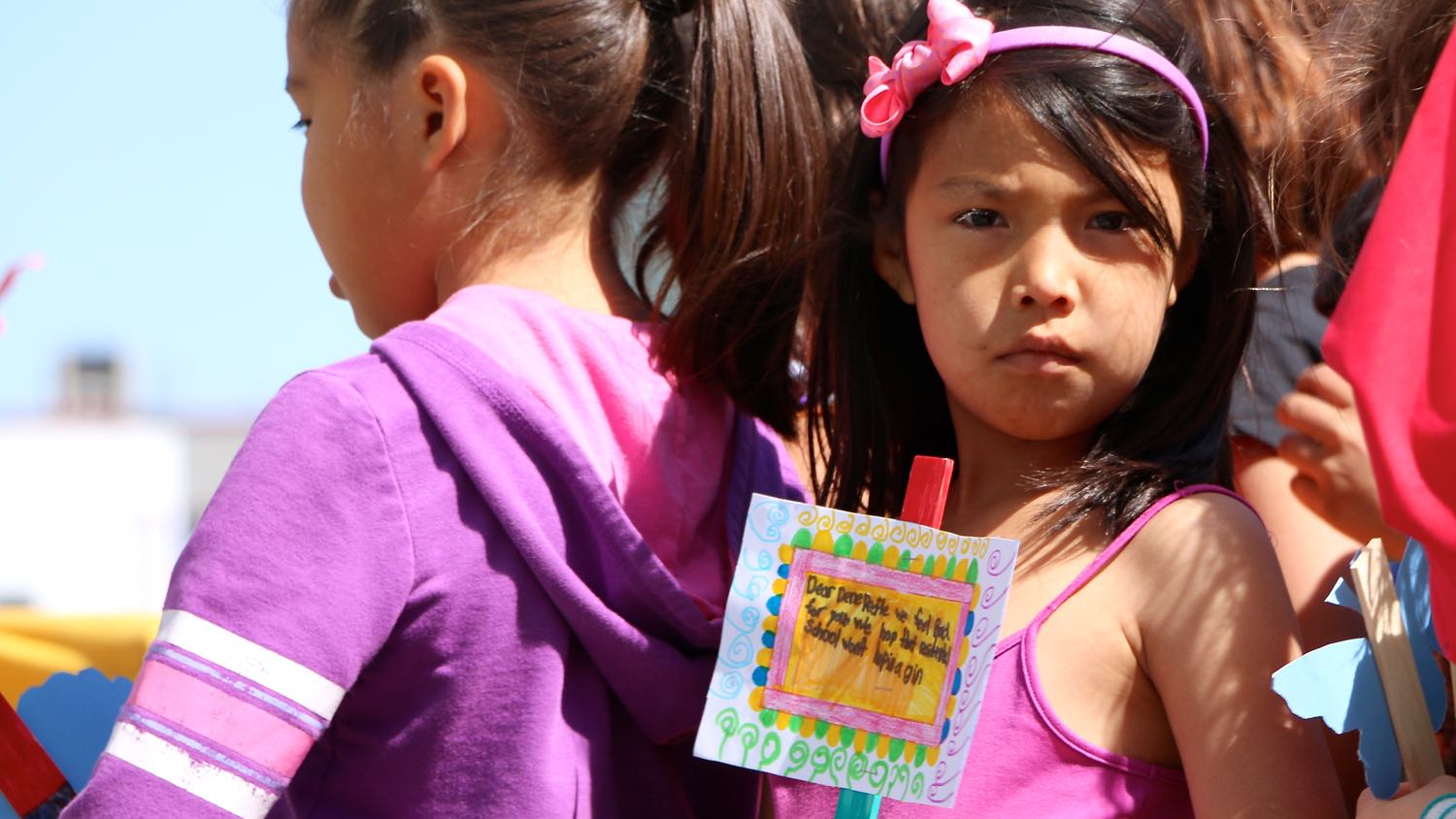
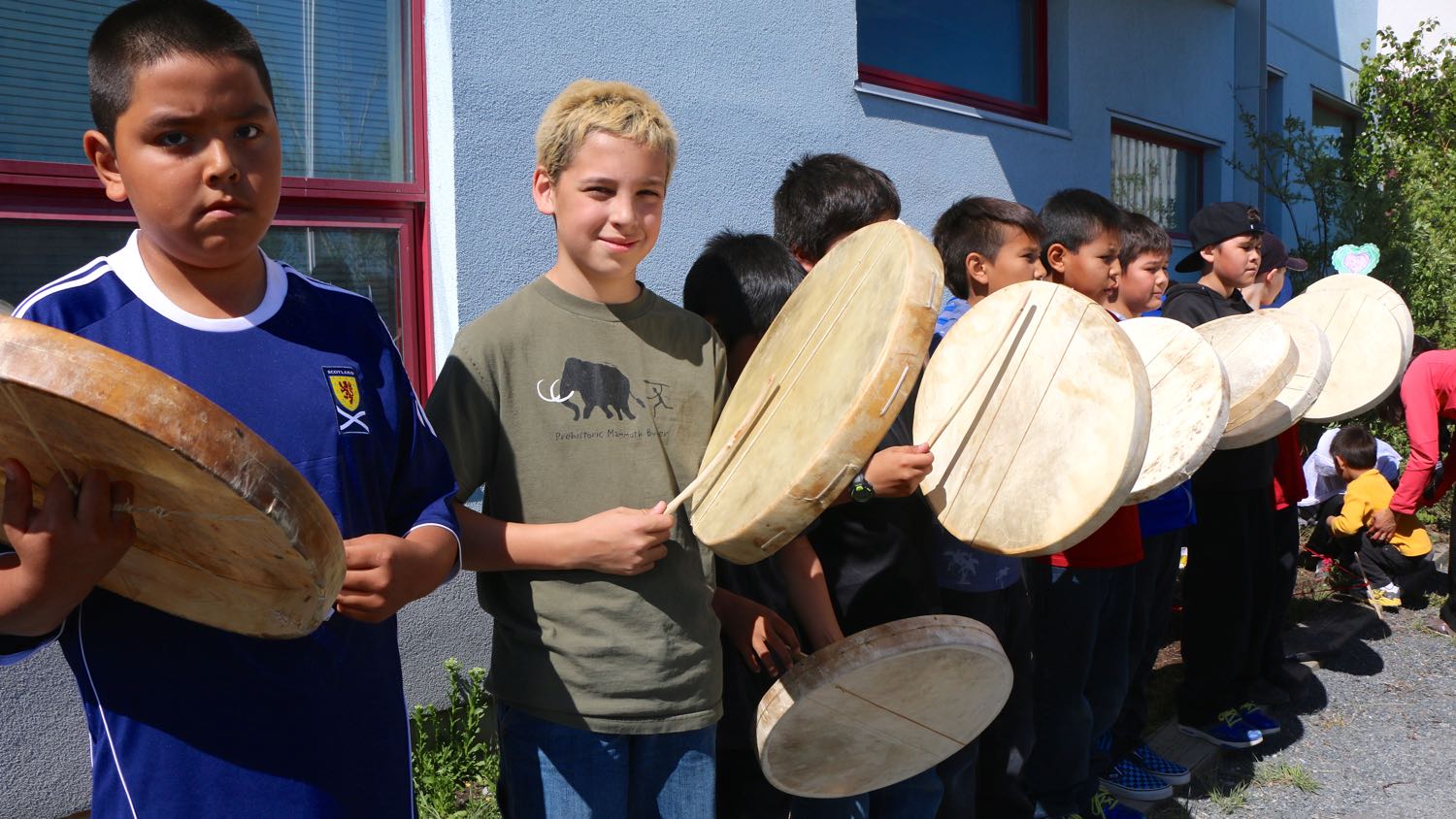
Children are now lining up to plant tributes in the heart garden. As young drummers play softly in the background, school principal Dawn Cosman urges students to “hear the heart of Mother Earth”.
Madelaine hears something else, too. As she speaks, she’s fighting to be heard over the giggling and laughter of dozens of young children in the playground.
When she talks about how much she wanted that bus ride, a young boy behind her – who has been listening in – pipes up: “I want a bus ride, too!”
It’s easy to imagine that boy as Madelaine, decades ago, blindly excited about the journey with no understanding of the profound consequences that ride might have.
“I get angry inside,” she adds, when the boy is no longer listening.
“I didn’t get to know my parents as well as I should have. I didn’t really know their love, I didn’t really know the culture. When I came back, I felt like I didn’t fit in. I felt as if they took the real me out of me.
“The first year that I was there, we were told we couldn’t speak in our native language. I didn’t know a word of English. I never spoke for five years. There were times when I wanted to speak my heart and mind, and couldn’t – I was always told, hush.”
To her, noisy, happy children in the playground make a meaningful contrast.
“It’s such a release for me. To see so many young people participating in this ceremony reminds me that I need to let go of the past and believe that I can re-heal,” she says.
“When I work with these young students, I see a lot of potential here. My hope and desire is for them to open up and not be afraid like I was, and ask questions.
“I want them to do well. I always tell them to repeat after me, ‘I will be the best of the best one day.'”