
With funding earmarked for a green economy in the federal government’s budget, the NWT mining industry is eyeing an opportunity.
Over 7 years, the federal government earmarked $5 billion for various green economy programs.
Federal Conservative leader Erin O’Toole said there was not enough support for the natural resource sector in the federal budget. But Premier Caroline Cochrane highlighted the opportunity this provides for the NWT’s mining industry in her remarks about the federal government’s budget.
A number of minerals are required to construct things like solar panels and rechargeable batteries for electric vehicles.
One is rare earth elements which were added to the federal government’s list of critical minerals at the end of March.
The Mining Association of Canada (MAC) said the over $30 million going towards federal research and development to advance critical battery mineral processing and refining expertise is a positive step, but does not go far enough.
“Canada has the potential to be a global leader in this space, achieve critical mineral self-sufficiency and meet our allies’ growing demand for critical minerals all while doing so in an environmentally responsible way,” said Pierre Gratton, President and CEO of MAC.
“To establish an end-to-end Battery-Powered Electric Vehicle supply chain in Canada, we need to expand the production and manufacturing of critical minerals in Canada,” said in a statement.
Currently, most of the NWT’s mines are focused on mining gold and diamond mines. Nechalacho is set to be the first to mine rare earth elements in the territory when it starts production later this month.
Pine Point mine, which found the “best ever” quality of metal in recent exploratory digging, could also open a zinc mine, which can be used in rechargeable lithium ion batteries.
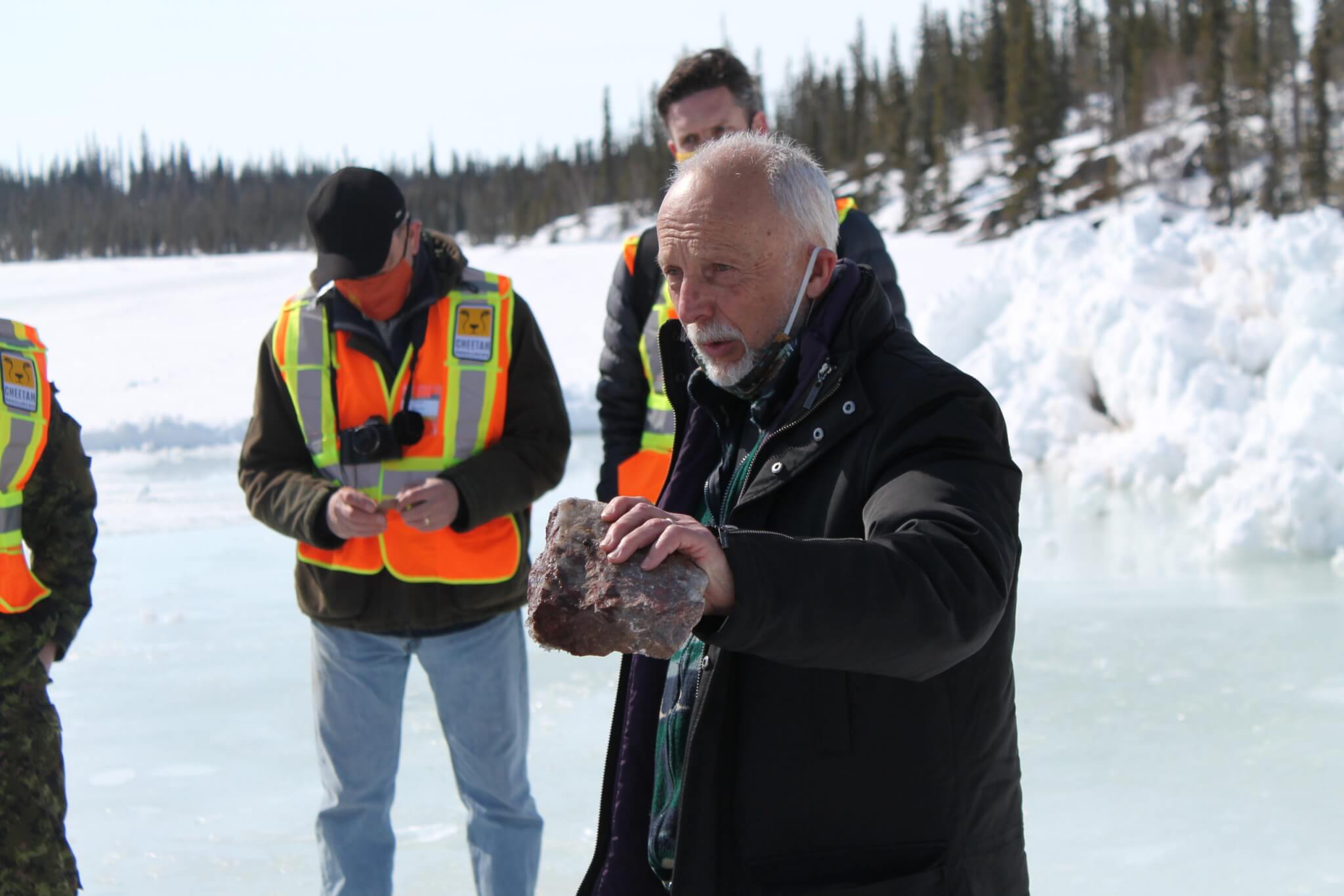
Chris Pedersen, a consulting geologist working at the Nechalacho rare-earths project, said building a green economy couldn’t happen without rare-earth mining.
“For everything that’s in the news and everybody’s requesting a green economy, the economy of the future, it’s not going to happen unless we develop our own resources,” said Pedersen. That future will not exist.”
While the first demonstration project is fairly small, said David Connelly, vice-president of Cheetah Resources, there is potential for growth.
Connelly said REETecAs has already expressed interest in the next stage of the project, saying they would want five times as much ore as they are currently set to receive from the first stage.
“There’s a multi generational source of rare earth elements,” said Connelly. “What we mine will be driven more by what demand is and not limited by what the supply. So, the limiting factor is will demand not the supply available funds by.”
The Nechalacho project will see 100,000 tonnes of rare earth elements mined during the first stage. While still not confirmed, Connelly said the second stage would definitely be going ahead.