
With mining set to start shortly, Cheetah Resource’s vice-president David Connelly said stage 2 of the Nechalacho rare earth minerals projects will be going ahead.
The first stage of mining, or the demonstration project, will involve digging an initial pit 100 metres deep to find bastnaesite ore, a collective term for the rare earth metals that will be mined.
The metals are commonly used in electronics, including in rechargeable electric car batteries and cell phones.
Around 100,000 tonnes of ore will be produced from mining operations during the demonstration stage, which will be sorted and separated from quartz onsite, said Connelly.
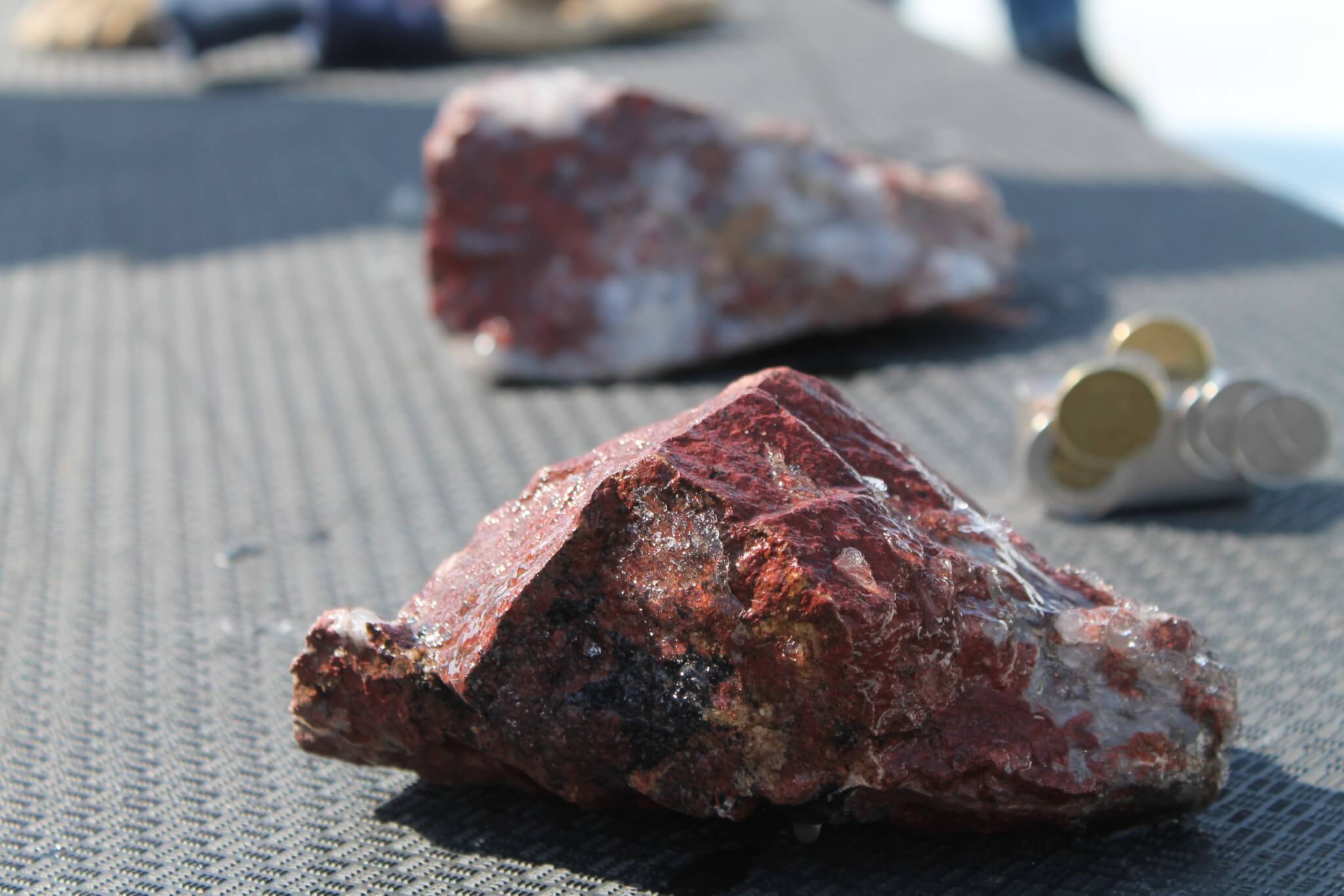
The ore from the first stage of the project has been pre-sold to Norwegian mineral extraction company REETecAs at a cost of $5 million. The mine will gather from deposits of rare earth minerals, including lithium, zirconium, beryllium, niobium and tantalum.
Connelly said REETecAs has already expressed interest in the next stage of the project, saying they would want five times as much ore as they are currently set to receive from the first stage.
“There’s a multi generational source of rare earth elements,” said Connelly. “What we mine will be driven more by what demand is and not limited by what the supply. So, the limiting factor is will demand not the supply available funds by.”
Connelly said there is absolutely no doubt that the second stage of mining would be happening.
The environmental impact from the mine will be less than compared to the diamond mines because the process being used to separate the ore from the other rock, doesn’t involve any chemicals or water, and won’t require the creation of a tailings pond, which would then have to be cleaned up during remediation, according to mine manager Clarence Pyke.
The machine instead uses radiation to separate the different rocks, releasing them in two streams. The waste stream, mostly quartz, can be repurposed, says Pyke.
“The pit is small but it’s going to yield a good product,” said Pyke.
Mining operations are set to start at Nechalacho within a few weeks.
The mine has had a few hiccups over the years, according to consulting geologist Chris Pedersen.
Pedersen was part of the initial crew that made the discovery in the 1980s, but because there was no technology that required rare earth metals, and therefore no market, the mine remained dormant for years.
That was until Avalon purchased the project in 2005 and began developing and exploring the area. Cheetah Resources bought the top level resources in 2019. Avalon retains the rights to the resources below the top level.