
100.1 GO FM - We're Your Feel Good Pop Station

NWT capital spending sees second biggest increase in the country

The NWT is set to see the second biggest increase in spending in Canada, as the territory tries to kick start its economy post-pandemic with infrastructure projects.

Compared to 2020, overall 2021 capital expenditures for the Northwest Territories are expected to increase by 13.4 per cent to $896 million.

This is the second year in the row spending on capital projects has increased, after five years of increase since 2015. Since capital spending peaked in 2015 with the construction of the Gahcho Kué diamond mine, private investment has trended downward while public investment has also increased.
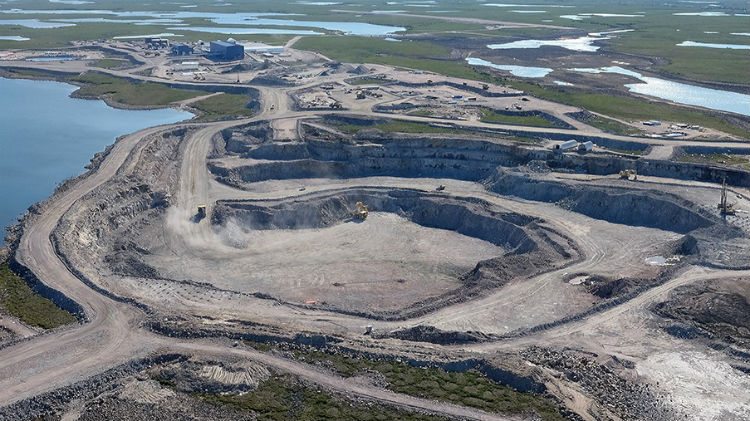
Private investment in capital projects has dropped significantly since Gahcho Kué was constructed in 2015. (Supplied by DeBeers Canada.)

But private investment is well below 2019 numbers. Between 2019 and 2020, private investment halved to $207 million. Private investment is set to grow to $247 million in 2021. 

Finance Minister Caroline Wawzonek said attracting more private investment was a priority for the territorial government moving forward. 

Public spending on capital projects, things like roads and buildings, will increase by 11.5 to nearly $650 million dollars, according to the NWT Bureau of Statistics.

The GNWT’s capital budget outlined $451 million in capital project pending, with Wawzonek saying infrastructure projects would be a priority.

The biggest spending item will be on maintaining and expanding the territory’s roads, highways and bridges, with $61.3 million going towards the Tłı̨chǫ all-season road project. The territory approved more than $180 million in spending on roads.

The 13.4 per cent increase in capital investment for the Northwest Territories is the second largest increase, to Yukon which is expected to increase the most, rising by over 20 per cent. 

Capital spending in Nunavut is expected to grow by less than 1 per cent. 

The NWT is nearly double the national average for an increase in spending, with capital spent  set to increase by 7.0 per cent in Canada between 2020 and 2021.

Bailey Moreton
Bailey Moreton
Bailey is new to the north, arriving from Ottawa where he studied journalism at Carleton University. He has worked for newspapers in Halifax, Windsor, and Ottawa. He came to the north hoping to see polar bears. He will settle for a bison. If you have a tip, send it to 905 252-9781, or [email protected].

Continue Reading

You may also like


cjcd Now playing play

- Advertisement -

Related Articles

- Advertisement -

Latest News

Alternatives North suspects regulatory capture in ITI

Alternatives North believe they have uncovered evidence of the ‘regulatory capture’ of the GNWT Department of Industry Trade and Investment (ITI) by the mining industry, specifically regarding the regulatory policies surrounding the Mineral Resources Act. 

Relentless Indigenous Woman talks languages, “literally” changing world

Dr. Candace Manitopyes, aka The Relentless Indigenous Woman, is working with Elders and Language Keepers in the North and across Turtle Island on relaunching an Indigenous languages program. Dr. Manitopyes says there is an urgency to support Indigenous language learning, especially for Northern First Nations communities, where culturally responsive community rooted resources are even more scarce.

New generation of Indigenous languages speakers celebrated in the NWT

“The language is who we are. Language is our Elders. Language is what makes us who we are,” said Paul Andrew, who emceed a special gathering in Yellowknife that included mentors and apprentice Indigenous language learners, their families, organizers and community leaders. This year’s cohort engaged in learned the languages of Gwich’in, Tłı̨chǫ, Inuvialuktun, Inuinnaqtun, Inuktitut,Dene Kede, Dene Zhatıé, Nêhiyawêwin, Dëne Sųłıné and Wı̀ılı̀ıdeh. 

NWT services to be made accessible in Indigenous languages, says GNWT

The territorial government will soon begin offering all services in each of the 11 official languages including the nine Indigenous languages of Dinjii Zhu Ginjik (Gwich’in), ᐃᓄᒃᑎᑐᑦ (Inuktitut), Inuvialuktun, Inuinnaqtun, Dene Kǝdǝ́/ Sahtúot'ı̨nę Yatı̨ (North Slavey), Dene Zhatıé (South Slavey), Tłı̨chǫ, Dëne Sųłıné (Chipewyan) and Nëhiyawëwin (Cree). Previously, the services had been available in English and French only.

Support and funding for “Language Cafes” to launch this spring

The NWT Literacy Council has started a new funding program to help support Indigenous language revitalization. Kathryn Barry Paddock, Executive Director of the NWT Literacy Council made the announcement that the organization is promoting more funding and the creation of more accessible spaces for Indigenous language through "Language Cafe" events.