



Grant Beck wins at Canadian Championship Dog Derby

Grant Beck came out on top at the Canadian Championship Dog Derby over the weekend.

The two-day event took place on a circuit carved by volunteers around a 45-mile track on Great Slave Lake, starting and finishing at Yellowknife Bay.

Warmer weather meant the race times had to be moved earlier for the 10-dog race. Jordee Reid, organizer of the event, said the time change helped the dogs perform better, since they are used to training into colder weather.

All the racers were polled about the time change, to avoid any disadvantage, says Reid. The time change went well, although it was hard to get the message out to spectators.

Grant won the 10-dog race, the derby’s showpiece event, coming first on both days, beating his brother Richard Beck by three minutes over the two legs of the race.
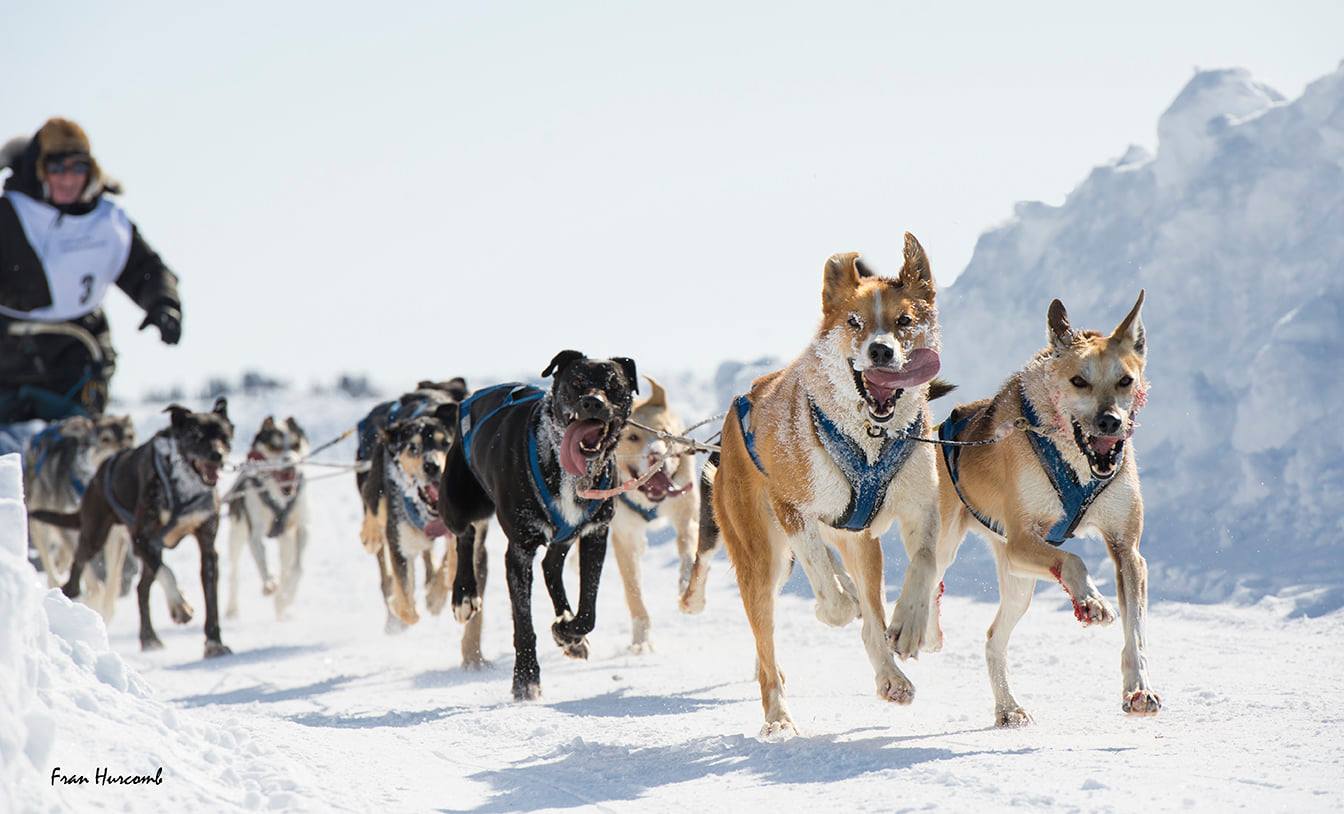
Grant Beck and his team won both legs of the race. (Supplied by Fran Hurcomb/Canadian Championship Dog Derby.)

Grant was one of five Becks competing in the race.

Reid said because the race was closed to competitors from the south of Canada because of COVID-19, only racers from NWT kennels were able to compete, most of whom are related.

“I think there was only one team that wasn’t a cousin of some shape or form,” said Reid.


While some races and events have faced financial difficulty because of the pandemic, Reid said the Dog Derby should be secure for the future.

“We were just really grateful that in the north here that we can put on dog races whereas in other parts of Canada that’s not the case,” she said.

Changing weather also shouldn’t be a problem in the future because as the climate changes, the dogs will get used to training in warmer weather, says Reid.

“As long as there’s still snow on the ground — and up north I don’t think that’s going to change anytime soon — we’re good to go.”


Bailey Moreton
Bailey Moreton
Bailey is new to the north, arriving from Ottawa where he studied journalism at Carleton University. He has worked for newspapers in Halifax, Windsor, and Ottawa. He came to the north hoping to see polar bears. He will settle for a bison. If you have a tip, send it to 905 252-9781, or [email protected].

Continue Reading

You may also like


cjcd Now playing play

- Advertisement -

Related Articles

- Advertisement -

Latest News

GNWT issues closure cautions for Wekweètì and Gamètì winter roads

The GNWT’s department of Infrastructure has issued a 72 Hour Notice of Closure Caution for the Wekweètì and Gamètì winter roads. According to the public message posted Sunday afternoon, the roads “may close sooner with little to no notice.” Earlier this month, the Wekweètì and Gamètì winter roads were restricted to night travel only between 10 pm to 10 am.

Tuktoyaktuk RCMP lay charges in bootleg liquor investigation

Tuktoyaktuk RCMP are laying charges following an investigation into liquor bootlegging earlier this week.

Youth engage with Tłı̨chǫ language in unconventional immersive spaces

While in-person On the Land learning continues to be central to Tłı̨chǫ language revitalization, the Tłı̨chǫ language division is looking at ways to engage with youth through new immersive platforms, like virtual spaces, that honour history and traditions. Danielle Dacanay with the Tłı̨chǫ Government’s Language Division emphasized that virtual resources are supplements to learning the language in the traditional way, they are not a replacement for it.

New microgrant stream wants youth to plant language seeds outside school

“100 youth projects wanted in French,” a new microgrant program wants youth to plant language learning seeds outside school. A network of action-research teams in Canada, other parts of North America, Africa and Europe is launching a youth grant stream to support French language engagement outside of conventional spaces. Youth across the country aged 14 to 30 are eligible for 100 microgrants in support of grassroots initiatives as part of this program run by the Dialogue Network.

Water testing at another Yellowknife school confirms elevated lead and copper

Testing at another school site in the city of Yellowknife showed elevated levels of lead and copper in water present in some of its drinking taps. Earlier this month, testing showed four other school buildings in Yellowknife and a school in Behchokǫ̀ had elevated levels of both copper and lead in water. Since comprehensive testing of schools across the territory began this fall, 28 school sites out of 34 announced to date have tested positive for elevated levels of lead.


