
While ministers outlined plans for anti bias training for employees in the GNWT, one MLA says the territorial governments needs to address systemic racism in its hiring practices.
MLA for Great Slave Lake Katrina Nokleby says racial minorities are underrepresented in the public service and the GNWT needs to be more accountable and make changes for prospective employers, not just current ones.
“It is crucial that the GNWT adopt a culture of continuously reviewing and analyzing its policies and practices for racial bias, in all departments,” she said in the Legislative Assembly on Wednesday.
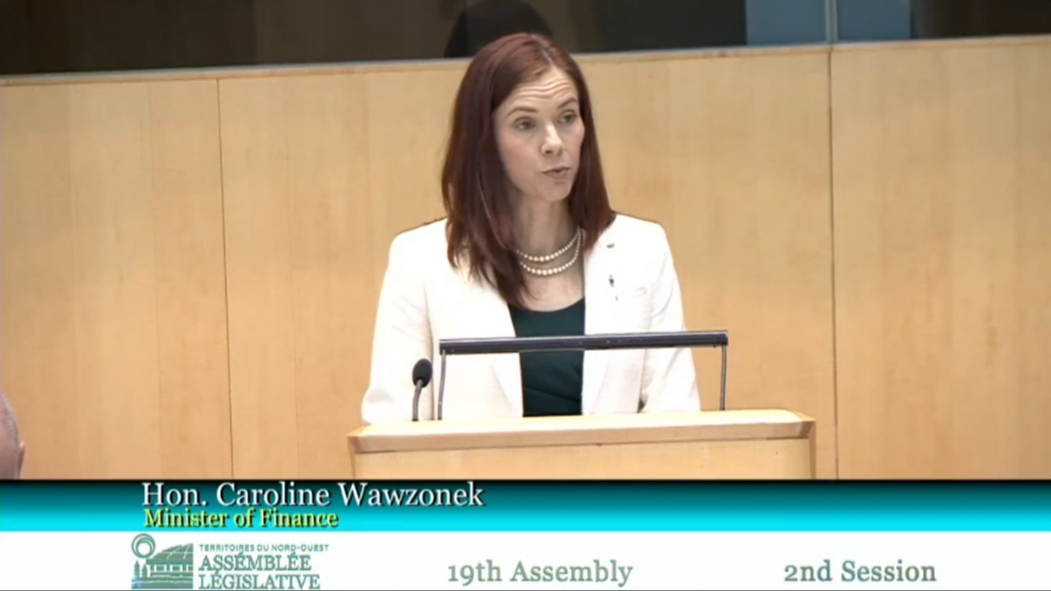
The address was part of the Legislative Assembly’s day of focusing on systemic racism, with most MLA’s addressing issues on systemic racism in their statements.
Finance Minister Caroline Wawzonek says the GNWT is undertaking a twofold effort to address the lack of diversity and systemic racism in the public service.
It includes anti-racism training for current employees and an Indigenous recruitment and retention framework for hiring.
“This is meant to be really a change of mindset in the way that we are — representative of the way people think about the government, the way people think about public service, and it’s only a starting point,” she said.
Wawzonek said the anti-racism training will teach GNWT employees how to “identify how biases, racism, power, and privilege are the root of myths and misconceptions that have become part of mainstream culture.”
Health department
Nokleby says racism in the health department is also an issue.
“In October, nothing spoke more to the horror of that racism than the video recorded by Joyce Echaquan, a 37-year-old Indigenous mother of seven in Quebec,” she said. “Joyce’s last moments on earth were spent listening to the nurses who were charged with her care, who had sworn an oath to help her, disparage her with racist comments about her worth and intelligence.”
Health minister Julie Green vowed to address racism in all its forms in the NWT health and social services system.
Green pointed to research that shows that Indigenous peoples experience a disproportionate amount of negative health and social outcomes in comparison to non-Indigenous people.
The health department has piloted 13 cultural safety training sessions.
The sessions included information about Indigenous medicine teachings, Indigenous experiences of residential schools and inter-generational impacts, and understanding racism at interpersonal and systemic levels.
Around 225 health and social services system employees participated in these pilots.
The Legislative Assembly ended on Wednesday by passing a motion that calls for an examination of policies related to education, health and social services, justice, housing, and government hiring.
The motion was moved by MLA Thebacha Frieda Martselos, who is Dene.
“This motion is very much in line with my entire life philosophy of improving government for the people we serve,” she said. “I have been fighting my entire adult life for the betterment of Black, brown, and Indigenous people.”
“Racism takes many different forms, especially in government,” she added. “Gaps in cultural barriers have always been a problem. Affirmative action and the procurement policy are prime examples of bureaucratic systemic racism. This has to change. Only then, we will make a difference.”