
The territorial government has extended its pandemic wage top-up program to August 31.
The funding boost for businesses pays eligible employees $18 an hour opposed to the territory’s normal minimum wage of $13.46.
It had been scheduled to expire on February 28.
As of February 24, the total cost of the program was $2,670,079. That total includes the employee wage top-up, employer EI and CPP plus $50 per employee compensation fee, according to Todd Sasaki, spokesperson for the Department of Finance.
There are 96 businesses who have used the funding; and 2,337 individuals have had their wages topped up, Sasaki added in an email.
If their employers didn’t apply for the funding, minimum wage workers can retroactively apply to have their wages topped up. Applications are open for the April 1, 2020 to February 28, 2021 period for eligible workers to apply directly if their employer is not participating.
But the GNWT has remained mute on whether the wage top-up will be made permanent, or whether any increase in the minimum wage is coming.
Frame Lake MLA Kevin O’Reilly said earlier in February in the Legislative Assembly the fact this program is needed is the clearest sign minimum wage is too low.
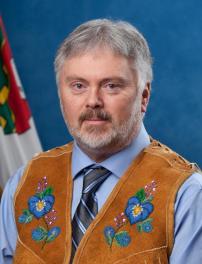
“It would be unbelievable, if not completely unfair, if the effective minimum wage in the NWT is rolled back from anything less than $18 an hour, which is what people have been getting for the last 10 months,” he added.
Employment minister R.J. Simpson said he was considering a number of options, but didn’t give an indication as to whether the minimum wage would increase from $13.46.
In response to O’Reilly’s questions, Simpson said there had been lots of discussion about a guaranteed basic income in the Legislative Assembly, but said studies done in B.C. showed that implementing a guaranteed basic income “probably is not going to solve all the issues.”
“What you need are targeted supports,” Simpson said. “You need to deal with people if they have addictions issues. You need to make sure that there are jobs for people to have. You need to make sure people can be trained. You need to make sure people have housing.”
“Just throwing money at a problem, as simple as it seems, and that is probably the allure of it, it does not necessarily mean that it works,” he added.
The current minimum wage of $13.46 was increased from $12.50 back in April of 2018. Before that, the last increase had been in 2015.