



100.1 GO FM - We're Your Feel Good Pop Station

Issues with northern tax deduction ‘like a broken record’: MLA

Longstanding issues with tax reductions for northerners continue, with requirements unclear and audits too frequent.

Kevin O’Reilly, MLA for Frame Lake, told the Legislative Assembly that the northern resident deductions are cumbersome and don’t help northerners, especially the travel deduction, which is inconsistent year-to-year about how much you can claim to cover travel costs in the territories.

“I seem to raise these deductions on an annual basis, like a broken record,” O’Reilly said. “I know this is not our Minister of Finance’s program, but it is going to take our Finance Minister’s intervention to get this fixed.”

O’Reilly also cited a report from 2018 that found northerners were three times more likely to be audited by the Canada Revenue Agency than Canadians living elsewhere in the country, creating barriers to accessing the deductions.
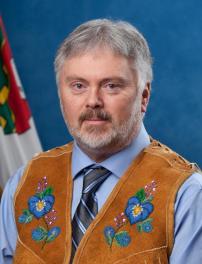
Frame Lake MLA Kevin O’Reilly. (Supplied by GNWT.)

But Finance Minister Caroline Wawzonek said some of the challenges that may have led to more audits “have been resolved”, in part helped by the change of the finance minister in the federal government. This means that problems with audits should stop for NWT residents.

O’Reilly also noted with travel restrictions in place, people may not be able to take advantage of the travel portion of the northern resident reduction. 

But Wawzonek confirmed trips in the Northwest Territories do qualify for the travel deduction, with a maximum of two trips per year per household member. 

“So please go take your staycation and continue to do so,” said Wawzonek.

Wawzonek said despite the challenges for NWT residents, she didn’t want to be too critical of the tax reduction program.

“It doesn’t allow us to be matching up to inflation, necessarily, but we certainly do get a benefit in terms of our northern residents deduction, so I want to be a bit cautious before biting the hand that feeds us all,” she said.
Wawzonek committed to communicating with the territorial governments in Yukon and Nunavut and said some collaboration could come in the future.


Bailey Moreton
Bailey Moreton
Bailey is new to the north, arriving from Ottawa where he studied journalism at Carleton University. He has worked for newspapers in Halifax, Windsor, and Ottawa. He came to the north hoping to see polar bears. He will settle for a bison. If you have a tip, send it to 905 252-9781, or [email protected].

Continue Reading

You may also like


cjcd Now playing play

- Advertisement -

Related Articles

- Advertisement -

Latest News

Alternatives North suspects regulatory capture in ITI

Alternatives North believe they have uncovered evidence of the ‘regulatory capture’ of the GNWT Department of Industry Trade and Investment (ITI) by the mining industry, specifically regarding the regulatory policies surrounding the Mineral Resources Act. 

Relentless Indigenous Woman talks languages, “literally” changing world

Dr. Candace Manitopyes, aka The Relentless Indigenous Woman, is working with Elders and Language Keepers in the North and across Turtle Island on relaunching an Indigenous languages program. Dr. Manitopyes says there is an urgency to support Indigenous language learning, especially for Northern First Nations communities, where culturally responsive community rooted resources are even more scarce.

New generation of Indigenous languages speakers celebrated in the NWT

“The language is who we are. Language is our Elders. Language is what makes us who we are,” said Paul Andrew, who emceed a special gathering in Yellowknife that included mentors and apprentice Indigenous language learners, their families, organizers and community leaders. This year’s cohort engaged in learned the languages of Gwich’in, Tłı̨chǫ, Inuvialuktun, Inuinnaqtun, Inuktitut,Dene Kede, Dene Zhatıé, Nêhiyawêwin, Dëne Sųłıné and Wı̀ılı̀ıdeh. 

NWT services to be made accessible in Indigenous languages, says GNWT

The territorial government will soon begin offering all services in each of the 11 official languages including the nine Indigenous languages of Dinjii Zhu Ginjik (Gwich’in), ᐃᓄᒃᑎᑐᑦ (Inuktitut), Inuvialuktun, Inuinnaqtun, Dene Kǝdǝ́/ Sahtúot'ı̨nę Yatı̨ (North Slavey), Dene Zhatıé (South Slavey), Tłı̨chǫ, Dëne Sųłıné (Chipewyan) and Nëhiyawëwin (Cree). Previously, the services had been available in English and French only.

Support and funding for “Language Cafes” to launch this spring

The NWT Literacy Council has started a new funding program to help support Indigenous language revitalization. Kathryn Barry Paddock, Executive Director of the NWT Literacy Council made the announcement that the organization is promoting more funding and the creation of more accessible spaces for Indigenous language through "Language Cafe" events.


