



Rent payment plans now available for renters who fell behind due to COVID

The GNWT has implemented changes which will make repayment plans accessible for renters who missed payments due to COVID-19.

Beginning February 1, the program will allow renters to pay back rental arrears — overdue payments that are owed to landlords — accumulated from March 18, 2020 to January 31, 2021 on a steady, scheduled plan, as long as they experienced job loss or a significant drop in income because of the pandemic.

The GNWT change rules back in April, to allow for tenants to defer rental payments if their incomes were negatively impacted due to the COVID-19 pandemic
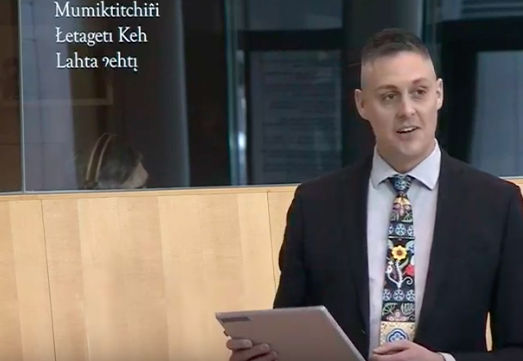
MLA R. J. Simpson speaks in the Legislative Assembly. (Screenshot from GNWT live stream.)

Starting on February 1, tenants have one year to enter into an agreement for a payment plan with their landlord. The agreement has to include the date repayment started, the total amount of rent still owed, how much monthly payments are and the due date of each installment.

The updates to the Residential Tenancies Act, which regulates all residential tenant-landlord dealings, don’t impact payment plans that may have been set up by landlords and tenants before the announcement.

A statement from the Department of Justice acknowledges a “number of residents” have started such plans, 

“COVID-19 has touched all aspects of our lives and our economy,” R.J. Simpson, Minister of Justice, said in a statement.

“Now, we want to take a measured approach to tenancy rules and give people advance notice so they can plan to pay back any owing rent,” he added. “These changes will help tenants maintain their housing and provide them with a 12 month period to gradually pay back any unpaid rent. We encourage landlords and tenants to work together during this difficult time.”


Bailey Moreton
Bailey Moreton
Bailey is new to the north, arriving from Ottawa where he studied journalism at Carleton University. He has worked for newspapers in Halifax, Windsor, and Ottawa. He came to the north hoping to see polar bears. He will settle for a bison. If you have a tip, send it to 905 252-9781, or [email protected].

Continue Reading

You may also like


cjcd Now playing play

- Advertisement -

Related Articles

- Advertisement -

Latest News

GNWT releases report on public feedback for Public Services Act modernization

The Government of the Northwest Territories has released their report on public feedback gathered as part of phase two of the Public Services Act modernization initiative.

After nearly two months, Wekweèti sees boil water advisory lifted

Following nearly two months of an active boil water advisory, the Chief Environmental Health Officer has lifted the boil water advisory for Wekweèti.

Dene leaders urge GNWT, feds to stop intercepting housing funds

Dene Nation leaders are calling for autonomy from the government of the Northwest Territories in access housing and infrastructure funding. “As we speak, there are shortages of housing in every Dene community in the N.W.T. Lots of houses are boarded up, units are boarded up too. And there's overcrowding in lots of houses, communities. There's a lot of shortages of housing — that needs to be looked at right away,” said Dene National Chief George Mackenzie.

City of Yellowknife opens Community Programs Survey

The City of Yellowknife is asking residents to share their opinions on the future of local recreation with the 2026 Community Programs Survey.

Chief Mackenzie “hopeful” but cautious in response to major projects launch

While Indigenous leaders across the territory, including Chief Mackenzie, say they are “hopeful” about what major projects like the Mackenzie Highway could mean for the North and Indigenous communities, they are also “cautious.” “That's why we invite development, we know the world is never the same, the North most likely will never be the same. It will change, we have to accept it, but we have to respect our animals, water, air — environment as much as possible."


