



Returning students will have self-isolation covered by GNWT

Students who have to travel for their education will continue to have their self-isolation stays paid for by the GNWT, even after January 5.

Students and apprentices who live in the Northwest Territories and are required to travel outside the NWT for education and training will have their costs covered for required stays in an isolation centre, if they cannot safely isolate elsewhere.

The territorial government will also be paying for the stays of people with specific legal situations, although the statement did not outline what these situations would be.

Changes were made to the GNWT’s policy of paying for isolations at the beginning of December, with the aim of cutting down the costs for the isolation centres run by the territorial government — which so far have cost the GNWT more than $18.5 million.

Up until January 5, anyone who stays in the isolation centre can have their mandatory 14-day isolation period paid for by the GNWT. After that, people who travel for discretionary reasons will have to pay for their own isolation stays.

People who are travelling for medical appointments or for compassionate reasons — the death or illness of a family member — can also still have their isolation periods paid for. Travel for any other reason will have to be paid for by the individual when they return to the territory.

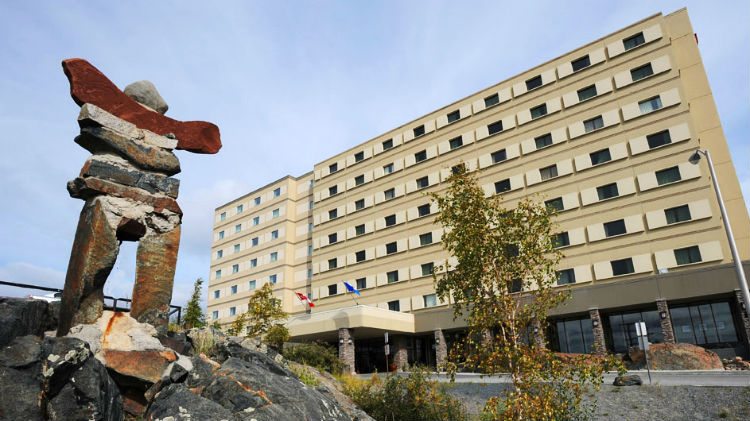
More than 4,600 guests stayed at Northwest Territories’ four isolation centres — in Yellowknife, Hay River, Inuvik and Fort Smith — from the opening of these facilities through to December 16.

Both Premier Caroline Cochrane and Dr. Kami Kandola, Chief Public Officer said it was important to the safety of the territory as a whole to continue to pay the isolation stays for students travelling back to the GNWT.

“Self-isolation is the most effective way to break the chain of infection and prevent outbreaks,” Kandola said in a statement. “It is critical that we support people who must leave the territory for education and legal purposes. Paying isolation centre stays for these travellers will help to keep us all safe.”


Bailey Moreton
Bailey Moreton
Bailey is new to the north, arriving from Ottawa where he studied journalism at Carleton University. He has worked for newspapers in Halifax, Windsor, and Ottawa. He came to the north hoping to see polar bears. He will settle for a bison. If you have a tip, send it to 905 252-9781, or [email protected].

Continue Reading

You may also like


cjcd Now playing play

- Advertisement -

Related Articles

- Advertisement -

Latest News

Tuktoyaktuk RCMP lay charges in bootleg liquor investigation

Tuktoyaktuk RCMP are laying charges following an investigation into liquor bootlegging earlier this week.

Youth engage with Tłı̨chǫ language in unconventional immersive spaces

While in-person On the Land learning continues to be central to Tłı̨chǫ language revitalization, the Tłı̨chǫ language division is looking at ways to engage with youth through new immersive platforms, like virtual spaces, that honour history and traditions. Danielle Dacanay with the Tłı̨chǫ Government’s Language Division emphasized that virtual resources are supplements to learning the language in the traditional way, they are not a replacement for it.

New microgrant stream wants youth to plant language seeds outside school

“100 youth projects wanted in French,” a new microgrant program wants youth to plant language learning seeds outside school. A network of action-research teams in Canada, other parts of North America, Africa and Europe is launching a youth grant stream to support French language engagement outside of conventional spaces. Youth across the country aged 14 to 30 are eligible for 100 microgrants in support of grassroots initiatives as part of this program run by the Dialogue Network.

Water testing at another Yellowknife school confirms elevated lead and copper

Testing at another school site in the city of Yellowknife showed elevated levels of lead and copper in water present in some of its drinking taps. Earlier this month, testing showed four other school buildings in Yellowknife and a school in Behchokǫ̀ had elevated levels of both copper and lead in water. Since comprehensive testing of schools across the territory began this fall, 28 school sites out of 34 announced to date have tested positive for elevated levels of lead.

Testing at more NWT buildings confirms lead in water

Fort Smith officials said water testing at municipal buildings has confirmed the presence of lead. According to the announcement, water samples at the Town Hall, the Fire Hall, and the Municipal Services Building continue to show elevated levels of lead.



