
The Yellowknives Dene First Nation issued a call to the federal government to give an apology and compensation for the damage caused by the Giant Mine project.
YKDFN also called for the government to allow the YKDFN greater involvement in the Great Mine remediation project, both economically and at the negotiation table, as well as job opportunities as part of the remediation program.
“Giant Mine was established within the Yellowknife Preserve, which Canada promised to protect for the exclusive use of Indigenous hunters and trappers,” Chief Edward Sangris said in a statement.
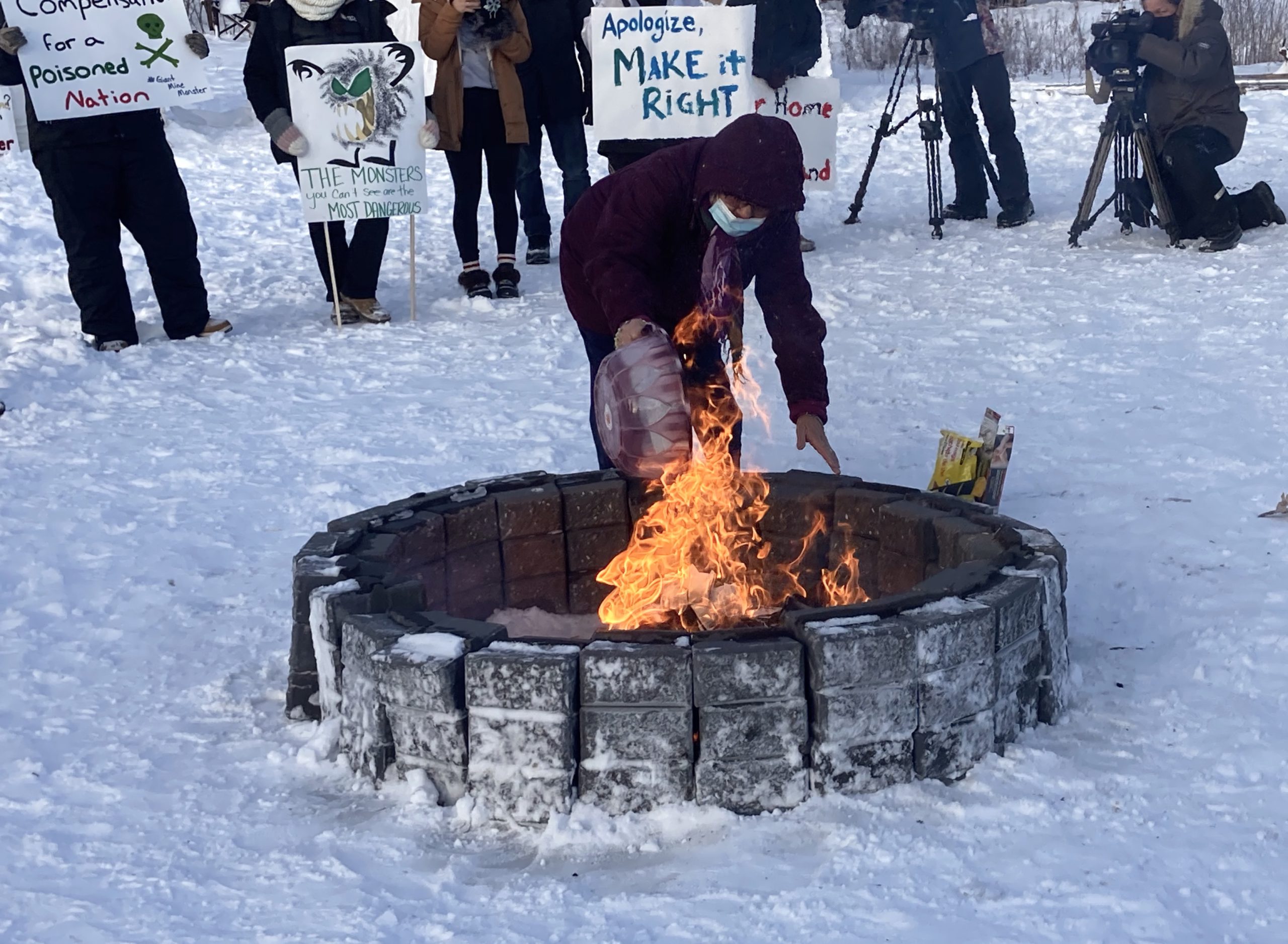
The Yellowknife Preserve was established in 1923, a 70,000 acre plot of land that was designated for YKDFN hunters and gatherers. The area had traditional importance for YKDFN people, but the Dene’s exclusive rights to the land would be slowly chipped away.
The Giant Mine was first explored and mined in 1935 and operations lasted for decades, until the mine was eventually shut down in 2004. The process used to extract the gold produced vast amounts of poisonous arsenic trioxide, a harmful compound that remains on the land in storage pits, while the Giant Mine remediation project is ongoing.
“Canada failed to honour that promise,” he added. “It allowed the Yellowknife Preserve to be summarily abolished 1955, and it permitted the operators of Giant Mine to take the gold, and create a toxic legacy of contamination of the land and interference with our rights to hunt, trap and gather food and medicine, without any compensation or consultation with us.”
Chief Edward Sangris, YKDFN Dettah Chief said the arsenic trioxide – the compound produced in the gold extraction process – that polluted the land had wide ranging impacts for YKDFN people and their way of life.
“Every family had a dog team, dog teams were a big part of the community,” he said at a press conference on Wednesday. “When we would travel across the mind site, our dogs would get sick and some of them even die. They would lose all their hair on the arms and legs and paws. They looked like they were getting burnt, simply from walking on the ground at the Giant Mine site.”
The Giant Mine Remediation Project team submitted a remediation plan to the Mackenzie Valley Land and Water Board as part of a Water License application back in 2007. That plan is still undergoing revisions after being reviewed by the City of Yellowknife and the Mackenzie Valley board.
Johanne Black, the Director for Treaty, Rights, & Governance for YKDFN said the remediation project shouldn’t be celebrated, but says elders “see it as a new project” taking place on YKDFN land.
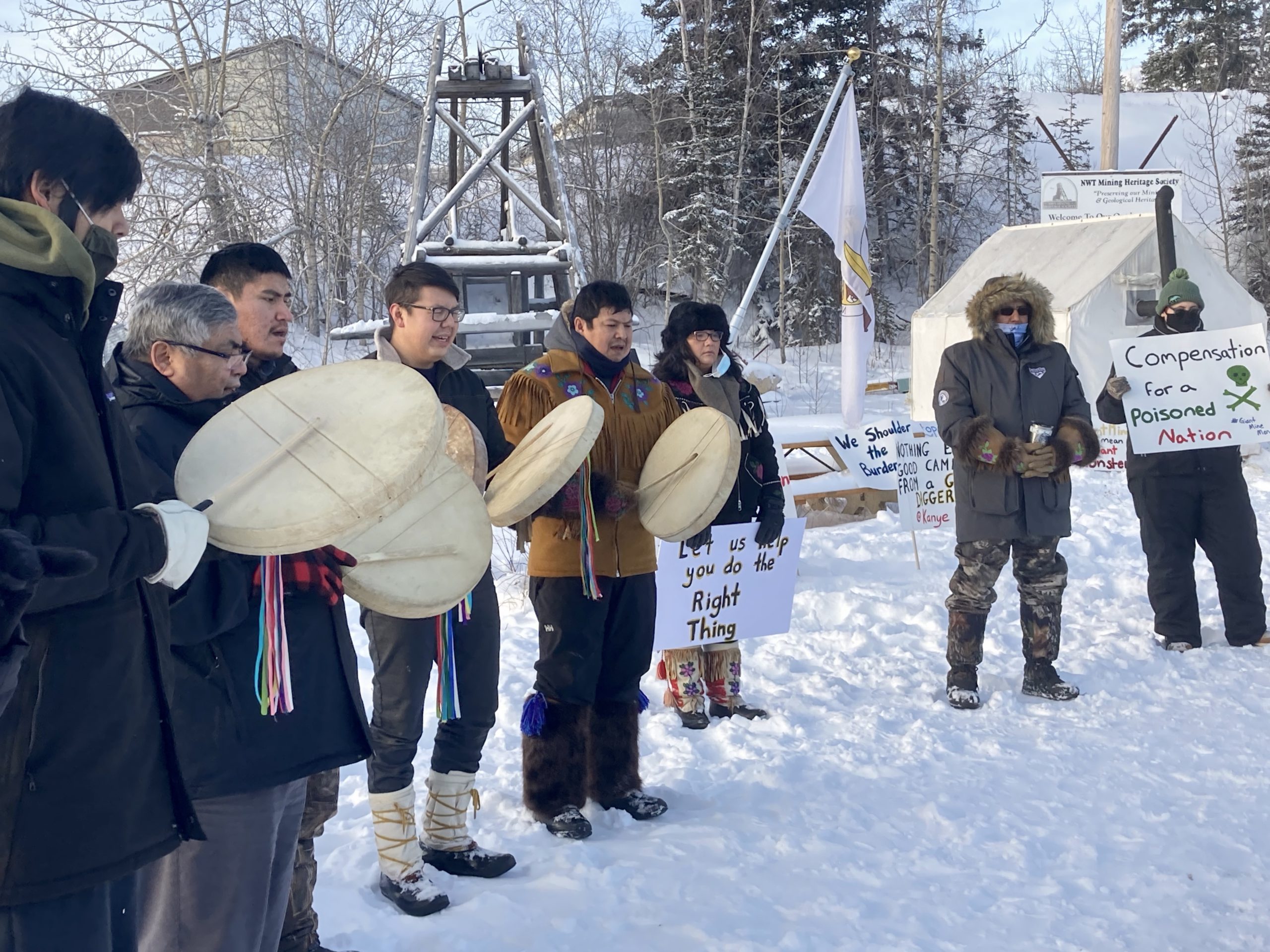
“It seems to me that one of the stumbling blocks between Yellowknife and Canada over the years has been that Canada just sees this as a cleanup project, and everybody should be happy about it,” said Black.
All the speakers at the press conference Tuesday reiterated how YKDFN had received no economic benefit throughout the mine’s operations.
“They took the gold out of the ground and gave us nothing,” said Black. “Now they will put the arsenic back into the ground and give us nothing.”
Chief Ernest Betsina suggested one way to compensate the YKDFN people would be to provide economic and job opportunities. He called on the government to provide training and education for YKDFN people so they collect the samples and do the environmental monitoring included in the YKDFN project.
He added the Dene are natural stewards of the land, and their traditional knowledge would make them well suited to these roles.
YKDFN launched a website – www.GiantMineMonster.ca – as part of their call on the Canadian government. A petition has also been started, which is being distributed through email.