
Premier Caroline Cochrane called for more money and a broad-based approach to deal with homelessness and affordable housing in NWT, in reaction to the federal throne speech.
The throne speech, delivered by Governor General Julie Payette, made several notable proposals including expanding the employment insurance system, extending the emergency wage subsidy program into next summer, funding national child daycare and creating more affordable housing, “particularly for Indigenous Peoples and northern communities.”
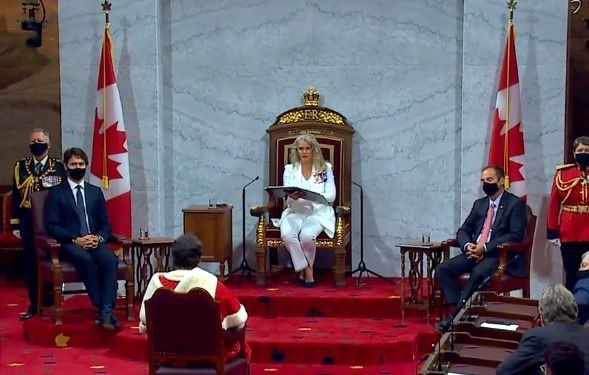
The speech also said the federal government would continue its efforts to combat homelessness and would become “entirely focused on eliminating chronic homelessness in Canada.”
“I think it’s an ambitious goal,” Cochrane said during a press conference. “We need to look at housing, our supports, we need to look at homeless shelters. But we also have to look at mental health and addiction and trauma if we’re going forward with this.”
In my opinion, there are a lot of times the issues are combined,” added Cochrane. “I’m excited that they’re willing to tackle this. I think it’s been a priority of my own since I came into politics. And it’s a commitment that I hold dearly to my heart.”
Premier Cochrane said ensuring money is available will be key to ensuring the commitments on affordable housing commitments are actually achievable.
“We don’t build houses without money,” said Cochrane. “The cost of housing compared to the southern jurisdictions is at least double.”
“If our costs are double, then we should be getting, perhaps, double the funding.”
In 2018, 338 people were counted as homeless in Yellowknife, according to the Point-in-Time Yellowknife Committee Homeless Count. Seventy-five per cent of those were deemed chronically homeless.
Of the 338 people, 42 per cent were youths under the age of 24, and 104 were children under the age of 18. The report also found 90 per cent of Yellowknife’s homeless population identified as Indigenous.
The commitment to eliminate chronic homelessness comes as Yellowknife city councilors called on GNWT to finalize a location for a temporary day shelter for Yellowknife’s homeless, with several locations ruled out as being options.
The existing permanent day shelter and sobering centre has reduced capacity due to Covid-19 physical distancing restrictions. Territorial officials said a temporary day shelter is needed until at least March 31, 2021.
Several locations were ruled out because they didn’t meet the territory’s requirements for a day shelter location.
The new temporary day shelter location must be close to the downtown core, have no stairs that might cause trips and falls, accommodate 30 people with physical distancing, have separate washrooms for staff and users, provide a kitchen, and include a staff office and break room.
“The council was in support of the government looking to finalize the location at any of those ones, except for the city facilities because we’re currently using the library and the multiplex gym,” said Yellowknife Mayor Rebecca Alty in an interview with Moose FM. “So instead of closing those programs down and putting the day shelter in those locations – council said, look at the other options.”