It’s very cold here in the North. With our extreme Winter conditions, frostbite can occur within a minute, but frostbite can be prevented says Chief Public Health Officer of the NWT.
Frostbite is an injury caused by freezing of the skin and underlying tissues.

Dr. Kami Kandola Chief Public Health Officer with the Department of Health & Social Services for the Government of the Northwest Territories (GNWT).
“First your skin becomes very cold and red, then numb, hard and pale,” Dr. Kandola said. “Frostbite is most common on the fingers, toes, nose, ears, cheeks and chin. Exposed skin in cold, windy weather is most vulnerable to frostbite. But frostbite can occur on skin covered by gloves or other clothing.”
According to Dr. Kandola frostbite occurs in several stages.
- Frostnip
- Superficial frostbite
- Deep (severe) frostbite
Frostnip:
“Frostnip is a mild form of frostbite,” Dr. Kandola said. “Continued exposure leads to numbness in the affected area. As your skin warms, you may feel pain and tingling”
Frostnip doesn’t permanently damage the skin. You can treat frostnip with first-aid measures, including rewarming the affected skin according to Dr. Kandola.
“All other frostbite requires medical attention because it can damage skin, tissues, muscle and bones,” Dr. Kandola said. “Possible complications of severe frostbite include infection and nerve damage.”
Superficial frostbite:
Superficial frostbite appears as reddened skin that turns white or pale. Your skin may begin to feel warm — a sign of serious skin involvement Dr. Kandola says.
“If you treat frostbite with rewarming at this stage, the surface of your skin may appear mottled. And you may notice stinging, burning and swelling,” Dr. Kandola said. “A fluid-filled blister may appear 12 to 36 hours after rewarming the skin.”
Deep (severe) frostbite
As frostbite progresses, it affects all layers of the skin, including the tissues that lie below.
“Your skin turns white or bluish-gray and you may experience numbness, losing all sensation of cold, pain or discomfort in the affected area,” Dr. Kandola said. “Joints or muscles may no longer work. Large blisters form 24 to 48 hours after rewarming. Afterward, the area turns black and hard as the tissue dies.”
There are specific conditions that lead to frostbite according to Dr. Kandola which include:
- Wearing clothing that isn’t suitable for the conditions you’re in — for example, it doesn’t protect against cold, windy or wet weather or it’s too tight.
- Staying out in the cold and wind too long. Risk increases as air temperature falls below minus 15 C, even with low wind speeds. In wind chill of minus 27 C, frostbite can occur on exposed skin in less than 30 minutes.
- Touching materials such as ice, cold packs or frozen metal.
Mitchell Andrew is originally from Inuvik but has been living in Yellowknife since 2003. Andrews was fixing a snowmobile outside yesterday and had both of his hands frostbitten during the process.
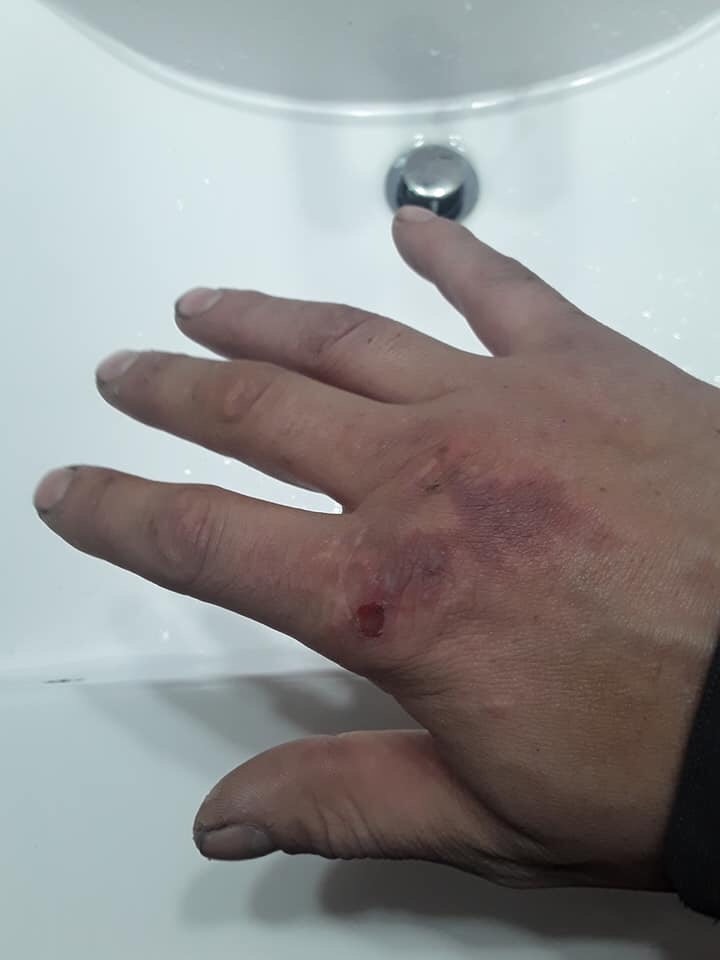
“Don’t play with aluminum when it’s this cold,” Andrew said. “It will bite you.”
Andrew’s posted a picture of his severely frostbitten hands-on Facebook.
“I was trying to work as quickly as possible to avoid frostbite,” Andrew said. “Clearly that didn’t happen.”
Dr. Kandola says frostbite can be prevented. Here are ten tips provided by Dr. Kandola to help you stay safe and warm:
- Limit time you’re outdoors in cold, wet or windy weather. Pay attention to weather forecasts and wind chill readings. In very cold, windy weather, exposed skin can develop frostbite in a matter of minutes.
- Dress in several layers of loose, warm clothing. Air trapped between the layers of clothing acts as insulation against the cold. Wear windproof and waterproof outer garments to protect against wind, snow and rain. Choose undergarments that wick moisture away from your skin. Change out of wet clothing — particularly gloves, hats and socks — as soon as possible.
- Wear a hat or headband that fully covers your ears. Heavy woolen or windproof materials make the best headwear for cold protection.
- Wear mittens rather than gloves. Mittens provide better protection. Or try a thin pair of glove liners made of a wicking material (such as polypropylene) under a pair of heavier gloves or mittens.
- Wear socks and sock liners that fit well, wick moisture and provide insulation. You might also try hand and foot warmers. Be sure the foot warmers don’t make your boots too tight, restricting blood flow.
- Watch for signs of frostbite. Early signs of frostbite include red or pale skin, prickling, and numbness. Seek warm shelter if you notice signs of frostbite.
- Plan to protect yourself. When traveling in cold weather, carry emergency supplies and warm clothing in case you become stranded. If you’ll be in remote territory, tell others your route and expected return date.
- Don’t drink alcohol if you plan to be outdoors in cold weather. Alcoholic beverages cause your body to lose heat faster.
- Eat well-balanced meals and stay hydrated. Doing this even before you go out in the cold will help you stay warm.
- Keep moving. Exercise can get the blood flowing and help you stay warm, but don’t do it to the point of exhaustion.
Stay warm and stay safe during this deep freeze weather by practicing these ten tips.
Twitter.com/artcgreen