


100.1 GO FM - We're Your Feel Good Pop Station

NT RCMP releases water safety tips

It’s that time of year here in the Northwest Territories (NT) when boaters are headed to their special spot for a spectacular day of fishing.
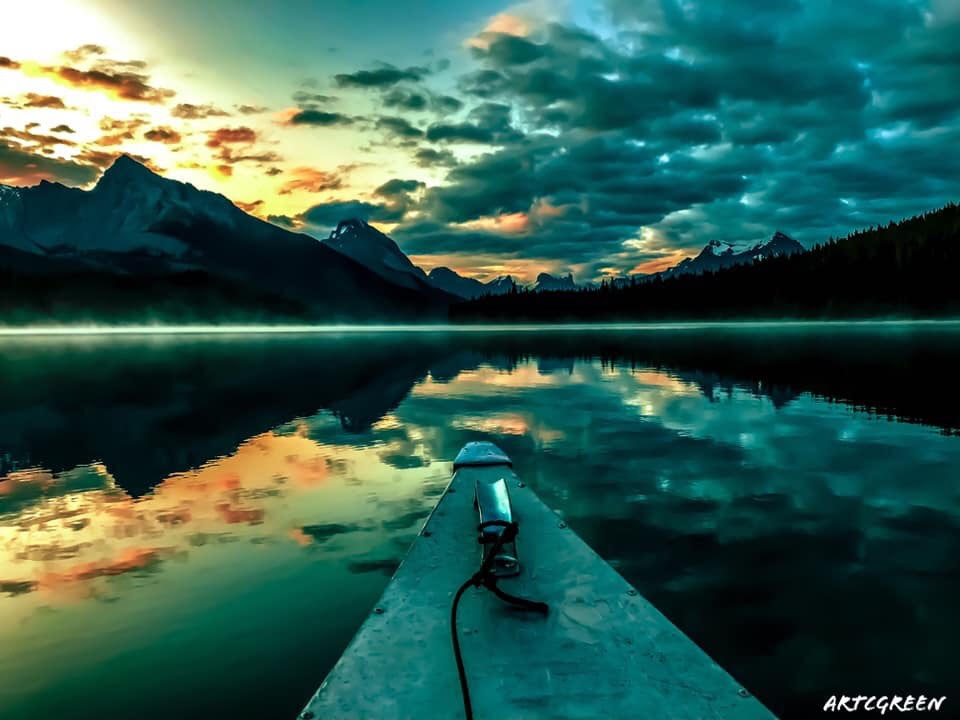
For more information on boating safety and the equipment required for your vessel, the NT RCMP recommends you visit the Transport Canada website. Arthur C. Green/The Moose

With increased traffic comes an increased risk of accidents and drowning, according to the NT RCMP, as people flock to the natural waterways for a day of fun. This fall, whenever operating a boat, canoe, kayak, or another kind of watercraft, take every possible precaution to ensure a safe trip.

NT RCMP are reminding boaters to always practice safe boating and not operate a boat while under the influence of drugs or alcohol. In 2017, drinking and boating accounted for about 40 per cent of boating-related fatalities in Canada.

The NT RCMP says know your waterways and how to handle your vessel in calm and rough conditions. Arthur C. Green/The Moose

Because of this alarming statistic, Julie Plourde who is the Media Relations Officer with the NT RCMP recommends the following tips to be safe on the water this Fall North of 60:

  • Be prepared and do not go out alone – let a responsible person know where you are going and when you plan to return.
  • Dress appropriately for the water temperature – wear layers under your life jacket or personal flotation device and a hat.
  • Be familiar with the operation of your vessel and ensure it is in proper working condition prior to heading out on the water.
  • Wear a personal flotation device (PFD) with a whistle as water conditions can and do change quickly. A whistle can be used to signal for help.
  • Carry extra fuel, a spare battery or a means to recharge your boat battery and a backup motor.
  • Familiarize yourself with marine navigation and learn about local hazards on the waterways.
  • Check the marine forecast before heading out and monitor the weather for changes.
  • Ensure that you have the appropriate required safety equipment for your vessel.
  • Know your waterways and how to handle your vessel in calm and rough conditions.
  • Keep in mind that water levels change and may be shallower or deeper than they appear.
  • Currents can be below the surface and not visible.
  • Avoid the use of alcohol and drugs.
  • If operating a motorized water vessel, the same rules apply as driving a motor vehicle, in relation to impaired driving.

For more information on boating safety and the equipment required for your vessel, the NT RCMP recommends you visit the Transport Canada website, https://www.tc.gc.ca/eng/marinesafety/debs-obs-menu-1362.htm

Or for more information on water safety, visit the Canadian Red Cross website, http://www.redcross.ca/training-and-certification/swimming-and-water-safety-tips-and-resources/swimming–boating-and-water-safety-tips/summer-water-safety

[email protected]

twitter/artcgreen

Arthur C. Green
Arthur C. Green
Arthur C. Green is from Whitbourne Newfoundland and graduated from the CNA Journalism Program. Arthur also studied Business Marketing and Political Science at Memorial University in Essex England and St. John's Newfoundland. Green has worked as a spot news photographer/journalist with such news organizations as CBC, CBC Radio, NTV, Saltwire and Postmedia in Alberta.

Continue Reading

You may also like


cjcd Now playing play

- Advertisement -

Related Articles

- Advertisement -

Latest News

Snowkings’ organizers say volunteers play important roles in festival

Snowkings’ Winter Festival organizers are busy getting preparations underway for this year’s much anticipated snowcastle. The Snowkings’ snow and ice fortress is expected to burst back to life on Yellowknife Bay on March 1. For 31 years, the festival has attracted thousands of visitors from across the territory and from across the globe. Organizers are looking for people within the local community of Yellowknife who are interested in volunteer roles.

Climate resilience capacity program reaches Hay River and Inuvik

A series of workshops focussed on “climate resiliency” have reached three hubs of the N.W.T. Organizers say the initiative has helped to build local capacity around recovery, resilience and emergency preparedness. The gatherings brought together about 30 representatives from Indigenous governments, Northern NGOs,community organizations, and health and wellness workers for psychological first aid training and community-led planning focused on climate resilience.

Yellowknife Street Support Network launches this Friday

The Yellowknife Street Support Network is holding a community gathering in front of the post office on Franklin Avenue starting at 12 p.m. on Feb 13. Everyone is invited to share a meal, where soup, bannock and coffee are being served and learn more about the group’s vision and plans. 

Scaling back of operations at Gahcho Kué diamond mine announced

Operations at the Gahcho Kué diamond mine in the Northwest Territories are being scaled back, according to a recent announcement from Mountain Province Diamonds Inc. 

Cold alerts issued in NWT’s north and south as temps to dip into -50 zone

Environment Canada has issued several yellow cold warnings across the territory, including for Sachs Harbour, Aklavik, Fort Good Hope, Tulita, Norman Wells, Ulukhaktok, Colvile Lake, Deline, the Inuvik region, Tuktoyaktuk, Paulatuk, Tsiigehtchic and Fort MacPherson along with areas of the North Slave region. This evening the cold warning was also extended into the communities of Wekweeti, Whati and Behchoko, with wind chills of -50 degrees expected tonight.




