
The Yellowknife Women’s Society has plans to turn the Arnica Inn into 42 units of transitional housing.
Board chair Monique Robitaille and board member Anneka Westergreen told council the Women’s Society plans to provide 42 housing units with supports for tenants as well as 24-hour access to staff and security. Councillors voted in unanimous support of the society’s plans for the building at 4115 Franklin Ave. Monday night.
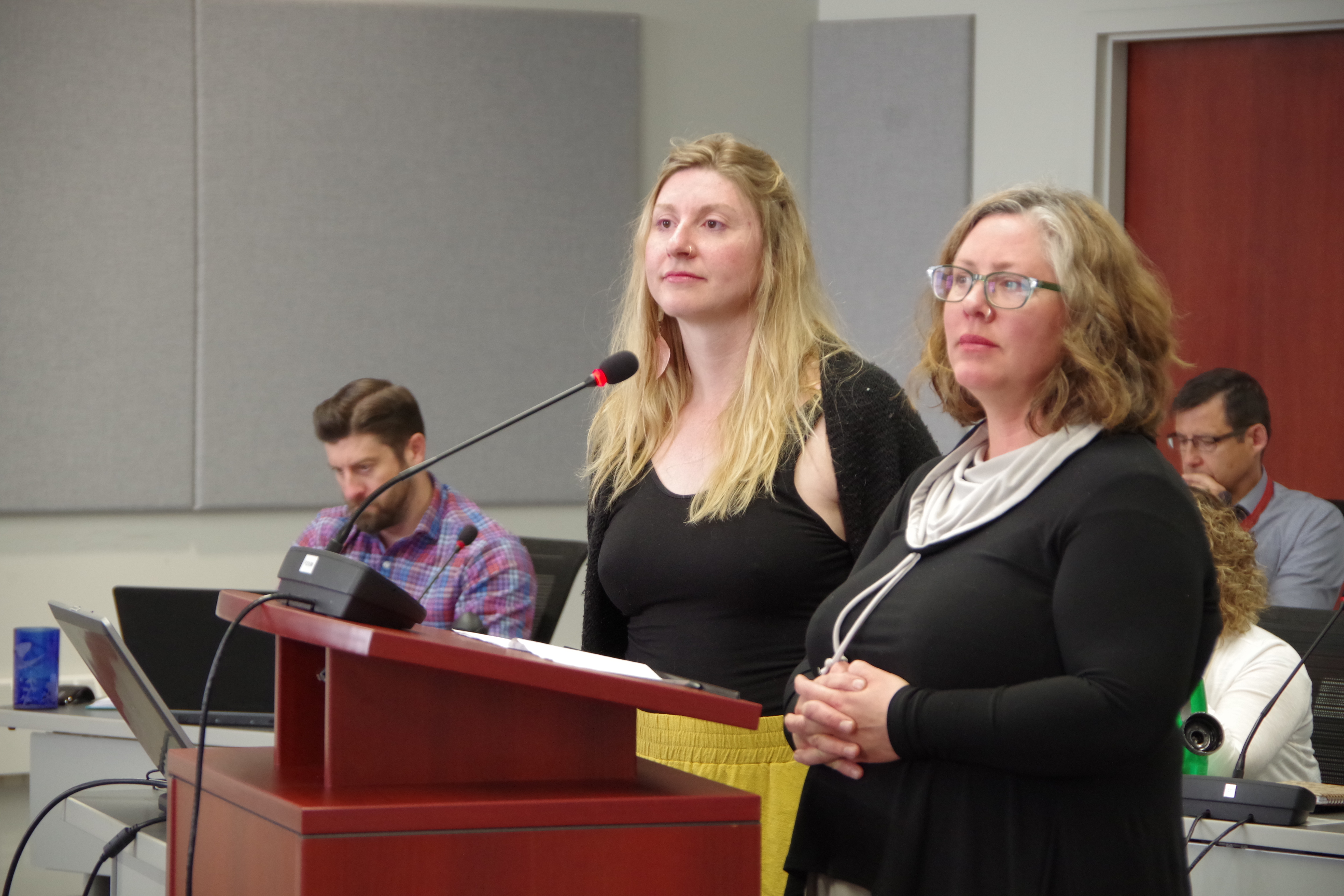
There is a real need for this type of housing say Westergreen and Robitaille, as 160 people are currently on a waitlist for housing first and 338 people were identified as homeless in 2018. Robitaille says the society’s experience running the women’s centre, the housing first program since 2016 as well as daycare, street outreach and advocacy qualifies them to run this new initiative.
The women’s society will be accessing funding from the Canada Mortgage and Housing Corporation (CMHC), GNWT and the society’s own funding sources to start the project. Rent will provide stable funding going forward.
“The plan is for residents to actually pay rent, so that would eventually end up paying for itself,” Robitaille says.
Tenants would be singles and could include chronically homeless people, people in need of mental health and addictions support, elders at risk of abuse, women fleeing violent partners or those who lack support from their family or community.
“They would be single occupancy units, so 42 people…These are the people that have the hardest time getting into programs,” Robitaille says.
The units would be run as a harm reduction approach, meaning tenants would not be forced to abstain from using substances such as alcohol. “We allow people to make their own choices and support them to try to mitigate the harm that comes out of those lifestyles…through counselling and various programs and support systems and having access to staff,” Robitaille says.
Councillor Stacie Smith, who voiced her support of the plans especially given the many Indigenous people who are facing homelessness, brought up the potential issue of neighbours seeing the building as a ‘slum.’
“My fear is that it will be looked upon, at some point, as a slum because it has so many individuals with unique issues,” she says.
Robitaille says the society would be providing security and staff at the location, as well as other programs, such as gardens, to both beautify and provide a sense of pride for residents in their homes. “We have a lot of work to do too, just around trying to change the narrative of how people are viewed. They’re not just drunk people – they’re human beings, they have trauma and the community needs to see that,” Robitaille says.
“We really want to maintain good community relationships,” Robitaille says, adding the society both sent letters and had executive director Bree Denning go door-to-door to talk with neighbours. What they heard back, she says, was support for the program.