



100.1 GO FM - We're Your Feel Good Pop Station

New Yk cab company wants city to modernize, and fast

A new Yellowknife cab company set to open April 1st is hoping the city can move fast in allowing them to use a wireless meter system.

Meda Shannahan of Yellowknife Cab Ltd. asked council Monday night for permission or a special provision to be able to install wireless taxi meters in their 35 cabs. Shannahan says approval of the meters is one of the last requirements before the company can get their cabs inspected and on the road.

“Currently taxi companies are required to use a mechanical meter – that is a bulky item, that has to be mounted onto the dashboard of a car, which obscures the driver’s visibility, it has wires running across the dash which looks unprofessional and can be considered an electrical fire hazard,” says Shannahan.

The system Yellowknife Cab plans to use is the DDS Wireless TaxiBook System, a ‘soft meter’, defined by the Passenger Transportation Board as devices which calculate distances based on GPS or smartphones and tablets loaded with taxi meter software. Shannahan says the system is encrypted, meaning only the creator DDS can access it.
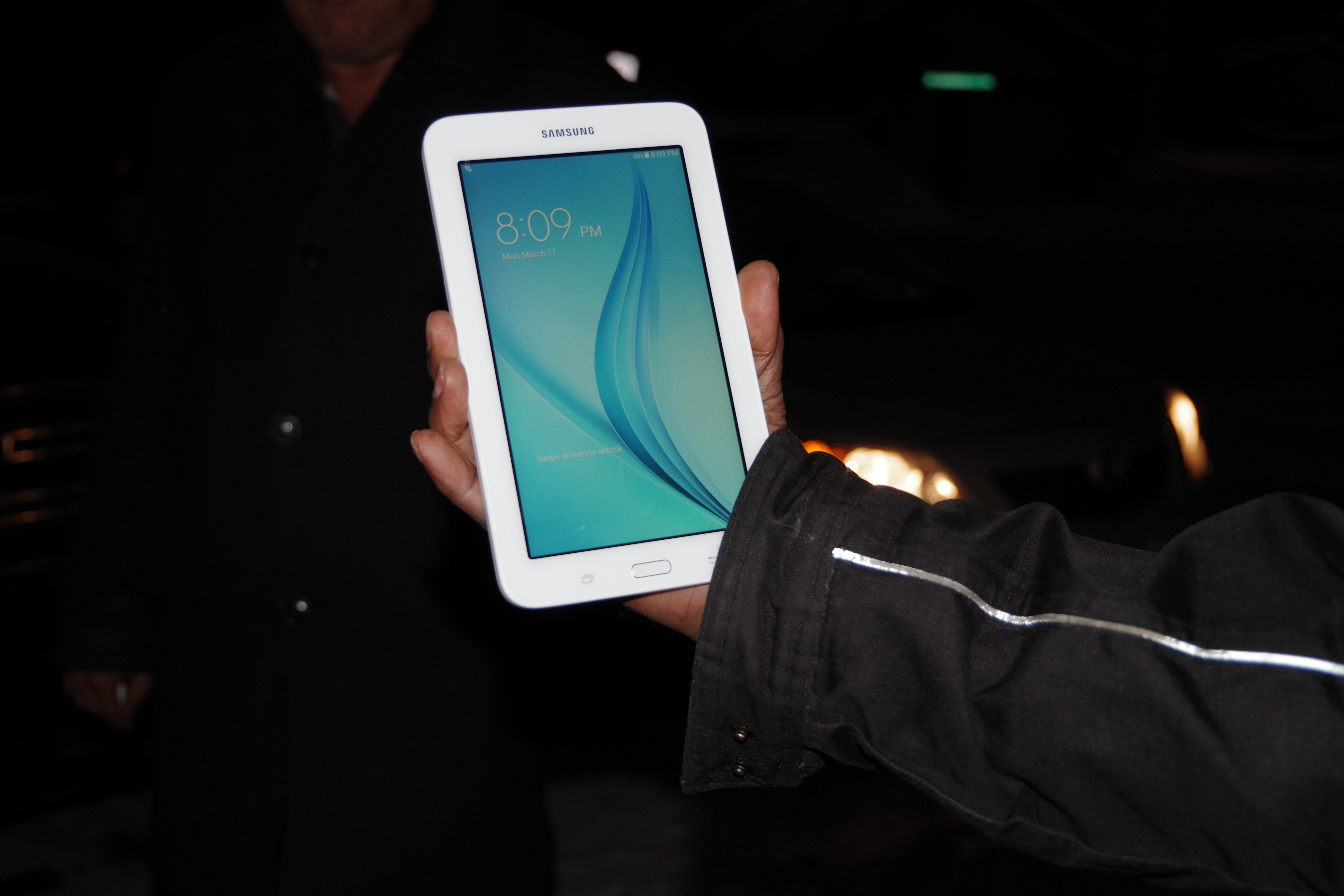
An example of how the DDS wireless taxi book system, a so-called ‘soft metre’, will look in a cab. Emelie Peacock photo

The meter has added benefits, Shannahan says, including being able to call passengers before arrival and fleet tracking – knowing where all drivers are at all times.

“This is high priority for our company as we need to ensure our drivers safety. And if there is an emergency, we know exactly where that car is,” she says.

Director of policy, communications and economic development Kerry Penney says the soft meter doesn’t fit within the definition of a taxi meter within the city’s bylaw 4526. Director of public safety Eric Bussey added the city has been researching these devices and looking at potential amendments to the bylaw.

“It’s exciting, a new cab company, but my number one question is how come you weren’t here like eight weeks ago?,” Councillor Niels Konge asked. He says less than a month to get the approval is far too short for the city.

President of Yellowknife Cab Ltd. Sibhat Berhane says the company sent a letter to the mayor weeks ago about this issue. “We’re doing our due diligence…It’s not blaming anybody, but we did try and we’re here now.”

Council will discuss Shannahan’s request at a committee meeting March 25th.

Emelie Peacock
Emelie Peacock
News Reporter

Continue Reading

You may also like


cjcd Now playing play

- Advertisement -

Related Articles

- Advertisement -

Latest News

Inuit Nunangat University to begin regional knowledge centre site selection

Following the selection of Arviat, Nunavut, as the site of Inuit Nunangat University’s main campus, the process to choose regional knowledge centres and satellite campuses across Inuit Nunangat is underway. Arviat, with a population of about 3,000, is Nunavut’s third-largest community and has one of the highest proportions of youth in the country.

Premier supports “dual use” aspects of country’s first “Defence Industrial Strategy”

The federal government announced the strategy Monday, describing it as the country’s first national defence industrial strategy. Simpson said those elements are particularly relevant to the North. He said equipment and technology systems intended for use in the Arctic should be tested in the territory’s northern climate and developed in partnership with northern governments, Indigenous rights holders and communities.

Nominee Program opens up for 2026

The Northwest Territories Nominee Program will be opening applications for the employer-driven and francophone streams starting March 9 at 9am.  

Yellowknife Fire Fighter Association campout fundraiser to be held this weekend

The Yellowknife Fire Fighter Association will be holding a campout this weekend on the roof of the Yellowknife CO-OP to raise funds and awareness for Muscular Dystrophy Canada. 

Search continues for ways to deal with 200,000 tons of arsenic dust at Giant Mine

Scientists presented projects for a more permanent solution to hundreds of thousands of tons arsenic dust from the mine. One method uses local beer to fuel a transformation of the toxic dust, while another tries to turn it into glass. Another proposed method looks at turning the dust into a highly sought commodity known as metallic arsenic. Additional proposals look whether robotic technology could allow crews to virtually pilot the extraction of the dust while “sipping coffee” from a distance.



