The NWT’s legislature ranks last in the number of women holding elected office among parliaments across Canada, this is something the territorial government wants to change.
A special committee is touring the NWT to ask residents about things that stop women from running for public office. It also wants to know how those barriers could be helped or removed, and what incentives might encourage women to put their names forward.
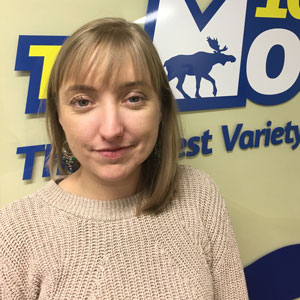
Yellowknife Centre MLA Julie Green is touring with the committee and says the first meeting in Fort Smith saw 15 women and men come out. Green heard ideas ranging from reaching out to Grade 7 to 9 students to get them interested in politics, to subsidies for childcare or campaign expenses.
“Certainly childcare is a question for women who have children at home. We’re interested in knowing whether they would be eligible to get a subsidy for childcare. Campaign expenses as well, women often find it difficult to round up the money out of their family budgets for a campaign run.”
Of the 19 members of the legislature, two are women. Green is joined by Range Lake MLA Caroline Cochrane, who is also minister of education and status of women. In the last legislative assembly there were two women, and the previous assembly three women sat.
Green says what helped her make the move to politics, this is her first term at the legislature, was having female role models in politics, a team of volunteers to help get elected and attending campaign school.
“Trying to come to terms with planning and and strategy..the campaign school which I attended in 2015 was certainly very helpful in that way and I’m looking forward to having more campaign schools for women who are thinking about running in the 2019 territorial election.”
The legislative assembly has a goal of increasing what is now 10 per cent women in the legislature to 20 per cent by 2023 and 30 per cent by 2027, according to a May 31 discussion paper. The territory made early strides in women’s leadership and diversity in territorial politics, it adds, including most prominently Nellie Cournoyea as the first Indigenous woman and second woman in Canada to hold the position of Premier. Despite these successes, the NWT legislature ranks last among all of Canada’s parliaments in the representation of women.
The next public meeting is scheduled for 7 p.m. Tuesday at the recreation centre in Hay River. Meetings in Fort Providence on January 10th, Dettah on the 16th and at the legislative assembly in Yellowknife on the 17th at 7 p.m. will follow. Those who can’t attend in person can send their thoughts to [email protected] or [email protected].