
The new C19 rifles are replacing Lee-Enfield rifles that have been a mainstay of the Rangers for decades
The Canadian Rangers are getting new rifles, Defence Minister Harjiit Sajjan announced in Yellowknife today.
“Today, we are proud to announce the delivery of the brand new C-19 Ranger Rifles here at the first Canadian Ranger Patrol Group headquarters,” says Minister Sajjan, at 440 Squadron’s hangar in Yellowknife today.
The new .308 calibre C19 rifles replace the Lee-Enfield .303 rifles the Canadian Rangers have used since 1947.
“Your new rifles perform extremely well in the conditions well below freezing,” Minister Sajjan says, and will support surveillance and patrols in the North.
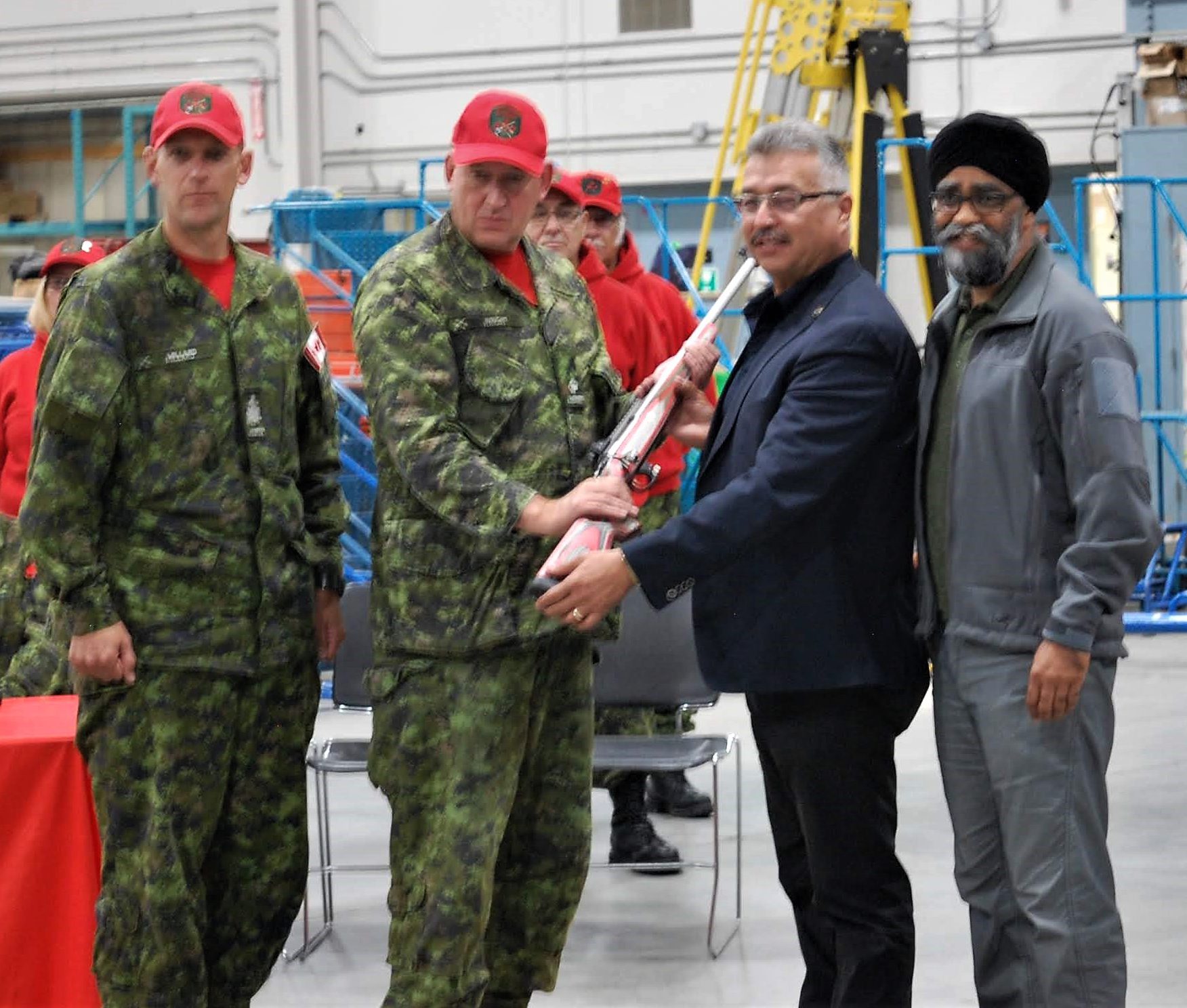
The new rifles have a unique red and black pattern, designed to make them visually identifiable from a distance.
Territorial MP Michael McLeod was an active Ranger up until he was elected in 2015. He says he grew up using the .303 rifle.
“This one looks very nice,” MP McLeod says about the new C19 rifles.
“Rangers here in Yellowknife are just one of the many groups across the country that will receive new rifles over the next few years,” says Minister Sajjan.
“Your motto reminds us of the need to be aware and alert on this vast territory of ours,” Minister Sajjan says, in reference to the Canadian Rangers motto Vigilans, which means “watching,” in Latin.
Some 1800 Canadian Rangers and 1400 Junior Rangers form 60 patrol groups in 42 communities across the North.
“The military presence we provide in support of our sovereignty in the Arctic is extremely important and valuable to us,” says Minister Sajjan.
“Increasingly this region is a key crossroads where international trade, climate change and global security intersect. And that is why we are making sure that you have the equipment you need to do your jobs.”
As announced in Canada’s new defence policy, the government plans to enhance and expand Canadian Ranger training while strengthening capabilities within the Canadian Armed Forces, he says.
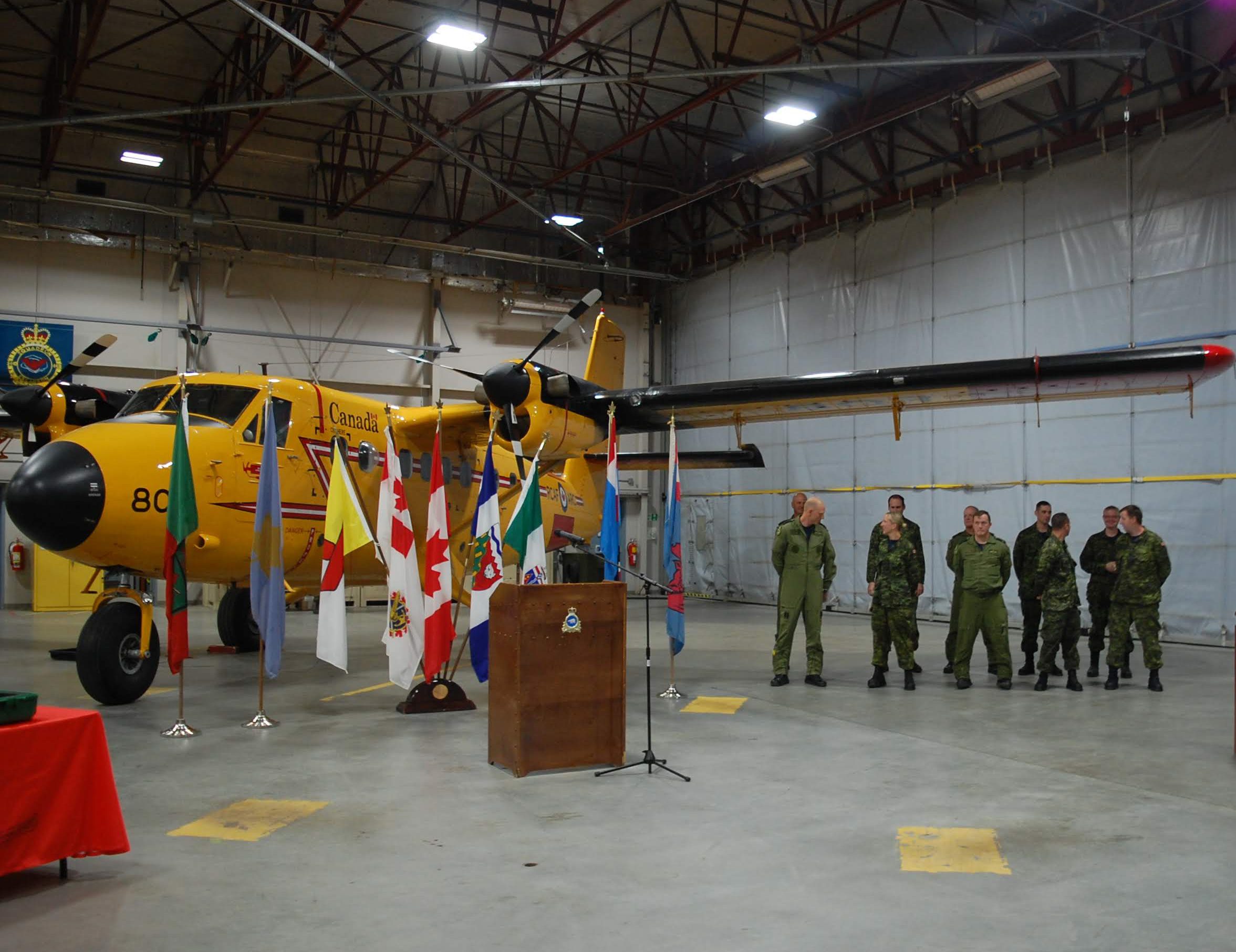
Minister Sajjan says the government also plans to replace the squadron’s CC-138 Twin Otter aircrafts before their end of life.
“This aircraft that you see behind me has been a steady reliable workhorse in the Royal Canadian Airforce fleet since the 1970s,” Minister Sajjan says.
The aircraft are used in transport and support roles to the Canadian Forces’ northern operations and in search and rescue (SAR) missions.
The Department of National Defence and the Canadian Armed Forces will work together to “better understand our mobility needs in the North,” he says. After the government assesses needs in the North, they will launch a “competitive process” to procure a replacement aircraft. But in the meantime, a repair and overall life-extension project have the potential to extend the current fleet for another seven years.
“Through these maintenance projects, we will keep the fleet operational, until 2025.”