



100.1 GO FM - We're Your Feel Good Pop Station

High arsenic levels in Kam Lake from 1989 prompt advisory

A public health advisory concerning arsenic levels in lake water around Yellowknife was released by the NWT’s chief public health officer Monday.

READ: The full advisory on the Department of Health and Social Service’s website

The advisory is similar to one issued last year, with the addition of data concerning dissolved arsenic levels in Kam Lake.

It can’t be called new data, however, as the information on Kam Lake is from nearly 30 years ago.

Old data from 1989 was recently found by health and social services. It showed that Kam Lake had some of the highest arsenic levels in the Yellowknife area.
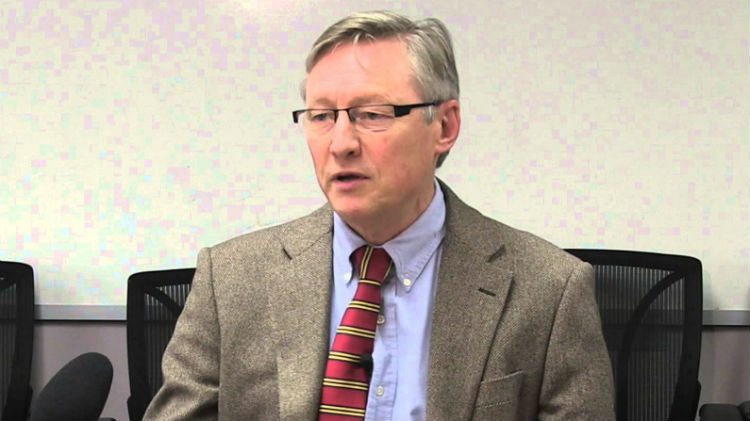
Dr. André Corriveau, the territory’s chief public health officer.

While this is outdated data, the territory’s chief public health officer Dr. André Corriveau said they’re releasing the updated advisory to be better safe than sorry.

“We think it’s probably good that people assume that this lake is still contaminated,” Corriveau told Moose FM.

According to the information, in 1989 Kam Lake had the highest rate of dissolved arsenic in its water in the Yellowknife area, above 500 parts per billion.

“It could be that it’s a little bit less now, you know 30 years later,” said Corriveau.

“But until we get newer data we have to put it as the best information we have. As a precautionary principle we have to assume that it’s probably still quite contaminated.”

The public advisory advises the public “not to use Kam Lake for swimming, fishing or harvesting of nearby berries or other edible plants.

“Residents can continue to enjoy paddling on the lake or walking through the area.” [pdf]

Water from Kam Lake should also not be consumed according to the advisory.

“It’s a reminder that it’s a contaminated lake and it might be pretty to look at but it’s not a place where you’d want to go swimming every day or use for catching fish that you eat,” Corriveau said.

He believes an updated study of the contamination in Kam Lake should be done.

Continue Reading

You may also like


cjcd Now playing play

- Advertisement -

Related Articles

- Advertisement -

Latest News

Inuit Nunangat University to begin regional knowledge centre site selection

Following the selection of Arviat, Nunavut, as the site of Inuit Nunangat University’s main campus, the process to choose regional knowledge centres and satellite campuses across Inuit Nunangat is underway. Arviat, with a population of about 3,000, is Nunavut’s third-largest community and has one of the highest proportions of youth in the country.

Premier supports “dual use” aspects of country’s first “Defence Industrial Strategy”

The federal government announced the strategy Monday, describing it as the country’s first national defence industrial strategy. Simpson said those elements are particularly relevant to the North. He said equipment and technology systems intended for use in the Arctic should be tested in the territory’s northern climate and developed in partnership with northern governments, Indigenous rights holders and communities.

Nominee Program opens up for 2026

The Northwest Territories Nominee Program will be opening applications for the employer-driven and francophone streams starting March 9 at 9am.  

Yellowknife Fire Fighter Association campout fundraiser to be held this weekend

The Yellowknife Fire Fighter Association will be holding a campout this weekend on the roof of the Yellowknife CO-OP to raise funds and awareness for Muscular Dystrophy Canada. 

Search continues for ways to deal with 200,000 tons of arsenic dust at Giant Mine

Scientists presented projects for a more permanent solution to hundreds of thousands of tons arsenic dust from the mine. One method uses local beer to fuel a transformation of the toxic dust, while another tries to turn it into glass. Another proposed method looks at turning the dust into a highly sought commodity known as metallic arsenic. Additional proposals look whether robotic technology could allow crews to virtually pilot the extraction of the dust while “sipping coffee” from a distance.



