



100.1 GO FM - We're Your Feel Good Pop Station

35 On The Land projects to be supported across the NWT

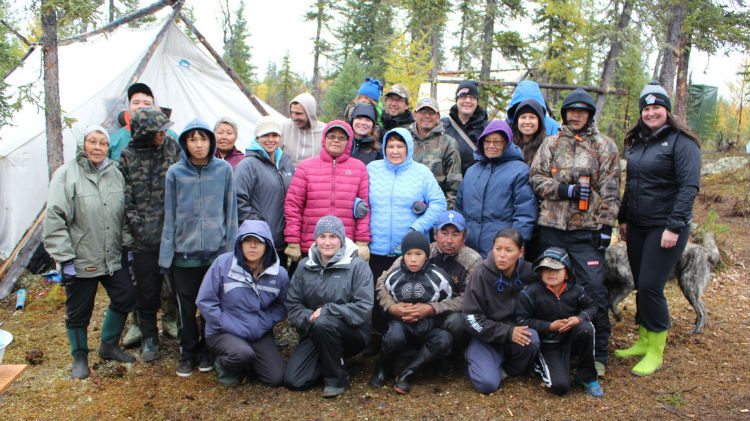
There’s a growing need for more land-based programming in the territory; now many organizations will be able to fund activities thanks to support from the NWT On The Land Collaborative.

RELATED: Photo exhibit celebrates Dene people’s life ‘on the land’ in NWT

This is the group’s second year supporting on the land projects. They’re supporting 35 projects across the territory, and fully funding most of those to the tune of $634,845 in total.

NWT On The Land Collaborative’s logo.

“The collaborative was brought together because there were a number of difference government institutions and different organizations, philanthropic organizations, non-profits, Indigenous governments that recognize the importance of land-based programming,” said On The Land Programs director Jess Dunkin.

The collaborative project makes it easier for projects to find funding in one spot rather than apply for small pots from different groups in hopes of receiving funds from all of them.

“There’s growing evidence, what people know anecdotally that being on the land is good for people, it’s good for families, it’s good for communities and it’s also good for the land,” Dunkin said.

“The problem was, it was difficult for individuals and organizations to access funds to get out on the land.”

This year, the collaborative is helping to fund programs like a $3,000 canoe trip for freshmen in Fort Smith and Trails on the Land, a 10-day trip out in the Delta traveling the traditional trail leading from Tuktoyaktuk.

READ: 2016 projects

In Yellowknife, $25,000 is going towards an environment home monitoring and traditional knowledge project through the Yellowknives Dene First Nation and traditional youth leadership camps sponsored by the YWCA.

This year, the average project will receive over $18,000 in funding from the collaborative.

Continue Reading

You may also like


cjcd Now playing play

- Advertisement -

Related Articles

- Advertisement -

Latest News

Alternatives North suspects regulatory capture in ITI

Alternatives North believe they have uncovered evidence of the ‘regulatory capture’ of the GNWT Department of Industry Trade and Investment (ITI) by the mining industry, specifically regarding the regulatory policies surrounding the Mineral Resources Act. 

Relentless Indigenous Woman talks languages, “literally” changing world

Dr. Candace Manitopyes, aka The Relentless Indigenous Woman, is working with Elders and Language Keepers in the North and across Turtle Island on relaunching an Indigenous languages program. Dr. Manitopyes says there is an urgency to support Indigenous language learning, especially for Northern First Nations communities, where culturally responsive community rooted resources are even more scarce.

New generation of Indigenous languages speakers celebrated in the NWT

“The language is who we are. Language is our Elders. Language is what makes us who we are,” said Paul Andrew, who emceed a special gathering in Yellowknife that included mentors and apprentice Indigenous language learners, their families, organizers and community leaders. This year’s cohort engaged in learned the languages of Gwich’in, Tłı̨chǫ, Inuvialuktun, Inuinnaqtun, Inuktitut,Dene Kede, Dene Zhatıé, Nêhiyawêwin, Dëne Sųłıné and Wı̀ılı̀ıdeh. 

NWT services to be made accessible in Indigenous languages, says GNWT

The territorial government will soon begin offering all services in each of the 11 official languages including the nine Indigenous languages of Dinjii Zhu Ginjik (Gwich’in), ᐃᓄᒃᑎᑐᑦ (Inuktitut), Inuvialuktun, Inuinnaqtun, Dene Kǝdǝ́/ Sahtúot'ı̨nę Yatı̨ (North Slavey), Dene Zhatıé (South Slavey), Tłı̨chǫ, Dëne Sųłıné (Chipewyan) and Nëhiyawëwin (Cree). Previously, the services had been available in English and French only.

Support and funding for “Language Cafes” to launch this spring

The NWT Literacy Council has started a new funding program to help support Indigenous language revitalization. Kathryn Barry Paddock, Executive Director of the NWT Literacy Council made the announcement that the organization is promoting more funding and the creation of more accessible spaces for Indigenous language through "Language Cafe" events.



