



100.1 GO FM - We're Your Feel Good Pop Station

Owner calls for bylaw changes after dog hit at sandpits

Yellowknife councillors could consider changing the city’s dog bylaw to enforce more rules out at the sandpits.

This comes after a woman’s yorkie schnauzer was hit by a vehicle in the area, suffering a broken pelvis.

RELATED: “It was devastating”: Dog run over at Yellowknife’s sandpits

The sandpits are one of the three off-leash areas for owners to take their dogs in Yellowknife. It’s not uncommon to see people running their dogs beside their vehicles there, something that leads to several pet fatalities a year.

“It’s so dangerous and people don’t understand how dangerous it is until somebody that you know gets hurt,” said Trudy Hause. Her dog Elwood was run over in October while at the sandpits.

“People just don’t understand that, and they continue to run out there with their dogs outside their trucks. It’s just dangerous. It’s just not worth losing your dog over, especially when you run over your own.”

Change needed

Hause says she’s lucky her dog survived, and now she’s petitioning for city councillors to crack down on people who drive alongside their pets in the area.
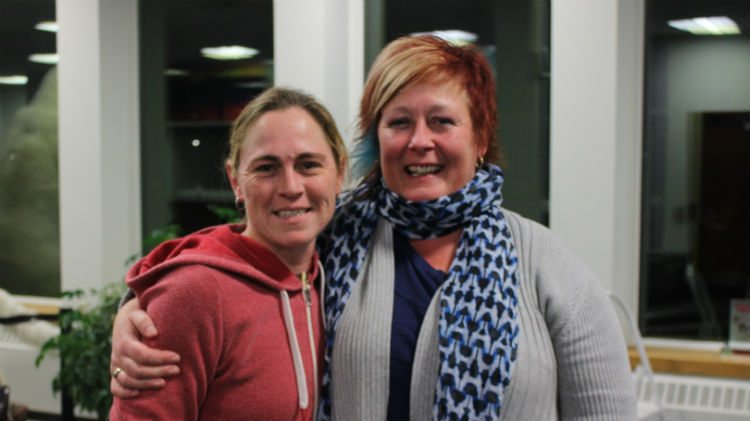
Melissa Ruf (left) and Trudy Hause (right) at city hall following Monday's council meeting.
Melissa Ruf, left, and Trudy Hause following Monday’s council meeting. (Gabriela Panza-Beltrandi/Moose FM)

On Monday night, her and Melissa Ruf, a certified dog trainer, spoke to councillors about the need to make off-leash dogs areas safer in the city.

They’re asking for the city to enforce a speed limit of 15 kilometres per hour at the sandpits and Tin Can Hill, and for the city to set aside funds to educate pet owners about the dangers of running their dogs beside their cars.

“Any time you have an off-leash area that is used by dog guardians as well as people, with recreational vehicles or bicycling, there’s going to be conflict,” Ruf told councillors.

She thinks the city should consider safety measures like signage or designate specific areas for dog walkers within the sandpits.

“The dog bylaw currently prohibits allowing dogs to pursue vehicles on highways,” Ruf said.

“But [it] fails to include the high-risk areas such as the sandpits and Dettah ice road, where numerous pet fatalities have already occurred.”

No bylaws
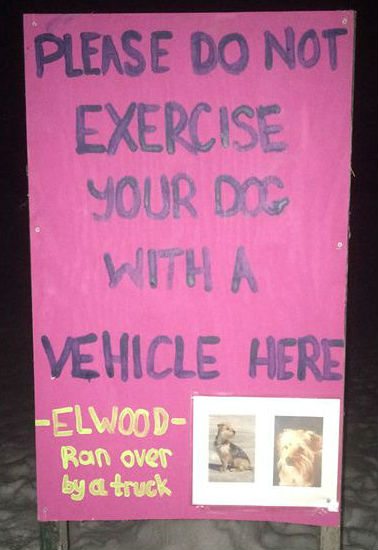
A warning posted by a community member at the sandpits. Photo courtesy: Tiarella Hanna on Facebook.

There was some confusion at city hall about what bylaw would apply to this situation.

Section 34 of the city’s dog by-law [pdf] says “no person shall allow a dog to be outside of the passenger cab of a motor vehicle on a highway.”

Most roads in Yellowknife fall under this bylaw.

However, according to city administration, the sandpits are not considered a designated highway, and thus fall outside of the city’s jurisdiction in this case.

Administration says it will look into possible amendments to the dog bylaw and report back to councillors within a couple of weeks.

Until then, Hause says her fight to stop pet owners from driving at the sandpits will continue.

“I’m not giving up on this. I’m hoping to push this through with everyone’s help.”

 

Continue Reading

You may also like


cjcd Now playing play

- Advertisement -

Related Articles

- Advertisement -

Latest News

Alternatives North suspects regulatory capture in ITI

Alternatives North believe they have uncovered evidence of the ‘regulatory capture’ of the GNWT Department of Industry Trade and Investment (ITI) by the mining industry, specifically regarding the regulatory policies surrounding the Mineral Resources Act. 

Relentless Indigenous Woman talks languages, “literally” changing world

Dr. Candace Manitopyes, aka The Relentless Indigenous Woman, is working with Elders and Language Keepers in the North and across Turtle Island on relaunching an Indigenous languages program. Dr. Manitopyes says there is an urgency to support Indigenous language learning, especially for Northern First Nations communities, where culturally responsive community rooted resources are even more scarce.

New generation of Indigenous languages speakers celebrated in the NWT

“The language is who we are. Language is our Elders. Language is what makes us who we are,” said Paul Andrew, who emceed a special gathering in Yellowknife that included mentors and apprentice Indigenous language learners, their families, organizers and community leaders. This year’s cohort engaged in learned the languages of Gwich’in, Tłı̨chǫ, Inuvialuktun, Inuinnaqtun, Inuktitut,Dene Kede, Dene Zhatıé, Nêhiyawêwin, Dëne Sųłıné and Wı̀ılı̀ıdeh. 

NWT services to be made accessible in Indigenous languages, says GNWT

The territorial government will soon begin offering all services in each of the 11 official languages including the nine Indigenous languages of Dinjii Zhu Ginjik (Gwich’in), ᐃᓄᒃᑎᑐᑦ (Inuktitut), Inuvialuktun, Inuinnaqtun, Dene Kǝdǝ́/ Sahtúot'ı̨nę Yatı̨ (North Slavey), Dene Zhatıé (South Slavey), Tłı̨chǫ, Dëne Sųłıné (Chipewyan) and Nëhiyawëwin (Cree). Previously, the services had been available in English and French only.

Support and funding for “Language Cafes” to launch this spring

The NWT Literacy Council has started a new funding program to help support Indigenous language revitalization. Kathryn Barry Paddock, Executive Director of the NWT Literacy Council made the announcement that the organization is promoting more funding and the creation of more accessible spaces for Indigenous language through "Language Cafe" events.



