
The territory’s Department of Education, Culture and Employment (ECE) has laid out a four-year action plan to improve employment success for NWT residents.
The Skills4Success action plan was tabled in the legislature earlier this month, and provides a path to determine appropriate programs and supports for people looking to get into the Northern workforce.
The program has four foundational goals to focus on, from skills development to streamlining supports, focusing on NWT workforce partnerships, and providing labour market information to residents.
“We want Northern residents to be first in line for jobs in the NWT,” said Andy Bevan, assistant deputy minister of labour and income security with ECE.
Top 20 employable jobs
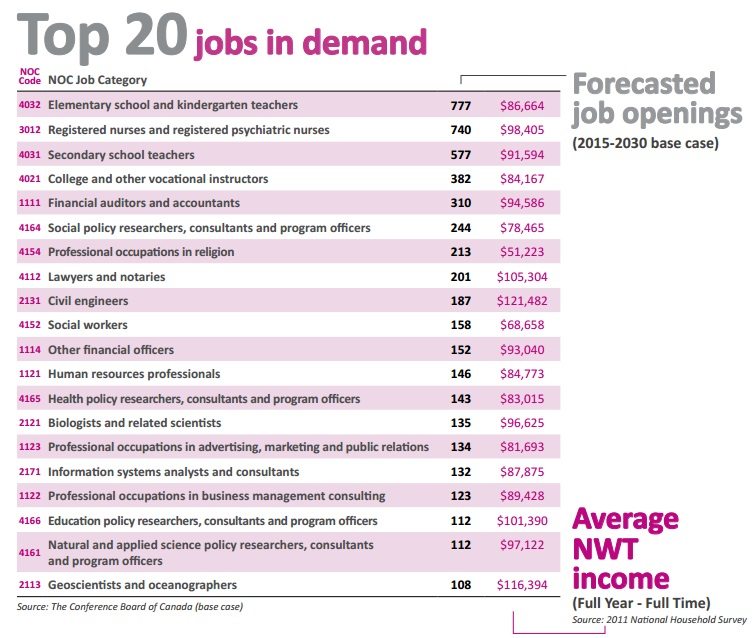
The department has also put out a list of the top 20 jobs [pdf] that will be in demand in the NWT over the next 15 years.
Depending on someone’s level of education, these can range from school teachers to nurses, administrative officers, and carpenters.
While Bevan insists the territory has a strong labour market, he admits there are some areas experiencing shortages.
“We know we have a skills shortage,” he said. “I think our labour market could be defined as saying that most if not all Northerners who have appropriate levels of education are employed.
“And yet employers still in some occasions have to either look to hire southern Canadians or in some cases maybe even people from overseas.”
Closing the gap through accessible education
Bevan says he wants residents, especially young people, to be positioned to be successful in the workplace.
To do that, he says, they need the right credentials, the right experiences, and the right education to take the positions that are available to them through the labour market.
In filling the gap of workers needed, Bevan says his department is working with education partners to provide and support those getting an education in fields that are most needed in the easiest way possible.
“That’s the first part, knowing what our employers and our industries and our economy requires, and then the second part is to make sure that our programs are aligned with those in-demand occupations,” he said.
“We want to make sure that our residents … are able to access as many post-secondary opportunities as possible.”
However, he added that those pursuing degrees outside of the top 20 fields will also be supported.
“We want our residents to aspire to be whatever it is they want to be,” he said.
“But we also want to provide them with information that says, ‘These are the occupations of the future and obviously there will be some opportunities for you if you return to the NWT to find work in those occupations.'”