
The territory’s Department of Municipal and Community Affairs (MACA) isn’t adequately supporting community governments in the delivery of some of the essential services it funds.
That’s according to a new report entitled Support to Communities for Municipal Services in the Northwest Territories: Department of Municipal and Community Affairs, which was tabled in the NWT legislature Tuesday afternoon.
READ: The auditor general’s full report
The focus of the report – which was conducted by the Auditor General of Canada – was to determine if the department properly monitors the provision of essential services in NWT communities.
Many smaller communities are highly dependent on the territorial government for essential services like the supply of clean drinking water and fire protection as well as essential infrastructure like roads and landfills.
Without adequate support from the GNWT, community governments may not always deliver essential services as required, thereby jeopardizing the health and wellbeing of its residents.
Overall, the audit found that MACA didn’t do enough to help community governments improve the delivery of some of their services.
The audit tabled Tuesday examined MACA’s activities from April 2013 to June 2016 and was finalized in late August.
Key findings and recommendations
Under territorial legislation, community governments are responsible for providing residents with essential services including those related to drinking water, waste management and fire protection.
However, MACA is responsible for monitoring and supporting the delivery of those services and intervening if any services are at risk.
Overall, while MACA did monitor community governments in the provision of some essential services, the audit found that the department didn’t adequately assist them in ensuring they were provided in accordance with requirements.
A total of 13 recommendations were provided as part of the audit – including the need for improved delivery and monitoring of fire protection services, emergency preparedness, drinking water and waste management in NWT communities.
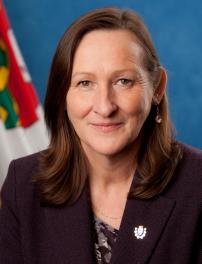
Caroline Cochrane, the minister responsible for MACA, accepted all 13 recommendations Tuesday and promised an action plan within the next 120 days.
“I welcome the report of the Office of the Auditor on the Department of Municipal and Community Affairs’ performance,” she said in a statement.
“Their oversight will help us to make targeted improvements to the services and support provided by the department to community governments.”
Cochrane says her department will work with necessary stakeholders to develop an action plan in response to the 13 recommendations provided.
That plan will then be provided to the Standing Committee on Government Operations within 120 days of the audit being tabled.
Public review looms
The Standing Committee on Government Operations will also hold a public review of the report.
The committee made up of MLAs has a mandate to review all reports provided by the auditor general to the NWT legislature.
In 2015, the auditor general’s office reviewed corrections services in the Northwest Territories. The year prior, it issued its findings on child and family services, and the year before that it reviewed income security programs.
It remains to be seen when exactly the Standing Committee on Government Operations will hold a public review of the auditor general’s most recent report.