
100.1 GO FM - We're Your Feel Good Pop Station

Yellowknife MLA: GNWT ‘delaying progress’ by not rolling out 911

The MLA for Frame Lake still wants to know why 911 hasn’t been rolled out across the Northwest Territories.

On Tuesday, Kevin O’Reilly asked cabinet if it was still committed to implementing the service or at the very least, changing an automated message that doesn’t tell residents which number to call in the event of an emergency.

RELATED: Supreme Court of Canada dismisses Bell’s 911 challenge

Currently, when people in the territory call 911 – a service that doesn’t exist – they’ll hear a message telling them where to direct their call instead of a message providing them with emergency numbers.

O’Reilly first brought up the issue during a June session.

At the time, the minister of Municipal and Community Affairs committed to rolling out a phased-in approach of the service and finding out if Northwestel could change the automated message.

Four months later, O’Reilly says the government is delaying real progress by having not done either.
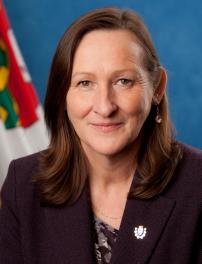
Caroline Cochrane, minister of Municipal and Community Affairs.

“What we have here is how the $150 million reduction target has hamstrung cabinet in introducing the most basic new service designed to protect lives and public safety that now exists in every other part of this country except Nunavut,” he said.

Municipal and Community Affairs Minister Caroline Cochrane responded to O’Reilly’s concerns Tuesday, saying her department has met with both Northwestel and the federal government to discuss the issue.

“We have met with the federal government, a couple of times actually,” she told MLAs. “We’ve been asking them to consider our request for 911 under public safety and under future investments in infrastructure funding.

“We have really put forward the case that 911 is an issue within the territories.”

However, don’t expect the automated message you hear when you dial 911 to change anytime soon.

“Northwestel is not willing at this time to change it,” added Cochrane. “They say it’s due to technical and liability concerns.

“They’ve also talked that it would require a technical upgrade and they’re concerned that it may jeopardize the current message should a new approach prove not successful.”

That being said however, Cochrane says her department is working with cell providers about improving the message on cellular devices.


Mike Gibbins
Mike Gibbins
Hello and thank you for listening to 100.1 Moose FM! To contact me, you can email me, find me on Twitter or call (867) 920-4663.

Continue Reading

You may also like


cjcd Now playing play

- Advertisement -

Related Articles

- Advertisement -

Latest News

Inuit Nunangat University to begin regional knowledge centre site selection

Following the selection of Arviat, Nunavut, as the site of Inuit Nunangat University’s main campus, the process to choose regional knowledge centres and satellite campuses across Inuit Nunangat is underway. Arviat, with a population of about 3,000, is Nunavut’s third-largest community and has one of the highest proportions of youth in the country.

Premier supports “dual use” aspects of country’s first “Defence Industrial Strategy”

The federal government announced the strategy Monday, describing it as the country’s first national defence industrial strategy. Simpson said those elements are particularly relevant to the North. He said equipment and technology systems intended for use in the Arctic should be tested in the territory’s northern climate and developed in partnership with northern governments, Indigenous rights holders and communities.

Nominee Program opens up for 2026

The Northwest Territories Nominee Program will be opening applications for the employer-driven and francophone streams starting March 9 at 9am.  

Yellowknife Fire Fighter Association campout fundraiser to be held this weekend

The Yellowknife Fire Fighter Association will be holding a campout this weekend on the roof of the Yellowknife CO-OP to raise funds and awareness for Muscular Dystrophy Canada. 

Search continues for ways to deal with 200,000 tons of arsenic dust at Giant Mine

Scientists presented projects for a more permanent solution to hundreds of thousands of tons arsenic dust from the mine. One method uses local beer to fuel a transformation of the toxic dust, while another tries to turn it into glass. Another proposed method looks at turning the dust into a highly sought commodity known as metallic arsenic. Additional proposals look whether robotic technology could allow crews to virtually pilot the extraction of the dust while “sipping coffee” from a distance.