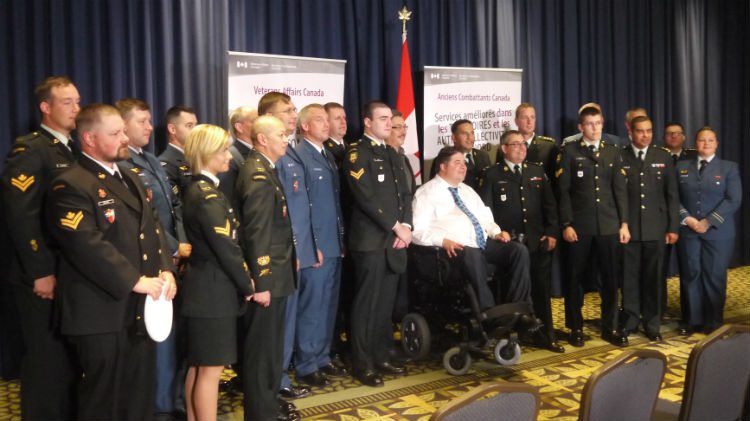
The federal government announced on Wednesday that outreach to veterans will be expanded in the territories, including the number of social workers who are made available to families.
Kent Hehr, minister of veterans affairs and associate minister of national defence, made the announcement at the Explorer Hotel on Wednesday afternoon, with veterans and veterans’ families in attendance.
The funding will involve changes to frontline staff, who will begin traveling to the territories and other northern communities every month starting August 31 to meet face-to-face with veterans and their families. Yellowknife, Whitehorse and Iqaluit will be the first areas visited.
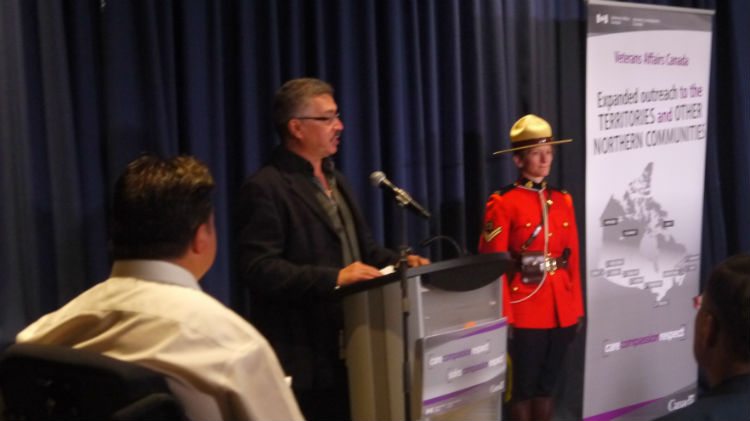
“It’s a commitment by our government to ensure that the North is looked after, appropriately staffed, and monitored, which was not happening before we came into office,” said Hehr.
The department currently serves 300 people across the entire North, but officials believe many people don’t know about the various services they may have access to.
To address this concern, veterans affairs is putting together an outreach plan that will work to inform veterans and their families of who’s eligible for benefits and services.
To get that message out and to improve services, up to 400 new employees will be hired across the country. As of May, more than 250 new frontline employees have been hired.
One of the key areas the government is looking to address is the number of caseloads per case manager. In recent years, Hehr says case workers have handled up to 45 cases each, when only 25 cases would normally be effective per person.
The department of veterans affairs is responsible for providing supports to those who serve or have served Canada, whether it’s in the armed forces, with the rangers or even RCMP.
“We have everything from pension, understanding benefits and medical examinations to case management which will work with the veteran and their families,” said Hehr.
The announcement comes after the Liberals’ 2016 budget, which invested heavily in benefits and services for veterans, included enriched disability awards, expanded access to permanent impairment allowances and a more generous income replacement program for the wounded.
The budget also included money to a reopen nine regional veterans affairs offices that were closed by the previous Conservative government. By May 2017, offices will reopen in:
- Charlottetown, PE
- Sydney, NS
- Windsor, ON
- Thunder Bay, ON
- Saskatoon, SK
- Brandon, MB
- Prince George, BC
- Kelowna, BC
A tenth office will open in Surrey, BC, and outreach will be expanded to veterans in the territories. In total, the budget includes $5.6 billion over six years, starting this year.
WELCOME NEWS
Veterans were already reacting to the news on Wednesday, including Kevin McLeod, 58, who served in the armed forces for 28 years as a combat engineer and for two years as commander of the northern region.
For Mcleod, who traveled around the world with the forces, one of the biggest issues in the North is getting the word out there.
“I think a lot of it is communications, knowing that there’s a support system out there,” McLeod said. “Folks that have issues that are caused by their service, they may feel alone.
“But the announcement the minister’s made to wrestle this to the ground perhaps is a solution for them.”
One of the challenging aspects of care for service members in the North is the remoteness of certain communities, McLeod says. For many down south, services are accessible in their community, whereas many in the North are required to get a plane.
“If we were living in Petawawa or Edmonton where they have all the support system that’s right there, it would make it easier for them to access it to hear from their peers,” said McLeod. “It’s the ability to access it and in a timely manner.”