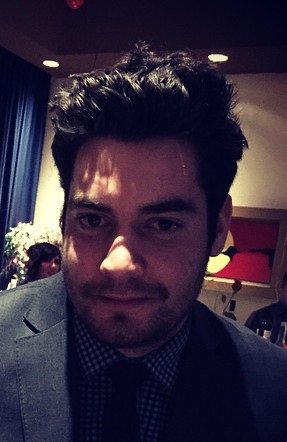
Territorial finance minister Robert C. McLeod insisted Wednesday that the government did not resort to austerity measures as he tabled his first budget in the NWT legislature.
Heading into this government’s first spring session, there had been widespread fear of job cuts and other austerity measures in response to the territory’s harsh economic climate.
Just last week, 58 government staffers received an ‘affected employee notice’ from the GNWT. Even though notices were issued, the government maintained that no decisions had been made at the time.
Read: Job cuts? Or more tax? MLAs weigh NWT’s tough choices
On Tuesday, Premier Bob McLeod opened the current five-week sitting by telling MLAs the 2016/2017 budget would be void of austerity measures.
“This is simply what responsible governments do to make sure they can continue to afford the programs and services the public needs by trimming and redirecting spending to keep it in line with revenues,” he said.
That message was echoed by Robert C. McLeod upon delivering the budget Wednesday.
“This is not an austerity measures budget,” he said. “An austerity measures budget is one where there’s a lot of job loss and you’re raising your taxes to try and offset some of your expenditures.
“If you look at what we’re doing, it’s not severe job cuts. I looked up the definition [Wednesday] morning and this is definitely not an austerity budget. I Googled it.”
Of the 58 workers who were told they could lose their jobs, McLeod says most have since been accommodated.
“We’re down to 19 positions that haven’t been accommodated yet,” he said. “The rest have been accommodated so I think we have four months and we’re still working on getting the 19 accommodated.”
Should there be any cuts, Mike Aumond – the deputy minister of finance – says some of them would be offset by new positions created through forced growth.
How close are we to the magic number of $150 million?
Earlier this year, the government said it needed to find $150 in a combination of revenue and expenditure measures over the next five years to avoid running into deficits.
Given the territory’s small tax base, significant tax increases aren’t much of an option since they’d place a lofty burden on residents and further drive up the cost of living. That had many people thinking cuts were on the way.
According to McLeod, this budget will get the government almost halfway to its goal of $150 million after it found $68 million in savings and revenues. It also means the territory will post a surplus of $119 million this year.
Had finance officials not taken any steps to curtail spending, the government would start posting deficits and borrowing more money by 2019.
Where will cuts be felt?
In total, $31 million will be cut from government programs. The GNWT will save an additional $27 million by not renewing “sunset programs” destined to end anyways.
“Anytime you’re looking at any type of reduction, it’s going to have an effect somewhere,” said McLeod.
In the end, eight departments will see their budgets shrink compared to last year. But none were hit harder than Industry, Tourism and Investment, which say its budget reduced by $5.8 million – or 8.8 per cent.
The government is also cutting $2.5 million in non-essential travel, contracting and telecommunications across the NWT.
New initiatives
Spending highlights in the 2016-2017 budget include:
- $2.2 million for Student Financial Assistance
- $2.6 million in additional funding to Hay River to help operate the town’s health centre and the long-term care unit in its hospital
- $900,000 for the Housing Corp to put towards homelessness initiatives
- $3.5 million to build six new RCMP housing units in Fort Smith
- $500,000 to implement the new Mental Health Act
- $5.9 million in additional annual funding for forest fire management
Airport improvement fee in Yellowknife
While there are no new taxes in the budget, an airport improvement fee will be implemented at the Yellowknife Airport.
That means travellers heading south will pay an extra $20 fee on their ticket while those heading north will pay $10.
The government expects the fee to eventually take in $10-$11 million a year and allow the airport to become more of an economic driver in the territory.
Businesses at the airport will also be looking at new fees, and airlines will be paying more to land on Yellowknife runways.
Going forward
MLAs have the next five weeks to go through the entire 2016-2017 budget with a fine-toothed comb and bring up any concerns they may have.
As for any future cuts or department mergers, McLeod didn’t rule anything out.
“That exercise we’re still going through right now to see if there’s value to amalgamation and if it will streamline our program delivery.
“We’re not going to do it just for the sake of doing it. There’s got to be some benefit to it and that work is ongoing right now.
All told, McLeod expressed optimism in delivering his first budget.
“We should be able to achieve that goal where the 18th Assembly, when they leave office three and a half years from now, will be in a fairly good fiscal situation,” he said.
“I’m always fairly optimistic and hoping we can improve our fiscal situation so we don’t go over that cliff that the former finance minister spoke about.”