




The Government of the Northwest Territories (GNWT) is forecasting marginal surpluses for the next three fiscal years followed by consecutive deficits.
Those figures were released by government officials during a technical briefing on the territory’s financial status Monday.
Sandy Kalgutkar, deputy secretary of the Financial Management Board, also expects the GNWT to amass over $1 billion in debt by 2020.
Last year, the territory saw its borrowing limit increase from $800 million to $1.3 billion. But over the next five years, the GNWT’s borrowing capacity is projected to erode as debt escalates.
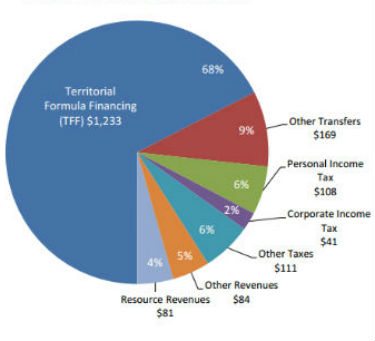
“We have to recognize that our revenues are under some pressure and are forecasted to decline by 1.7 percent over the next five years,” Kalgutkar said.
“Over that same period, our expenditures are forecasted to grow by 4 percent so as you can see we quickly have a delta that we have to address in our fiscal strategy.
“We also have to recognize that we have a very small tax base so any tax measures that we consider have to recognize that would likely have cost-of-living impacts on our residents.”
Asked why they were releasing these details now, a GNWT spokesperson told reporters it was to paint a clear picture of the territory’s financial state for the new government.
Members of the 18th Legislative Assembly will sit for the first time in just over two weeks – on February 18. Negotiations on a new collective agreement for GNWT employees are also recently underway.
Given the fragility of the territory’s economy, Kalgutkar says the GNWT needs to return to a more stable fiscal footing.
“Our economy is fairly fragile right now and that’s putting some downwards pressure on our fiscal framework,” he said.
“Our historic expenditure growth has been quite high and at times exceeded our revenue growth. One of the things we should do going forward is linking those better.
“With careful adherence to the fiscal responsibility framework, I think we can see our way out of it and return to a fairly strong fiscal position.
“That would allow us to start making the investments in our infrastructure that would start facilitating and stabilizing economic growth.”
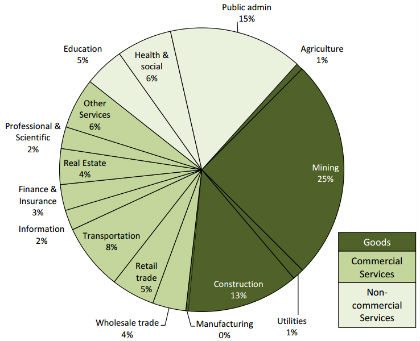
Kalgutkar says economic diversification is important, but that mining is the territory’s key economic driver and will continue to be over the next five years.
While there has been growth in manufacturing and forestry, Kalgutkar says it’s not enough to support the territory.
Lost federal funding: Can we get it back?
Last month, the federal government told Moose FM it was doing all it could to find a solution to a large gap in territorial funding created by changes at Statistics Canada.
Statistical alterations revealed in December meant the territory was set to lose out on $33 million annually – money the NWT expected to receive and for which it had already budgeted.
At the time, Premier Bob McLeod said the funding cut was an “unintended consequence” of changes to the way Statistics Canada prepares data on government expenditure.
On Monday, GNWT officials told reporters that talks with the federal government are ongoing and that they’re ‘fairly confident’ funding will be restored.
The territory will still receive around $1.26 billion in federal funding for the coming financial year if the change is not reversed – which accounts for almost 70% of its total revenue.
One disaster away from deficit
Kalgutkar stressed the importance of ‘maintaining sufficient borrowing authority’ so that the GNWT can cover any unforeseen expenditures.
“We also have to make sure that, over the long-term, the GNWT stays on a fairly strong fiscal footing to respond to any other threats to our economy,” he said.
Over the past three years, the territorial government has spent tens of millions of dollars fighting forest fires and covering for low water levels in the Snare hydro system.
Kalgutkar says unforeseen expenditures like these could actually turn some of the territory’s projected surpluses into deficits. For that reason, it’s imperative that the territorial government stay well under its credit limit.
Five-year picture
According to Kalgutkar, the five-year outlook for the territory’s economy ‘isn’t great.’
Because the NWT is so reliant on the mining sector (which makes up a quarter of its GDP), what happens in the industry has a dramatic ripple effect on the rest of the economy.
By the last year of the 18th Assembly, few funds are expected to be available for capital investment. At the same time, borrowing authority will erode as the territory falls further into debt.
Kalgutkar recommends that the GNWT link its expenditure growth to federal transfers, so that the government doesn’t run the risk of overspending.
“The GNWT will have to make strategic choices about its future spending,” the report concluded.
“Options for aligning expenditures with revenue, including the consideration of revenue options and potential reductions, are being developed for the consideration of the 18th Assembly.”






 is forecasting marginal surpluses for the next three fiscal years followed by two deficits.)