
Mines in the area have been struggling to meet some of their employment commitments.
That’s according to the Department of Industry, Tourism and Investment, who says the territory’s three operational mines aren’t hitting the targets the GNWT set them.
Currently, 25 per cent of management level jobs at mines in the NWT are held by NWT residents, compared with 86 per cent of entry-level positions.
“The three active mines each have employment targets for NWT resident employment but have struggled in recent years to meet their employment commitments,” a spokesperson for ITI said in a statement. “The GNWT is working with the mines to improve training opportunities.”
The spokesperson added that the GNWT acknowledges not enough skilled positions are held by NWT residents and the territorial government is working with the mines to change that.
The number of NWT residents working at Gahcho Kué mine increased to 296 in 2020, making up 50 per cent of the total workforce. The proportion of the workforce that is Indigenous has quadrupled, from 5 per cent in 2015 to 28 per cent in 2020, according to the company’s latest socio-economic report.
But at Gahcho Kué, 69 per cent of unskilled workers at the mine were Indigenous, compared to only 15 per cent of people in management positions being Indigenous — more than half were other NWT residents.
At the Ekati Diamond Mine, one Indigenous person held a management position, as of 2018. Most Indigenous mine employees worked semi-skilled or entry level positions, just under 75 per cent.
That’s compared with 34 per cent for non-Indigenous northerners and around 16 per cent for non-resident workers.
Terry Kruger, a spokesperson for De Beers, said the company has a number of training initiatives for Indigenous residents, including a literary program that distributes books to school. The company also has partnered with ECE and Aurora College.
Kruger says individual progression plans saw 20 Indigenous residents of the NWT being promoted to higher-level positions in the mining department.
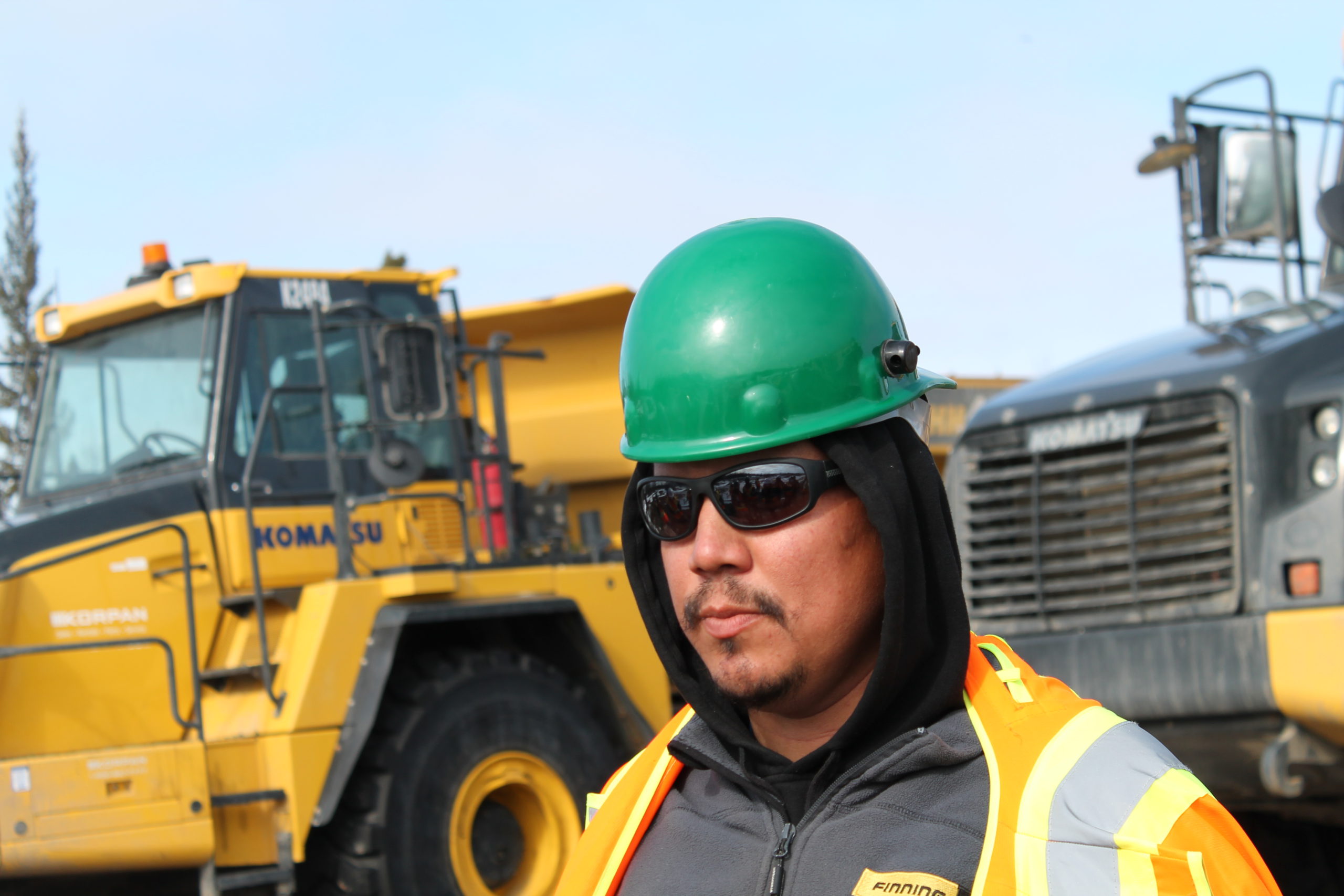
Paul Gruner, Chief Executive Officer of Det’On Cho Corporation — who helped with the hiring for the Nechalacho project — said as more contracts with mines are signed, it will provide more Indigenous NWT residents and Indigenous government-owned corporations experience and training opportunities to work on future remediation projects, like Giant Mine.
“It can be a bit challenging to source enough folks at a local level,” he said.
But Gruner added there’s been a lot of desire from the mines and various levels of government to work with Indigenous owned corporations like Det’On Cho, and that contracts like these provide more opportunities for training and experience.
Paul Bayha, who works as an operator at the Nechalacho Rare Earth Metals mine and is originally from Délı̨nę, said Nechalacho was the first worksite he has worked on where the majority of the workers have been Indigenous.
“This is rare among mine sites because not many Indigenous people have the training or work experience,” says Bayha.